


Curly hair gives men natural texture, movement, and volume, but the right haircut determines whether those qualities look controlled or bulky. A low taper keeps the area around the temples, ears, and neckline tidy while leaving enough length above to show the curl pattern.
This guide covers 40 practical variations, from short curls and textured fringes to 4C coils, long curls, mullets, line-ups, and beard combinations. The goal is to help you choose a style based on curl type, hair density, face shape, lifestyle, and the amount of maintenance you actually want.
What Is a Low Taper Fade Curly Hair Haircut?
A low taper is a gradual reduction in length concentrated near the lower sides of the head, around the sideburns and neckline. Unlike a higher fade, it does not remove as much hair from the upper sides, so the finished haircut retains a softer silhouette.
For curly textures, placement matters because curls shrink as they dry. A barber should therefore judge the shape with the natural curl pattern in mind rather than treating the hair like straight strands.
Key Features
- The taper sits low around the ears and neckline.
- More side length remains than with a high fade.
- The top can retain short, medium, or long curls.
- The transition can be subtle or sharply defined.
- A natural neckline or line-up can be selected.
- The style can be combined with facial hair.
- The shape can be adjusted for different curl densities.
- It works with waves, curls, coils, and tightly textured hair.
The main advantage is balance: the sides look organized without competing with the top. That makes this haircut suitable for men who want a clean finish without sacrificing natural texture.
Read More: Classic Taper Haircut: 65+ Styles, Types, Barber Tips & Expert Guide
Why a Low Taper Fade Works So Well with Curly Hair
Curly hair already creates visual volume, so removing a little weight from the lower sides can make the top appear more intentional. The taper also gives the haircut a defined outline while allowing the natural curl pattern to remain visible.
Another advantage is flexibility. A subtle taper can look conservative in an office, while the same basic shape can become much more expressive with a fringe, highlights, a hard part, or a longer curly top.
It Makes Curls Stand Out
The contrast between tidy lower sides and fuller hair above naturally directs attention toward the curls. Defined curls can remain the focal point instead of being hidden beneath excessive side bulk.
It Looks Clean Without Being Too Short
Some men dislike the exposed-scalp appearance associated with very aggressive fades. A low placement provides a cleaner outline while retaining more natural coverage.
It Fits Many Curl Types
This haircut can be adapted for:
- Wavy hair
- Loose curls
- Medium curls
- Tight curls
- Coily hair
- 4C hair
- Dense natural hair
- Fine curly hair
The important factor is not simply curl classification. Hair density, shrinkage, growth direction, and the desired finished shape should also influence the cut.
It Is Easy to Maintain
The lower placement generally makes grow-out less dramatic than a high fade. The exact maintenance schedule depends on how sharp you want the edges, how quickly your hair grows, and whether you choose a skin-level finish.
It Works in Every Setting
A conservative version can suit school, university, work, and formal occasions. A more textured or voluminous variation can work equally well for weekends, parties, and casual outings.
Who Should Get a Low Taper Fade Curly Hair Haircut?
This haircut is especially useful for men who want to preserve length while controlling the outline. It can be customized around curl size, density, face shape, and personal style rather than treated as a one-size-fits-all cut.
Best for Thick Curly Hair
Thick curls can create unwanted width around the temples and ears. Removing some of that lower-side bulk can make the top look fuller while giving the overall haircut a cleaner structure.
Best for Loose Curls
Loose curls and waves benefit from a gentle transition because the texture can remain relaxed rather than being forced into a highly sculpted shape.
Best for Tight Curls
Tighter curls can create substantial density around the sides. A careful taper helps establish a cleaner perimeter while leaving sufficient length for the texture to retain its character.
Best for 4C Hair
For 4C textures, the barber should account for shrinkage, density, and the natural direction of the hair. A controlled taper can emphasize the shape while keeping the top full.
Best for Wavy Hair
Wavy hair can also benefit from the same concept. Keeping additional length on top allows the natural wave to create movement while the lower sides provide definition.
40 Best Low Taper Fade Curly Hair Styles
There is no single best variation for every man. The right choice depends on your curl pattern, length, density, face shape, grooming habits, and how much styling you want to do.
Classic Low Taper Fade Curly Hair
The classic version keeps the curls relatively natural while placing the taper around the lower sides and neckline. It is a dependable choice for someone getting this haircut for the first time.
Ask for a soft transition and enough length on top to preserve the existing curl pattern. This gives the finished look a balanced, timeless character.
Low Taper Fade Curly Hair Short
Short curls make the routine quick and practical. The top can be clipped or scissor-cut to a manageable length while the taper provides a clean outline.
This variation is especially convenient for active men who prefer minimal styling. A small amount of curl cream can be enough to bring out texture.
Low Taper Fade Curly Hair Black
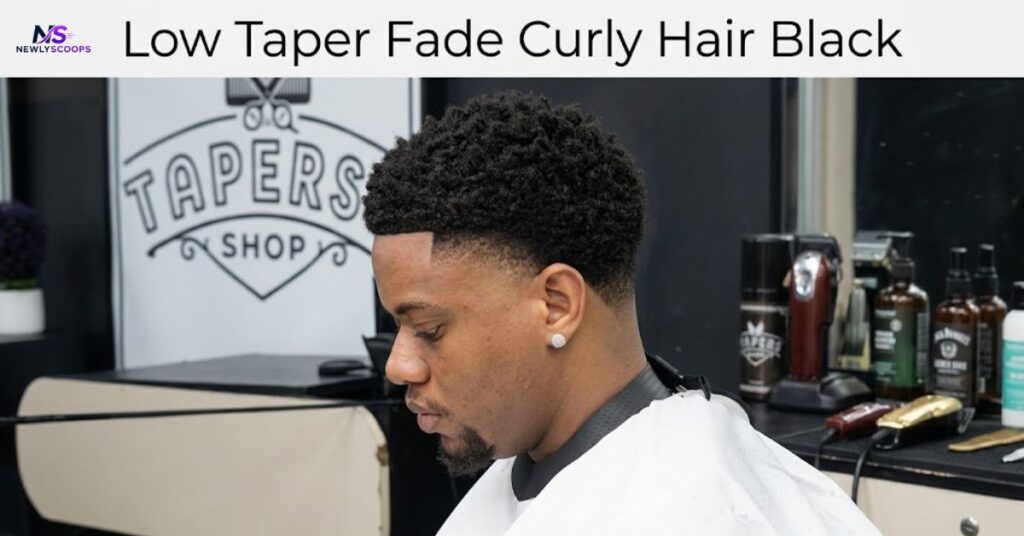
This variation works particularly well with natural textured hair because the taper can frame the curl volume without flattening it. A crisp temple and neckline can add definition.
For a more natural result, ask the barber to respect the existing density rather than removing excessive bulk from the top.
Low Taper Fade Curly Hair Black Male
A black male version can range from compact coils to a fuller textured top. The most important detail is matching the taper to the natural growth pattern.
An edge-up can provide additional sharpness, while a softer hairline can create a less formal appearance. Beard integration is another useful customization.
Low Taper Fade Curly Hair Men
For men who want one versatile option, a moderate-length curly top with a restrained taper is hard to beat. It can move between casual and professional environments.
The style can also be adjusted over time. Keeping the top longer creates more volume, while shortening it makes daily management easier.
Low Taper Fade Curly Hair Long
Longer curls create a dramatic difference between the textured top and controlled lower sides. The taper prevents the silhouette from becoming excessively wide.
This option suits men who enjoy growing their curls and want the sides to remain organized without sacrificing length.
Low Taper Fade Curly Hair Fringe
A curly fringe brings the texture forward toward the forehead. It can visually soften angular features and give the haircut a youthful appearance.
Keep the fringe long enough for the curls to form naturally. Cutting it too aggressively while wet can produce unexpected shrinkage after drying.
Blowout Low Taper Fade Curly Hair
A curly blowout emphasizes height and volume. The taper provides a clean foundation while the upper hair is lifted with controlled drying.
A diffuser can help preserve the curl pattern. Avoid excessive heat, particularly when the hair is already dry or chemically treated.
Low Burst Taper Fade Curly Hair
A burst-style variation curves around the ear and can create a more distinctive silhouette. It is especially interesting when paired with a textured or elevated curly top.
This option is more expressive than a conventional taper, so it works well for someone who wants a recognizable shape without choosing an extremely high fade.
Low V Taper Fade Curly Hair
A V-shaped neckline changes the back profile without dramatically altering the front. It gives the haircut a subtle custom detail.
The effect works particularly well with medium or longer curls because the tapered neckline contrasts with the fuller upper shape.
Low Taper Fade Curly Hair Mullet
A curly mullet keeps additional length toward the back while the taper cleans up the sides. The result has a distinctly modern, fashion-forward character.
The key is controlling the transition so the back length looks intentional rather than simply overgrown.
Low Taper Fade Curly Hair Blonde
Blonde curls naturally attract attention because lighter strands can reveal individual textures more clearly. A restrained taper keeps that color-focused look from becoming visually overwhelming.
If the hair is colored, moisture and gentle cleansing become particularly important because chemical processing can increase dryness.
Temple Low Taper Fade Curly Hair
A temple-focused taper removes less hair than a more extensive fade. It is useful for men who want a subtle cleanup rather than a dramatic change.
This version works nicely with longer sides and can blend naturally into facial hair when the sideburn area is shaped carefully.
Low Skin Taper Fade Curly Hair
A skin-level finish creates noticeably more contrast around the lower sides. It can make the curls appear fuller by comparison.
Because the exposed area becomes visible as the hair grows, this version generally demands more frequent cleanup than a softer taper.
Curly Top with Low Taper Fade
The main idea is simple: preserve the top and use the taper primarily to control the perimeter. It is a strong choice for medium and thick curls.
The upper hair can be worn forward, upward, or naturally separated depending on the curl pattern and desired appearance.
Textured Low Taper Fade Curly Hair
This variation celebrates imperfect, natural-looking texture. Rather than forcing every curl into an identical shape, the barber preserves variation across the top.
A lightweight styling product can enhance separation without creating a stiff finish.
Messy Curly Low Taper Fade
A messy version is deliberately relaxed. The curls can fall in different directions while the lower perimeter remains clean.
This is useful for men who want a fashionable hairstyle but do not want to spend a long time arranging individual curls each morning.
Low Taper Fade Curly Hair with Beard
A beard can extend the visual line of the haircut toward the jaw. The barber can blend the sideburn area into the facial hair for a smoother transition.
The beard does not need to be extremely full. Even short facial hair can complement the tapered sides when the proportions are balanced.
Low Taper Fade Curly Hair with Line-Up
A line-up adds geometric definition around the forehead and temples. It creates a sharper appearance against naturally textured curls.
This works especially well when the hairline is naturally strong. The barber should avoid forcing an artificial shape that does not suit the existing hairline.
Defined Curl Low Taper Fade
This version is designed around curl separation. The upper hair is allowed to form distinct curls rather than being brushed into a uniform mass.
A curl cream or light mousse can help enhance definition while retaining flexibility.
Natural Curl Low Taper Fade
The natural version uses minimal manipulation. The goal is for the haircut to look like an improved version of the wearer’s existing texture rather than a heavily styled transformation.
It is a particularly practical choice for everyday grooming.
Afro Low Taper Fade Curly Hair
An afro-textured top can remain full while the lower sides receive a controlled taper. This creates a strong silhouette without eliminating the character of the natural hair.
The final shape should follow the density and growth pattern instead of forcing the hair into an excessively narrow profile.
Medium-Length Curly Low Taper Fade
Medium length offers a useful middle ground. There is enough hair for movement and styling, but not so much that the routine becomes difficult.
The taper helps reduce visual heaviness around the lower sides while preserving the fullness of the upper hair.
High Volume Curly Low Taper Fade
This style is for men who want the curls to remain the dominant feature. The sides are controlled while the top is deliberately allowed to expand.
A diffuser can add lift, although the healthiest approach is to use moderate heat and avoid repeatedly disturbing the curl formation.
Low Taper Fade Curly Hair with Highlights
Highlights can emphasize curl separation and give the top additional visual dimension. They can be subtle or highly noticeable depending on the desired finish.
Because coloring can affect moisture balance, a consistent conditioning routine is important.
Low Taper Fade Curly Hair with Hard Part
A hard part introduces a deliberate dividing line between the upper hair and side section. It creates a more structured appearance than a fully natural style.
It is best suited to men who enjoy visible barber detailing and are comfortable with regular cleanup.
French Crop Low Taper Fade Curly Hair

A curly French crop keeps the top comparatively short and places emphasis on a textured front. The taper keeps the lower sides controlled.
This is a practical option for men who want a recognizable shape without maintaining long curls.
Modern Curly Taper Fade
The modern version combines a traditional lower taper with current approaches to curl volume and texture. The result can be understated or fashion-forward depending on length.
It is a flexible foundation because the same haircut can evolve as the top grows.
Low Taper Fade Curly Hair Kids
For children, comfort and simplicity are usually more important than elaborate detailing. A low taper can keep the perimeter tidy while allowing natural curls to remain soft.
Parents should choose a length that works with the child’s routine rather than requiring daily styling.
Low Taper Fade Curly Hair Boys
A boys’ version can be kept short and practical while still allowing visible texture on top. A soft taper is often appropriate for school and everyday activities.
A lightweight curl product may be sufficient when extra definition is wanted.
Classic Barber Low Taper Fade Curly Hair
This version focuses on traditional barbering fundamentals: clean transitions, controlled proportions, and a well-shaped neckline.
It is a reliable option when you want the haircut to look good without depending on an extreme trend.
Curly Caesar with Low Taper
A short, forward-directed top gives this variation a compact profile. The taper keeps the lower sides neat while the front remains textured.
It is particularly useful for men who prefer a shorter haircut but still want their curls visible.
Curly Quiff with Low Taper
A curly quiff adds height toward the front while maintaining a restrained lower taper. The result has more vertical movement than a conventional curly crop.
Use a lightweight product rather than a heavy wax if you want the curls to remain flexible.
Curly Mohawk with Low Taper
A low taper can support a curly mohawk without requiring an extremely high fade. The central strip remains fuller while the sides become more controlled.
This is a bold choice for men who want strong shape and noticeable personality.
Curly Side-Swept Low Taper
Side-sweeping the curls changes the direction of the hairstyle and can create a more mature appearance. The taper keeps the lower outline neat.
This option works well when the natural curl pattern already tends to move toward one side.
Curly Undercut-Inspired Low Taper
An undercut-inspired shape creates stronger separation between the top and sides, but the taper keeps the overall effect softer than a traditional undercut.
It is a useful compromise for someone who wants contrast without completely disconnecting the upper hair.
Curly Drop-Shape Low Taper
A slightly dropped transition can follow the contour of the head more closely toward the back. This can make the haircut look more customized from the rear.
The barber should assess the head shape before choosing the exact drop point.
Low Taper Fade Curly Hair vs Mid Taper Fade Curly Hair
Both options can work with curls, but their visual balance is different. A low placement preserves more side hair, whereas a mid placement introduces greater contrast farther up the head.
| Feature | Low Taper | Mid Taper |
| Fade position | Lower | Middle |
| Side coverage | More | Less |
| Overall contrast | Subtle | Stronger |
| Curl emphasis | High | Moderate to high |
| Grow-out | Usually softer | More noticeable |
| Style character | Natural | Fashion-forward |
| Best for | Versatility | More contrast |
Choose the lower option when preserving side coverage and natural proportion matters most. Choose the mid option when you want the taper to become a more visible part of the hairstyle.
Low Taper Fade Curly Hair vs High Taper Fade Curly Hair
A high taper begins farther up the head and therefore removes more side hair. This can produce a stronger visual contrast and a more dramatic outline.
| Feature | Low Taper | High Taper |
| Fade height | Low | High |
| Side length | Greater | Reduced |
| Contrast | Softer | Stronger |
| Top appearance | Fuller | More pronounced |
| Grow-out | Generally forgiving | More obvious |
| Overall mood | Understated | Bold |
A high taper can be excellent when the goal is maximum contrast. A lower taper is usually better when you want the curls and overall shape to remain the main focus.
Best Face Shapes for a Low Taper Fade Curly Hair
Face shape should guide proportions rather than dictate a rigid rule. The same haircut can look different depending on curl volume, fringe length, side width, and facial hair.
Oval Face
Oval faces are highly adaptable. Most curl lengths can work because the proportions are already relatively balanced.
Round Face
Extra height on top can create a more elongated visual impression. Keeping excessive side width under control can also improve the overall balance.
Square Face
A strong jawline can pair naturally with textured curls and clean lower sides. A moderate top length prevents the hairstyle from appearing overly rigid.
Diamond Face
Volume around the upper sides can help balance a narrower forehead and chin. A soft fringe can also work well.
Heart Face
A textured front can add visual weight around the forehead and help balance a narrower lower face. Avoid making the sides excessively tight if that creates too much contrast.
Best Curl Types for This Haircut

Different curl patterns respond differently to length and taper placement. The best result comes from considering shrinkage, density, and how the hair behaves after drying.
Type 2C
Dense waves can benefit from controlled sides and enough top length for the wave pattern to remain visible.
Type 3A
Larger curls often look fuller when the lower sides are cleaned up without removing too much upper length.
Type 3B
Springier curls can hold a strong shape, making them well suited to a defined taper.
Type 3C
Dense curls can benefit from side-bulk reduction while retaining substantial top volume.
Type 4A
Soft coils can be shaped into a rounded or structured top while the lower taper keeps the perimeter organized.
Type 4B
Tighter textures can look especially crisp with a carefully placed taper and clean edges.
Type 4C
A taper can frame tightly coiled hair while preserving its natural density. The barber should work with shrinkage rather than cutting based solely on the hair’s wet appearance.
Low taper fade curly hair men
Men can personalize the cut according to profession, age, hair length, and grooming preference. A conservative version can be appropriate for office environments, while additional texture can make the same foundation more youthful.
The most important decision is how much hair to preserve above and beside the taper. More length gives greater styling freedom, while a shorter top simplifies daily care.
For a first appointment, bring reference photos and explain the desired taper height, top length, neckline, and degree of edge definition. Clear instructions reduce the chance of receiving a fade that is higher than expected.
Low taper fade curly hair Black
Black men with textured curls, coils, or afro-textured hair have many ways to personalize the haircut. The taper can be combined with an edge-up, beard, sponge-defined texture, or fuller rounded top.
Do not assume every textured haircut should be cut extremely close. Density and curl shrinkage vary considerably, so the barber should preserve enough length to achieve the intended shape after the hair dries.
Mid taper fade curly hair
A mid taper is a useful alternative when you want stronger side contrast. It can make the upper curls appear more prominent while creating a more noticeable transition.
The choice between low and mid placement should depend on the desired silhouette rather than trend alone. A lower placement usually feels more understated, while a mid placement creates a bolder profile.
Low taper fade curly hair straight hair
Strictly speaking, straight hair does not create curls in the same way naturally curly hair does. However, a low taper can still be paired with naturally straight hair, a wavy texture, or hair that has been curled or permed.
The same principle applies: keep the taper low and decide how much upper length should remain. Straight strands usually show the transition more clearly because they do not contract through curl shrinkage.
Low taper fade curly hair black male
For black male clients, the haircut can be adapted to coils, curls, waves, or a fuller textured top. A line-up can sharpen the front while a natural neckline creates a softer finish.
Beard integration can also change the overall character. A connected beard produces a stronger masculine frame, while a clean-shaven face makes the haircut itself more prominent.
Low Taper Fade Curly Hair 4c
4C hair can look excellent with a low taper when the barber respects its natural density and shrinkage. The taper can be subtle around the temples and neckline while the top remains full.
For additional definition, an edge-up or carefully shaped top can provide structure. Moisture retention is also important because dry, tightly coiled hair can become harder to shape.
How to Ask Your Barber for a Low Taper Fade Curly Hair Haircut
Do not rely on the haircut name alone. Different barbers may interpret the same term differently, especially when deciding how high the transition should travel.
Show a Reference Photo
Bring photographs showing the front, side, and back whenever possible. This gives the barber a clearer understanding of the desired shape.
Ask for a Low Taper Fade
Tell the barber that you want the transition kept low around the temples, ears, and neckline. If you do not want skin exposure, say so explicitly.
Keep the Length on Top
Explain the approximate amount of length you want to preserve. Curly hair can shrink substantially, so mention whether you are measuring the desired length when wet or dry.
Blend the Beard
If you wear facial hair, ask whether the sideburn and beard transition should be connected, softened, or left separate.
Shape the Hairline
Decide whether you prefer a natural hairline or a sharper line-up. A natural edge generally requires less frequent precision cleanup.
How to Style a Low Taper Fade Curly Hair
Good styling starts with healthy hair. The objective is to enhance the existing curl pattern rather than overload it with product.
Start with Clean Hair
Use a cleanser suited to your texture and avoid unnecessarily frequent washing. Curly hair often benefits from a routine that protects its moisture balance.
Apply a Leave-In Conditioner
Apply leave-in conditioner to damp hair when additional softness and moisture are needed. Work it through gently instead of aggressively brushing the curls apart.
Use Curl Cream
A small amount of curl cream can improve definition and reduce frizz. Begin with less product and add more only if your hair needs additional control.
Dry Your Hair Properly
Air drying is simple and gentle. If you use a diffuser, keep the heat moderate and avoid repeatedly touching the hair while it sets.
Finish with a Lightweight Product
Mousse or a lightweight styling cream can add hold without making the curls rigid. Heavy products may reduce volume and leave buildup.
Best Hair Products for Low Taper Fade Curly Hair

The best routine depends on your curl pattern, density, dryness, and desired finish. More product is not automatically better.
Curl Cream
Useful for definition, softness, and everyday styling. Choose a formula that does not leave excessive residue.
Leave-In Conditioner
A leave-in can support moisture and make longer curls easier to manage between washes.
Styling Mousse
Mousse provides relatively light hold and can be helpful when you want volume without a heavy coating.
Texture Powder
Texture powder can add lift at the roots, but use it sparingly because buildup can make textured hair feel dry.
Sea Salt Spray
Sea salt spray can enhance movement in wavy or loose textures. It is best used cautiously if your hair is naturally dry.
Lightweight Pomade
A light pomade can control stray hairs and provide some polish without completely flattening the curls.
Argan Oil
A small amount can add shine and help reduce the appearance of dryness. Avoid applying excessive oil directly to the roots.
Moisturizing Shampoo and Conditioner
A suitable cleansing and conditioning routine helps preserve the flexibility and appearance of the curls. Product selection should match the individual’s hair needs.
How to Maintain a Low Taper Fade Curly Hair
Maintenance has two parts: keeping the taper clean and keeping the curls healthy. The exact schedule varies from person to person.
Visit Your Barber Regularly
If you want crisp edges, schedule cleanup appointments according to how quickly your hair grows. A softer finish can be left longer between appointments.
Keep Your Curls Moisturized
Use conditioner and leave-in products when appropriate for your texture. Hydrated curls are generally easier to shape and less prone to excessive frizz.
Sleep on a Satin Pillowcase
A satin pillowcase or bonnet can reduce friction overnight. This may help preserve the curl pattern and reduce morning frizz.
Avoid Heat Damage
Use moderate heat and a diffuser when drying. Repeated high-temperature styling can make textured hair more fragile.
Refresh Your Curls
Between washes, lightly dampen the hair and reshape the curls with your hands. A small amount of leave-in product can help restore definition.
Common Mistakes to Avoid
Even an excellent haircut can look disappointing if the proportions or maintenance routine are wrong.
Choosing the Wrong Fade Height
Be specific about the placement. If you want the transition to remain low, tell the barber before the cutting begins.
Cutting the Top Too Short
Remember that curls contract after drying. Preserve enough length for the intended shape rather than judging everything from wet hair.
Using Too Many Styling Products
Heavy layers can reduce volume, create buildup, and make curls appear greasy. Start with a small amount.
Ignoring Moisture
Dry curls can become harder to shape and more prone to frizz. A suitable conditioning routine can make daily styling much easier.
Waiting Too Long Between Haircuts
Letting the lower perimeter become excessively grown out can change the intended silhouette. A simple cleanup can restore the shape without removing much length.
Over-Defining the Hairline
A very sharp line-up is not necessary for every style. If the natural hairline is irregular, forcing an artificial shape can make the result less natural.
Ignoring Shrinkage
Always consider how much the curls contract after drying. This is especially important with tightly coiled textures.
Removing Too Much Side Weight
The purpose of a low taper is not to erase every trace of side volume. Excessive removal can turn a soft taper into a much more aggressive fade.
Brushing Dry Curls Aggressively
Dry brushing can separate the curl pattern and create unnecessary frizz. Detangle when the hair is suitably conditioned and use an approach appropriate to the texture.
Copying a Style Without Considering Density
A photograph may show a person with much thicker or finer hair. Ask your barber how the same concept can be adjusted to your actual density.
Forgetting the Back Profile
Many people focus only on the front. Ask for a shape that looks intentional from the side and rear as well.
Choosing a Style That Conflicts With Your Routine
A high-volume curly style may look excellent but require more daily work. If convenience is your priority, choose a shorter or more natural variation.
Final Thoughts
A low taper fade curly hair style gives men a practical way to organize the sides while allowing natural curls to remain the visual focus. With the right length and transition, it can look clean without becoming overly severe.
The best result comes from matching the cut to curl pattern, density, face shape, and lifestyle. Bring clear reference photos, communicate the desired fade placement, and maintain both the haircut and the health of your curls.
FAQ’s
Is low taper good for curly hair?
Yes. A low taper can work very well with curly hair because it reduces lower-side bulk while preserving the texture and volume above. The exact length should be adjusted for curl shrinkage and density.
Is fade haram in Islam?
There is no single answer that applies to every Islamic scholar or school of thought. Some scholars consider certain forms of qaza, where parts of the head are shaved while other areas are left, impermissible, while others distinguish between different modern fade techniques. If religious compliance matters to you, ask a trusted qualified scholar about the specific haircut you intend to get.
Is curly hair in style in 2026?
Yes. Curly and textured hairstyles remain highly visible in contemporary men’s grooming, particularly styles that preserve natural texture instead of making the hair appear overly rigid. The popularity of a particular variation can change, but natural-looking texture remains versatile.
What fade is better for curly hair?
It depends on the desired result. A low taper is a strong choice when you want softer contrast and more side coverage, while a mid or high fade creates a more dramatic separation. Curl density and face shape should also influence the decision.
What is the gen z haircut called?
There is no single haircut that represents every Gen Z man. Popular choices include textured crops, curly fringes, taper fades, modern mullets, and variations that combine natural texture with clean sides. The exact name depends on the shape and barbering technique.
