

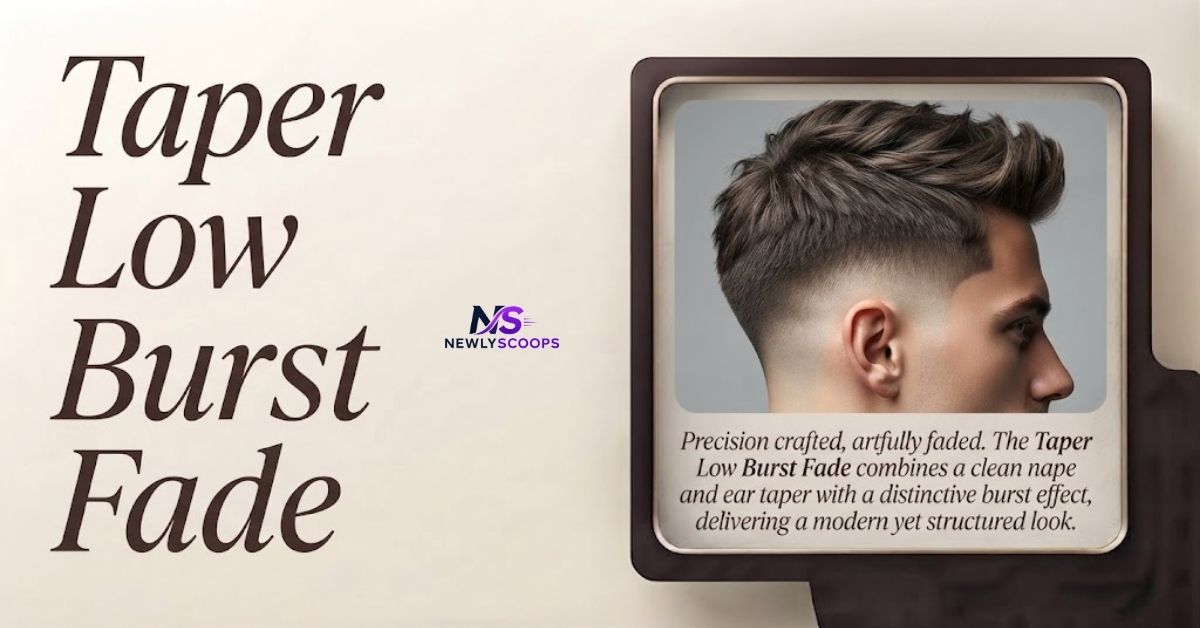
A Taper Low Burst Fade combines controlled tapering with a rounded burst around the ear. The result is a clean haircut with a distinctive side profile, while the top can remain curly, wavy, coily, straight, cropped, or longer.
Unlike a standard Low fade, the burst element changes the Fade shape around the Ear area. A Barber can keep the Fade height low, preserve Hair length on the sides, and create a rounded silhouette that works with many modern Hairstyle choices.
This guide explains the Taper Low Burst Fade, how it differs from other Fade haircut options, which Haircut styles suit it, what Barber instructions to use, and how to maintain the cut through the Grow-out period.
The quick version
- A Taper Low Burst Fade keeps a Low taper on the sides and a Low taper on the neckline while creating a Curved burst around the ear.
- The Burst fade shape is rounded rather than a Straight fade line, giving the Side profile a distinctive appearance.
- The style works with Straight hair, Wavy hair, Curly hair, Coily hair, and other forms of Textured hair.
- The top can be a Textured crop, Short top, Curly top, Fringe, 360 waves, Mullet, or another Hairstyle.
- A Barber can adjust the Fade placement, Hair length, Skin exposure, and Fade height according to the client’s preferences.
- Regular Touch-up appointments help preserve the Curved fade and clean Hairline.
- A Low taper generally produces lower contrast than a Mid fade or High fade.
- The cut can be adapted into a Low taper burst fade mullet, Low taper fade mohawk, or other modern Haircut styles.
- Good Barbering depends on preserving the Natural shape of the head while blending the Fade carefully.
- Styling is usually straightforward when the top has a defined Natural texture.
What a taper low burst fade is
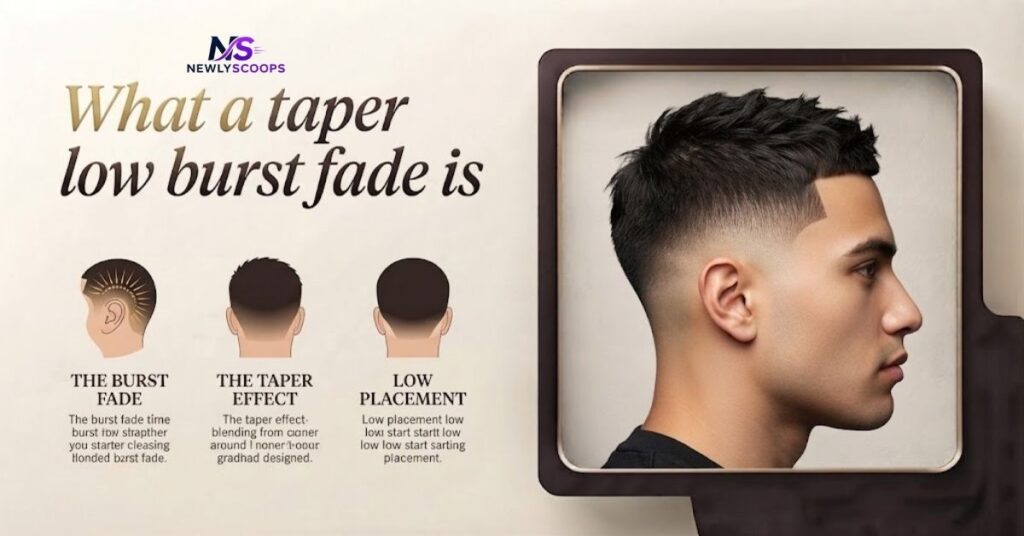
A Taper Low Burst Fade uses two related ideas: a gradual Taper and a curved Burst fade. The Taper controls Hair on the sides, Hair at the neckline, and Hair at the nape, while the Burst fade creates a half-circle shape around the ear. The combination gives the haircut a controlled foundation with a noticeable rounded detail.
The Low taper keeps the shortest Hair closer to the ears and neckline instead of moving high toward the temples. That Low placement leaves more Hair on the sides and can create a Soft appearance. A Barber can choose a very subtle Gradual taper or a stronger Fade depending on desired Skin exposure.
The defining feature is the Curved burst. Rather than making a Straight fade that travels horizontally through the side, Barbering follows a rounded path around the ear. This curved approach can complement Hair movement, Natural curls, Natural waves, Natural coils, and longer Hair on top.
The Taper Low Burst Fade can therefore look very different from one person to another. Hair length, Curl pattern, Wave pattern, Volume, Face shape, and top Styling all influence the final Hairstyle.
A Curved fade also gives the Ear area a deliberate shape. When the Fade around the ear is blended correctly, the transition can resemble a small Sunburst shape. The remaining Hair at the nape and Crown helps determine how naturally the cut connects to the rest of the head.
For clients who prefer less Skin exposure, a Barber can keep the Burst fade soft and leave a little more Hair around the ears. Someone seeking stronger contrast can request a tighter blend. The important point is that Fade placement should be discussed before cutting.
Taper vs low fade vs burst fade
The terms Taper, Low fade, and Burst fade describe different aspects of a Haircut. A Taper describes gradual shortening, a Low fade describes low Fade height, and a Burst fade describes the curved shape around the ear.
Understanding those distinctions makes a Barber consultation much easier because the same word can otherwise produce different results from one shop to another.
Taper
A Taper gradually reduces Hair length around specific areas, normally the Temple, sideburns, Hairline, Neckline, and Nape. A Low taper on the sides can preserve more Hair on the sides than a traditional Low fade.
A Taper fade may still expose some Skin, but its transition can remain relatively subtle. This creates a Low contrast appearance that is often suitable for clients who want a clean appearance without a dramatic change to the Side shape.
The difference between a Taper and a Low fade is especially visible around the sideburns and neckline. A Low taper on the neckline can retain more natural Hair at the Nape, while a Low fade may remove more Hair and produce greater Skin exposure.
Low fade
A Low fade describes Fade placement. The transition begins relatively low on the head, generally around the ears and lower sides rather than high near the temples.
A Low fade can be Straight or Curved. That means a Low fade is not automatically a Burst fade. The distinction comes from the Fade shape and the path followed around the Ear area.
The comparison of Low taper vs. low fade is therefore mainly about how much Hair is retained and how aggressively the sides are reduced. A Low taper usually creates a softer appearance, while a Low fade can produce stronger contrast.
Burst fade
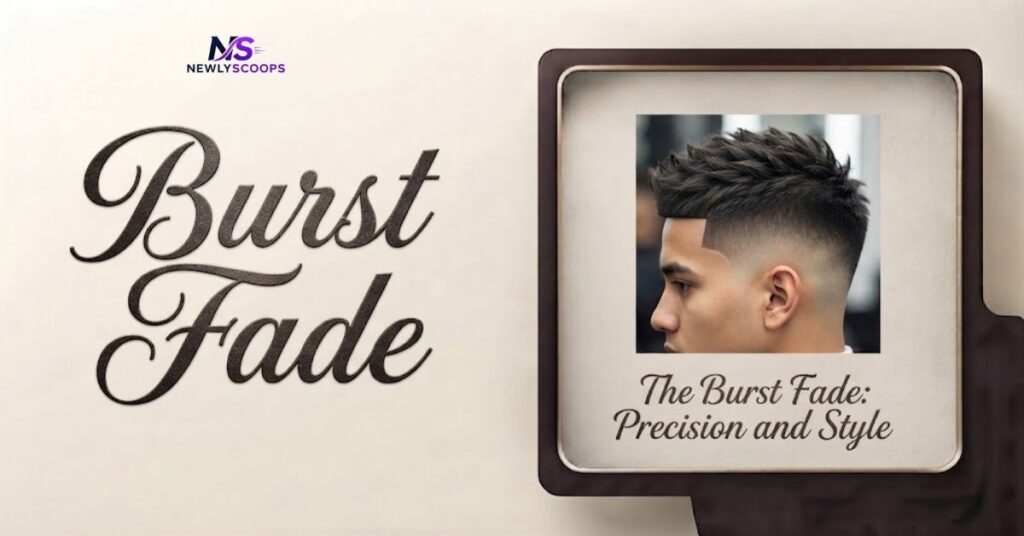
A Burst fade is primarily identified by its curved path around the ear. The Fade expands outward from the Ear area in a Rounded shape instead of following a straight horizontal path.
A Mid burst places that curved transition higher than a Low burst, while a High burst takes the shape higher again. The same basic Curved burst idea can therefore be adjusted through different Fade heights.
The Burst fade haircut has roots associated with classic barbering and Black hair culture, and its mainstream visibility has been linked in published haircut histories to figures including Usher and barber Curtis Smith. The style is also commonly associated with the South of France haircut.
A Low taper burst fade keeps that visual language closer to the lower side of the head. A Low taper drop fade is different because its transition generally drops behind the ear toward the Nape rather than forming the characteristic curved burst around the Ear area.
Who a taper low burst fade suits
A Taper Low Burst Fade is flexible because the Fade itself does not dictate the entire Hairstyle. The top can provide length, Volume, Texture, or Natural movement, while the sides remain controlled.
Face shape and Hair texture should both be considered during a Barber consultation. The goal is not simply to copy a reference image but to adapt the Fade placement and Hair length to the individual’s Facial proportions.
Face shapes
- Round face: Keeping Hair on top longer can create Vertical lift and improve Facial balance. A Mid burst can provide more height if the client wants a stronger change in Fade placement.
- Square face: A Curved fade can complement a strong Jawline by introducing a rounded detail rather than another rigid horizontal line.
- Oval face: An Oval face generally works with many Haircut styles, including a Textured top, Fringe, Short top, or longer Curly top.
- Oblong face: Keeping excessive Vertical lift under control can help maintain Facial balance. A lower Taper can leave useful width around the sides.
- Heart-shaped face: Moderate Top volume can balance a broader Forehead and narrower Chin.
- Strong Jawline: A rounded Burst fade can add visual softness around the sides without removing all the Hair on the sides.
A Barber should also consider the Crown and natural growth direction. Head shape can affect Fade shape, and the same Barber instructions may need adjustment for different Facial proportions.
Hair types
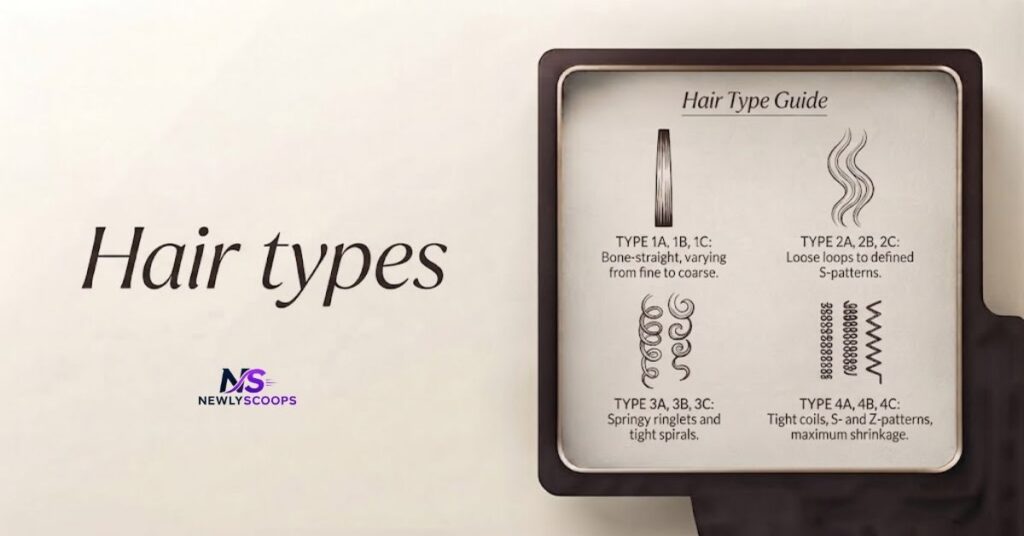
Straight hair can make the Fade placement highly visible because individual strands often show the transition clearly. A Short top, Textured crop, Forward fringe, or Textured top can work especially well with this Hair texture.
Wavy hair naturally provides movement around the Curved burst. A Barber can preserve that Wave pattern rather than cutting away too much Hair on the sides. The result can have a Lived-in finish without losing the Clean sides.
Curly hair is especially compatible with a Burst fade haircut because the rounded transition can follow the Curl pattern. Long curls can remain on top while the Hair around the ears is controlled.
Coily hair can also work extremely well with the shape. Natural coils, an Afro, and other forms of Textured hair can create strong Top volume while the Low taper keeps the lower section organized.
Clients with 360 waves can use a Low fade or Low taper to frame the wave pattern. The key is preserving enough Hair length for the Wave pattern while maintaining balanced sides.
The most important factor is Natural texture rather than a rigid formula. Straight hair, Wavy hair, Curly hair, and Coily hair each react differently to Scissor cutting, Clipper-over-comb, and Fade blending.
Best styles to ask for
The top determines much of the final Hairstyle. A Taper Low Burst Fade can be paired with short, medium, or longer Hair on top, allowing the same basic Fade to produce several different Haircut styles.
1. Textured crop
A Textured crop keeps the front relatively short while adding Texture through Scissor cutting or Clipper-over-comb. The result can have a Messy finish, Matte clay can emphasize separation, and a low curved side can keep the overall shape controlled.
2. Short top
A Short top is useful for clients who want minimal Styling time. It emphasizes the Fade around the ear and makes Hair maintenance relatively simple.
3. Long curls
Long curls create contrast between the controlled sides and fuller Hair on top. The Barber can preserve the Natural curls rather than removing too much length, creating strong Hair movement and Volume.
4. Forward fringe
A Fringe directs Hair toward the Forehead. A Forward fringe can make the haircut appear softer while the Burst fade provides definition around the ears.
5. 360 waves
A 360 waves Hairstyle requires consistent brushing and Hair maintenance. The sides can remain low enough to frame the wave pattern without overwhelming it.
6. Burst fade mullet
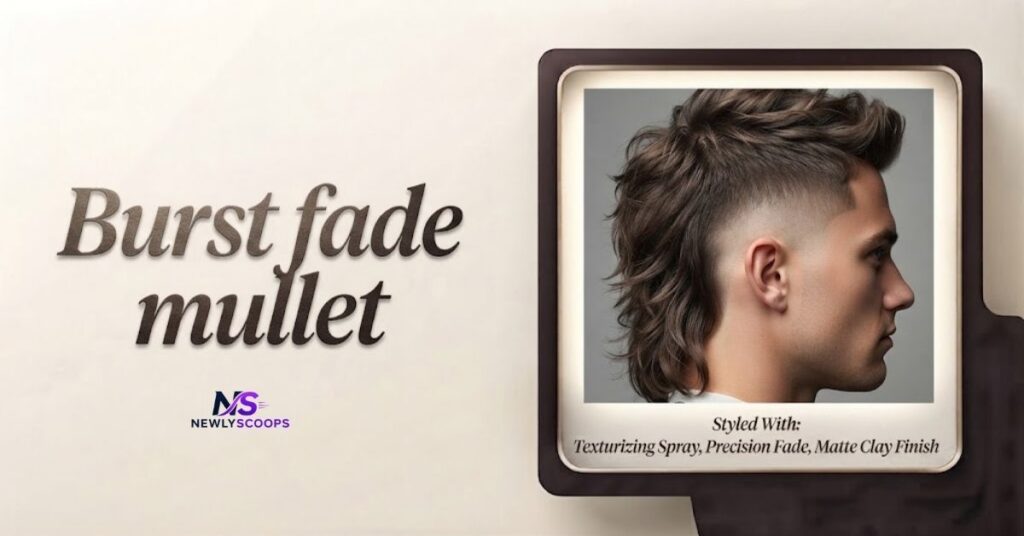
A Burst fade mullet leaves more Hair at the back while the Burst fade controls the Ear area. The Long back creates a distinctive Mullet silhouette, while the Curved burst provides the defining side detail.
7. Low taper fade mullet
A Low taper fade mullet offers a softer alternative to a pronounced Burst fade mullet. The Mullet remains visible through the Long back while the Low taper on the sides produces a more gradual transition.
8. Mid taper fade mullet
A Mid taper fade mullet raises the taper compared with a Low taper fade mullet. This can produce stronger contrast while retaining the Short front and Long back relationship.
9. Curly top
A Curly top can preserve Natural movement while the sides receive a Low taper burst fade. The Barber should account for shrinkage when determining Hair length.
10. Textured top
A Textured top works with Straight hair and Wavy hair as well as other textures. Texture powder or Matte clay can add separation without making the finish overly glossy.
11. Low taper fade mohawk
A Low taper fade mohawk keeps a stronger strip of Hair through the center. Compared with a conventional Mohawk, the Low taper fade mohawk can remain relatively controlled around the Ear area.
12. South of France
The South of France is closely associated with the Burst fade family. It generally emphasizes a rounded side transition while leaving noticeable Hair through the center and back.
13. Short front and long back
A Short front with a Long back creates a Mullet-like silhouette. The Curved burst can provide a clean transition around the Ear area without removing the length needed for the back.
14. Afro with a low burst
An Afro paired with a Low taper can maintain substantial Top volume while cleaning the Ear area and Nape. The rounded shape can work with the Natural shape of the Hair.
15. 360 waves with a low burst
A 360 waves variation combines controlled sides with a defined Wave pattern. The Barber should avoid taking the Fade height too high if preserving the wave coverage is important.
How to ask your barber for it
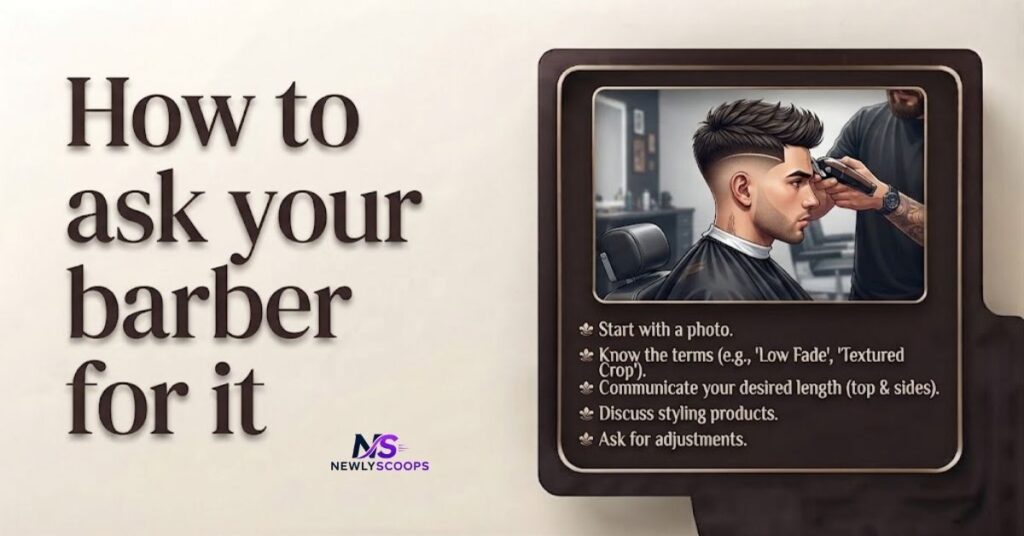
The best Barber instructions describe four things: the placement, the shape, the amount of Skin exposure, and the desired Hair length on top.
Instead of saying only “give me a Fade,” explain that you want a Low taper on the sides, a Low taper on the neckline, and a Curved burst around the ear. Then specify whether you want a Skin fade or a softer transition.
A script that works
“I want a low taper around the sides and neckline with a burst shape curved around the ear. Keep the placement low, leave the amount of Hair length I have on top, and blend the back naturally.”
For Curly hair, add that you want the Curl pattern preserved. For Wavy hair, explain whether you want the Natural waves left loose. For Straight hair, specify whether you want a Textured crop, Fringe, or Short top.
What to show
A reference photo is particularly useful for a Burst fade haircut because the shape is easiest to understand from the side. Show a Side profile, back view, and front view whenever possible.
The Barber should be able to see the Curved burst around the ear, the Fade height, the amount of Skin exposure, the Hair length on top, and the Hair at the neckline.
If you want a Low taper burst fade mullet, show the Long back as well. If you want a Low taper fade mohawk, show the desired width and height of the central section.
Barber instructions worth specifying
- Keep the Low taper on the sides.
- Keep the Low taper on the neckline.
- Make the Burst fade curved rather than Straight.
- Keep the Fade placement close to the Ear area.
- Preserve the requested Hair length on top.
- Explain whether you want Skin exposure.
- Mention your Hair texture.
- Show the desired Side profile.
- Explain how much Hair should remain at the Crown.
- Discuss the Nape and Hair at the neckline.
- Tell the Barber whether the back should remain rounded or elongated.
- Explain whether you want a Clean appearance or a Lived-in finish.
A strong Barber consultation prevents misunderstandings because “low,” “taper,” and “burst” can otherwise be interpreted differently.
Keeping a taper low burst fade sharp
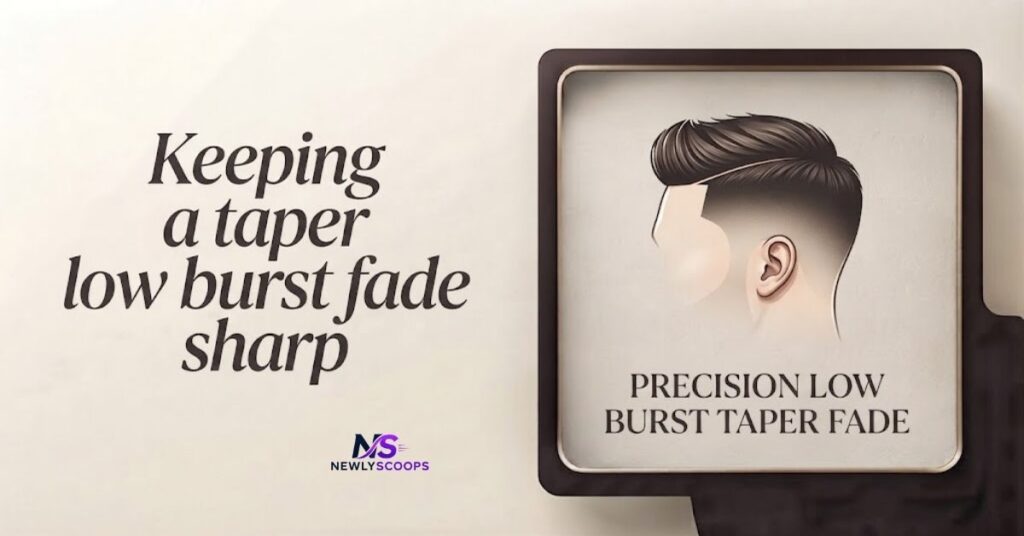
A Taper Low Burst Fade depends on a visible transition around the ear, so Hair growth can gradually soften the curved detail. Hair around the ears often becomes noticeable before the longer Hair on top needs attention.
A typical Touch-up schedule can vary according to Hair growth, Hair texture, and how crisp the client wants the Fade. People who prefer sharp definition may return more frequently, while clients who like a Lived-in finish can allow a longer Grow-out period.
Touch-up timeline
A Touch-up every two to four weeks is a practical starting point for maintaining a defined Burst fade. Faster Hair growth can shorten the interval, while a softer Low taper can tolerate a longer Grow-out period.
A Burst fade mullet can sometimes appear intentional during Grow-out because the Long back remains part of the design. A Short top generally makes regrowth more visible around the Ear area.
Hair growth patterns also matter at the Nape. Some clients develop more visible Hair at the neckline quickly, while others can maintain a Natural shape for longer.
Read More: Low Taper Fade With Design: Best Haircut Ideas, Styles, and Barber Tips for 2026
Neckline and sideburn cleanup
Hair at the neckline should normally follow the individual’s Hairline rather than being carved into an unnecessarily rigid shape. A Barber can use a Nape taper to keep the transition clean while retaining a Natural shape.
Sideburns should be balanced with the Temple and Ear area. Removing too much Hair can change the Facial proportions and make the Fade appear higher than intended.
Maintenance checklist
- Schedule a Touch-up when the Curved burst loses definition.
- Keep Hair around the ears clean.
- Monitor Hair at the neckline and Nape.
- Maintain the Hairline without over-sharpening it.
- Preserve the Curl pattern if you have Curly hair.
- Keep 360 waves brushed consistently.
- Use appropriate Styling products.
- Avoid excessive heat when maintaining Natural texture.
- Discuss Hair growth with your Barber.
- Adjust the Touch-up schedule according to your Grow-out period.
Mistakes that ruin the cut
The quality of a Taper Low Burst Fade depends heavily on Fade placement and Fade blending. Even a good reference photo cannot compensate for removing too much Hair around the Ear area or raising the Fade higher than requested.
Letting the fade creep up
A Low taper should remain low. If the Fade height moves toward a Mid fade or High fade, the sides can become much shorter than intended.
This is especially important for clients who want Low contrast. More Skin exposure creates Strong contrast, which changes the character of the Haircut.
Over-cutting around the ear
The Curved burst needs enough Hair around the Ear area to preserve its Rounded detail. Taking away too much Hair can make the Burst fade resemble an ordinary Low fade.
The Barber should establish the curved outline before aggressively removing Hair. This allows the Fade shape to remain visible.
Poor fade blending
A poorly blended Fade can create visible steps between Shorter hair and Longer hair. Fade blending should move gradually through different Hair lengths so the transition looks controlled.
Ignoring the Crown
The Crown affects how the back connects to the sides. If the Crown grows in a different direction, the Barber may need to adjust the Fade shape or Scissor cut to maintain balance.
Cutting against natural growth
Hair at the Nape can grow in several directions. A rigid approach may expose unwanted Skin or create an uneven Hairline.
Choosing the wrong fade height
A Round face does not automatically require a High fade, and a Square face does not automatically require a Low fade. Face shape, Hair length, Top volume, and Facial balance should all be considered.
Removing too much top length
Hair on top provides the Vertical lift, Texture, and Hair movement that complete the haircut. Removing excessive Hair can make the Fade dominate the overall Hairstyle.
Ignoring shrinkage
Curly hair and Coily hair can appear considerably shorter after drying. Barbering should account for this difference when setting Hair length.
Treating every texture the same
Straight hair, Wavy hair, Curly hair, and Coily hair respond differently to Fading and Scissor cutting. The Barber should adapt the technique to the Natural texture.
Overusing product
Heavy product can flatten Natural movement and reduce the Soft appearance of textured Hair. Styling should support the Hairstyle rather than hide its shape.
Styling it at home
The styling routine for a Taper Low Burst Fade depends primarily on the Hair on top. A Short top may need almost no Styling, while Long curls, a Fringe, or a Textured top can require more attention.
Matte clay works well for a Textured crop or Messy finish. Texture powder can provide grip and Volume, particularly for Straight hair or fine Hair. People with Natural curls may prefer a product that enhances definition without eliminating Natural movement.
Simple styling routine
- Start with damp Hair.
- Towel-dry gently.
- Apply a small amount of product.
- Work the product through the Hair on top.
- Use fingertips to create Texture.
- Lift the roots for Top volume.
- Shape the Fringe if you have one.
- Allow Natural curls, Waves, or Coils to settle.
- Avoid excessive product around the Fade.
- Finish with a Natural shape rather than forcing every strand into position.
A Matte clay can create a clean but textured finish. Texture powder can increase root Volume. For 360 waves, the styling process is different because the Wave pattern requires brushing and consistent Hair maintenance.
The Fade itself should not require extensive daily Styling. Its visual impact comes from Fade placement, Fade shape, and the contrast between Hair on the sides and Hair on top.
Taper low burst fade vs blowout taper
A blowout taper and a Taper Low Burst Fade can both create a modern Barbering look, but the emphasis is different. A blowout taper focuses heavily on Top volume and Hair movement, while a Burst fade focuses on the curved transition around the Ear area.
A blowout can be styled with substantial Volume and Natural movement. A Low taper burst fade keeps more attention on the rounded Fade shape and can work with a shorter or longer top.
The maintenance also differs. A blowout taper can require regular Styling time, while a Burst fade generally requires more frequent Fade Touch-up appointments to preserve the curved detail.
Clients should therefore decide whether they prefer daily Styling or more frequent Barber visits. Hair growth, Hair texture, and Hair length all influence that decision.
Is it okay for school, work, or formal settings?
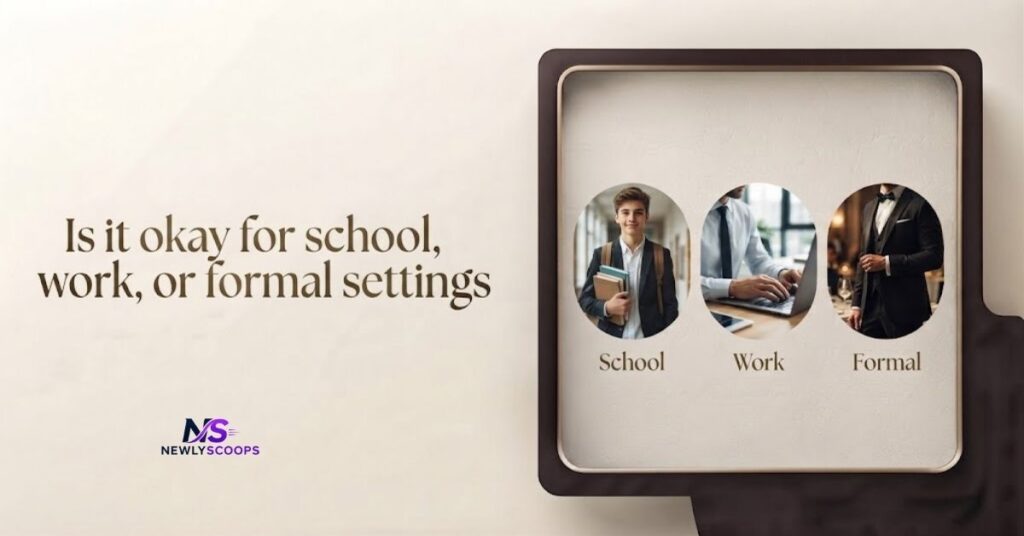
A Taper Low Burst Fade can be adapted for school, work, and formal environments by controlling the Fade height, Skin exposure, and Hair length.
For conservative settings, a Low taper with a Short top can produce a Clean appearance without excessive contrast. A Strong contrast Skin fade, dramatic Burst fade mullet, or tall Low taper fade mohawk may attract more attention.
A formal-friendly Hairstyle does not have to remove all individuality. Keeping the Fade placement low, maintaining a Natural shape, and choosing a neat Textured finish can make the haircut easier to wear in different settings.
Workplace requirements vary, so clients should follow their organization’s grooming rules. The same haircut can also be adjusted as Hair grows and Styling needs change.
Burst fade Low fade
A Burst fade and Low fade overlap but are not interchangeable terms. A Low fade identifies where the Fade begins, while a Burst fade identifies the curved path around the Ear area.
A Low fade can use a Straight fade shape across the sides. A Burst fade uses a Curved fade that creates a Rounded shape and leaves the back and upper sides with a different relationship to the Fade.
This means someone can request a Low fade without receiving a Burst fade. To obtain the rounded design, the Barber instructions should specifically mention the Burst fade around the Ear area.
Burst taper fade
A Burst taper fade combines gradual Tapering with a Burst fade shape. The exact amount of Skin exposure can vary, so the client should specify whether the desired finish is subtle or more defined.
For a lower version, ask for Low placement around the Ear area and neckline. For more contrast, the Barber can raise the Fade height toward a Mid burst or High burst.
The most important visual difference is the Curved burst. A Straight fade creates a different Side shape, while the Burst fade produces a half-circle or Sunburst shape around the ear.
Burst taper fade high
A High burst places the curved transition higher than a Low burst. The increased Fade height creates stronger contrast and removes more Hair from the upper sides.
A High burst can work with substantial Top volume, but it produces a different Hairstyle from a Low taper. Clients wanting Low contrast should explain that the Fade must remain low.
The choice between Low taper vs. high taper depends on desired contrast, Hair length, Face shape, and personal grooming preferences. A Barber can adjust the Fade placement to preserve Facial balance.
Low taper burst fade mullet
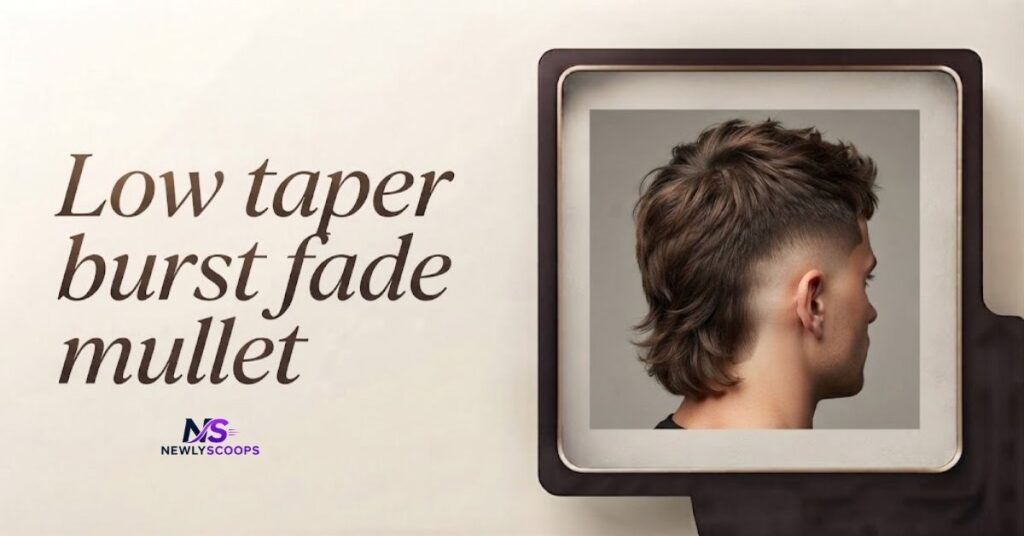
A Low taper burst fade mullet combines a low curved transition around the ear with the Long back associated with a Mullet. It provides a stronger silhouette while keeping the side Fade lower.
The front can remain Short, Textured, or styled into a Fringe. The back can retain substantial Hair length, while the Ear area receives the defining Curved burst.
This version is particularly useful for clients who want a Mullet without making the sides completely disconnected from the rest of the haircut.
Taper low burst fade curly hair
A Taper Low Burst Fade can work exceptionally well with Curly hair because the Natural curls provide Volume and movement above the Fade. The rounded Burst fade can complement the Curl pattern instead of creating a rigid line against it.
A Barber should account for shrinkage when deciding Hair length. Long curls can look considerably shorter after drying, so the desired finished length should be discussed during the Barber consultation.
The sides can remain low while the Curly top provides the main Volume. Natural curls can also help make the Grow-out period less visually obvious.
For strong Curl definition, Styling should enhance Natural texture rather than flatten it. A Curly top paired with a Low taper fade can therefore remain practical while still producing a distinctive Hairstyle.
Taper low burst fade straight hair
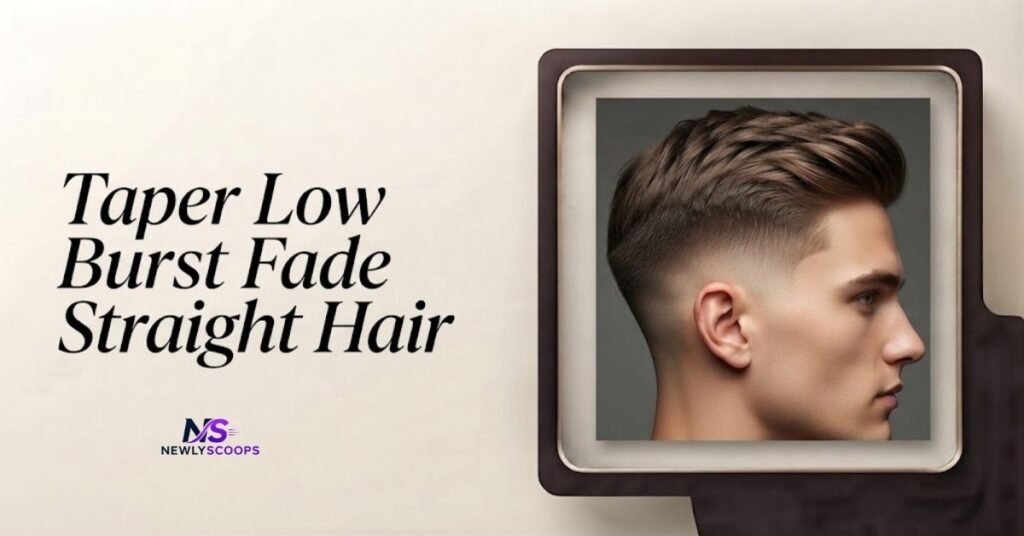
A Taper Low Burst Fade with Straight hair makes the Fade shape particularly visible. Because Straight hair tends to lie closer to the head, the Curved burst can provide a strong point of visual definition.
A Textured crop, Short top, Forward fringe, or Textured top can add movement to Straight hair. Texture powder can create grip and Volume if the Hair tends to fall flat.
The Barber should pay close attention to Fade blending because Straight hair can make uneven transitions easier to notice. A clean Fade placement and consistent Hair length help maintain a polished Side profile.
Clients with Straight hair can also request a softer Low taper if they prefer lower contrast. The final Hairstyle can then combine Clean sides with a more relaxed Textured finish.
Hair texture and haircut planning
Hair texture should influence Barbering decisions from the beginning. Straight hair can reveal Fade blending clearly, Wavy hair introduces Natural movement, Curly hair adds Volume, and Coily hair can create strong definition.
Textured hair often benefits from preserving Natural texture rather than aggressively reducing Hair length. The Barber should examine Curl pattern, Wave pattern, Natural movement, and Hair growth before selecting the final technique.
Straight hair
Straight hair works well with Textured crop, Fringe, Short top, and Scissor cut variations. A Matte clay or Texture powder can help create separation.
Wavy hair
Wavy hair can emphasize the rounded side shape naturally. A Low taper can preserve Hair on the sides while allowing Natural waves to flow over the transition.
Curly hair
Curly hair provides volume above the Burst fade. Long curls can create a strong contrast with the cleaner Hair around the Ear area.
Coily hair
Coily hair can produce a striking rounded silhouette. The Barber can maintain the Natural shape while refining the Nape, Temple, and Ear area.
Afro
An Afro paired with a Low taper can preserve significant Top volume. The Hair at the Crown should be considered when shaping the sides.
360 waves
360 waves require attention to Wave pattern and Hair maintenance. The Fade should complement the wave coverage rather than remove more Hair than necessary.
Face shape and proportions
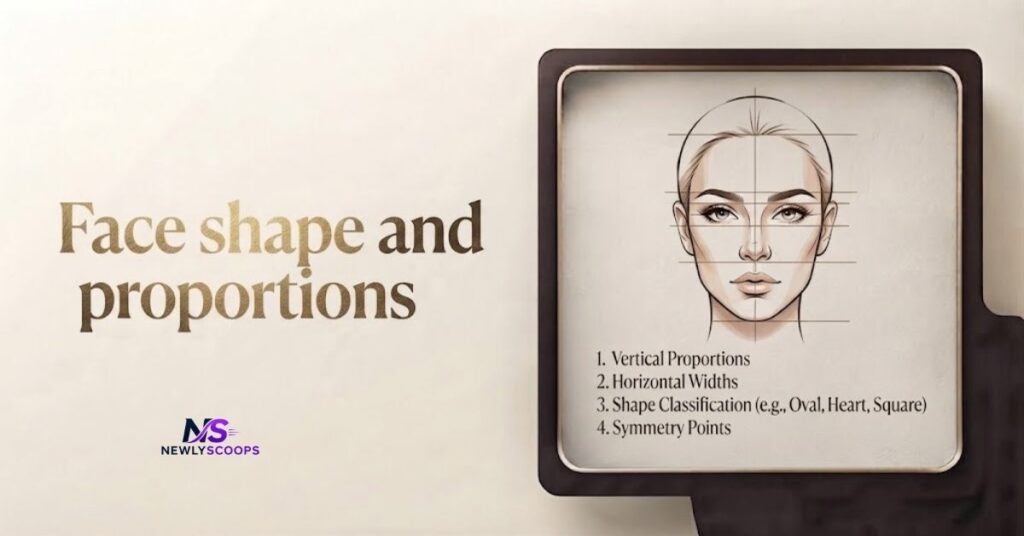
Face shape is useful for choosing Hair length and Top volume, but it should not be treated as a strict rule. Individual Facial proportions and natural Hair growth patterns can be more important than a generic category.
A Round face can benefit from Vertical lift, while a Square face may work with a rounded side detail. An Oval face offers considerable flexibility, and an Oblong face may benefit from controlled height.
A Heart-shaped face can be balanced by keeping enough Hair around the sides and adding appropriate Top volume. The Jawline and Chin can also influence whether the overall Hairstyle looks proportionate.
A Barber should therefore examine the entire head rather than selecting a Fade from Face shape alone.
Taper vs. low fade
Taper vs. low fade is essentially a comparison between a more gradual transition and a more pronounced Fade. A Taper can retain more Hair and create Low contrast, while a Low fade generally removes more Hair.
The distinction is particularly noticeable at the sideburns, Temple, neckline, and Nape. A Low taper on the sides and Low taper on the neckline can maintain a more natural appearance.
A client seeking maximum Skin exposure may prefer a Low fade or Skin fade. Someone wanting a Soft appearance may prefer a Taper.
Taper vs. burst fade
Taper vs. burst fade is slightly different because the terms describe different properties. A Taper describes gradual shortening, whereas a Burst fade describes a curved shape.
A Haircut can contain both. That is precisely why a Low taper burst fade can combine gradual tapering with a curved transition around the ear.
Low fade vs. burst fade
Low fade vs. burst fade compares placement with shape. A Low fade begins low, while a Burst fade curves around the ear.
They can also be combined. A Low burst fade places the curved Burst fade at a low position, creating a low-starting curved design.
Low taper vs. low fade
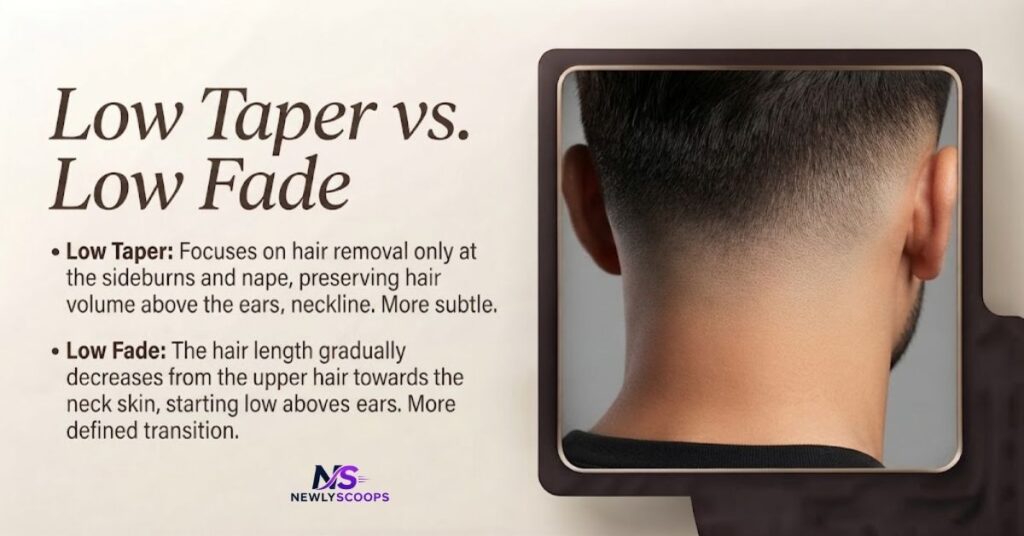
Low taper vs. low fade is mainly a question of contrast. A Low taper generally leaves more Hair around the sides and neckline, while a Low fade creates a stronger reduction in Hair length.
The correct choice depends on desired Skin exposure, Hair length, Hair growth, and Maintenance preferences.
Low taper vs. high taper
Low taper vs. high taper changes where the taper begins. A Low taper keeps the transition close to the Ear area and neckline, while a High taper moves the shortened section higher.
A Low taper creates a softer appearance and retains more Hair on the sides. A High taper creates stronger contrast and can visually increase the amount of exposed side area.
Low taper drop fade
A Low taper drop fade differs from a Burst fade because the transition follows the shape of the head downward behind the ear. A Burst fade instead creates a curved path around the Ear area.
Both can work with longer Hair on top, but their Side profile and back shape are different.
Mid taper
A Mid taper starts higher than a Low taper while remaining more moderate than a High taper. It can provide additional contrast without moving all the way toward a High taper.
A Mid taper can be paired with Curly hair, Wavy hair, Straight hair, or Textured hair, depending on the desired Hairstyle.
High taper
A High taper places the shortened transition higher on the sides. It creates more visible contrast and less Hair on the sides than a Low taper.
Clients should discuss Fade height carefully because a High taper changes the overall Facial balance and Side shape.
Mid burst
A Mid burst moves the curved Fade placement higher around the Ear area. It can create more Vertical lift and Strong contrast than a Low burst.
For a Round face, some people use a Mid burst to increase the visual height of the haircut. The top Hair length still plays an important role.
High burst
A High burst places the Burst fade higher and creates more Skin exposure. It is more visually prominent than a Low taper burst fade.
The Haircut can still include Curly top, Textured top, Mullet, or Mohawk elements, but the higher Fade changes the proportions.
Straight fade
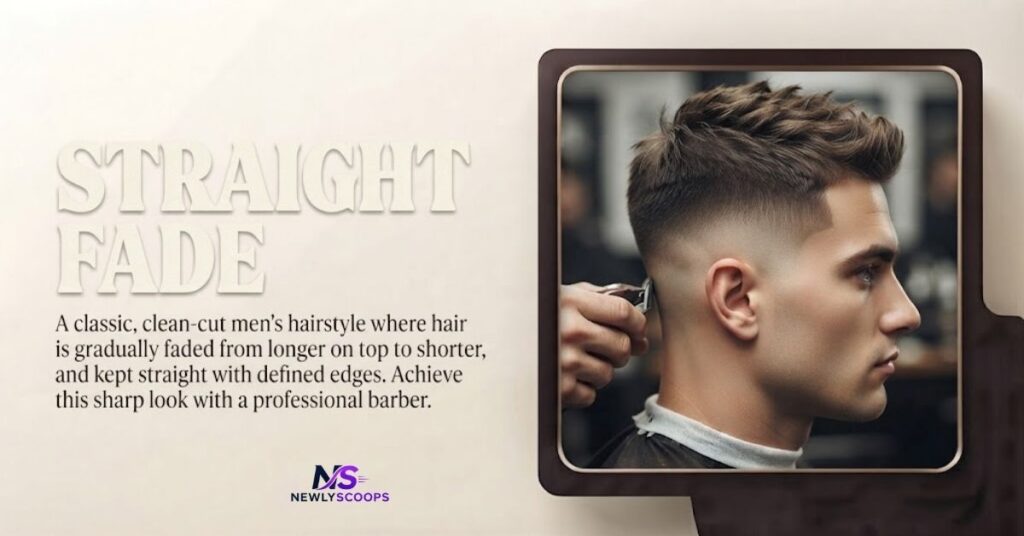
A Straight fade follows a more conventional path rather than curving around the ear. It can be appropriate when the desired Haircut relies on a flatter side shape.
Compared with a Curved fade, a Straight fade provides less of the rounded Ear-area detail associated with a Burst fade haircut.
Curved fade
A Curved fade follows the rounded structure around the Ear area. A Curved burst can create a half-circle shape, while the surrounding Hair length determines how visible the curve remains.
The success of a Curved fade depends on careful Fade blending, appropriate Fade placement, and preserving enough Hair around the Ear area.
Barbering technique
Good Barbering is about controlling Hair length gradually rather than simply removing Hair. Tapering, Fading, Clipper-over-comb, Scissor cutting, and Fade blending all have different roles.
Tapering
Tapering creates a gradual reduction in Hair length. It is useful around the Temple, Hairline, Neckline, and Nape.
Fading
Fading creates a stronger transition between different Hair lengths. A Low fade, Mid fade, and High fade differ mainly by placement.
Clipper-over-comb
Clipper-over-comb can refine Hair on the sides and create a controlled transition without relying entirely on fixed clipper guards.
Scissor cutting
Scissor cutting is useful for the Hair on top, especially when the desired result includes Natural movement, Texture, or a customized Hair length.
Fade blending
Fade blending should eliminate obvious steps between Shorter hair and Longer hair. The finished result should appear gradual from multiple angles.
Nape taper
A Nape taper controls Hair at the nape while respecting natural Hair growth. It can help maintain a clean appearance without creating an artificial Hairline.
Styling products
Product choice should match Hair texture and desired finish.
- Matte clay: useful for Textured crop, Short top, and Messy finish styles.
- Texture powder: useful for Straight hair that needs grip and Volume.
- Lightweight curl products: useful for Curly hair and Natural curls.
- Wave products: useful for 360 waves and maintaining Wave pattern.
- Lightweight styling creams: useful when Natural movement is more important than sharp definition.
The objective is to support the Hairstyle rather than overload it. Excessive product can reduce Texture and make Natural texture appear heavy.
Hair maintenance and grow-out
Hair maintenance should be planned around Hair growth rather than a fixed calendar alone. A person whose Hair grows quickly around the Ear area may need a Touch-up sooner than someone with slower growth.
During the Grow-out period, the Curved burst generally becomes softer. This is not necessarily a problem if the client prefers a Lived-in finish.
A Low-maintenance haircut can still benefit from regular Hair upkeep. Keeping the neckline, sideburns, and Hair around the ears controlled can extend the clean appearance between full appointments.
Choosing the right fade height
Fade height changes the entire Side shape. A Low taper creates Low placement, a Mid fade increases contrast, and a High fade removes Hair farther up the side.
A Low taper is useful when the client wants Hair on the sides to remain visible. A Skin fade increases Skin exposure and produces stronger contrast.
The right Fade height should therefore be chosen with Hair length, Face shape, Facial proportions, and Styling preferences in mind.
Choosing between rounded and straight shapes
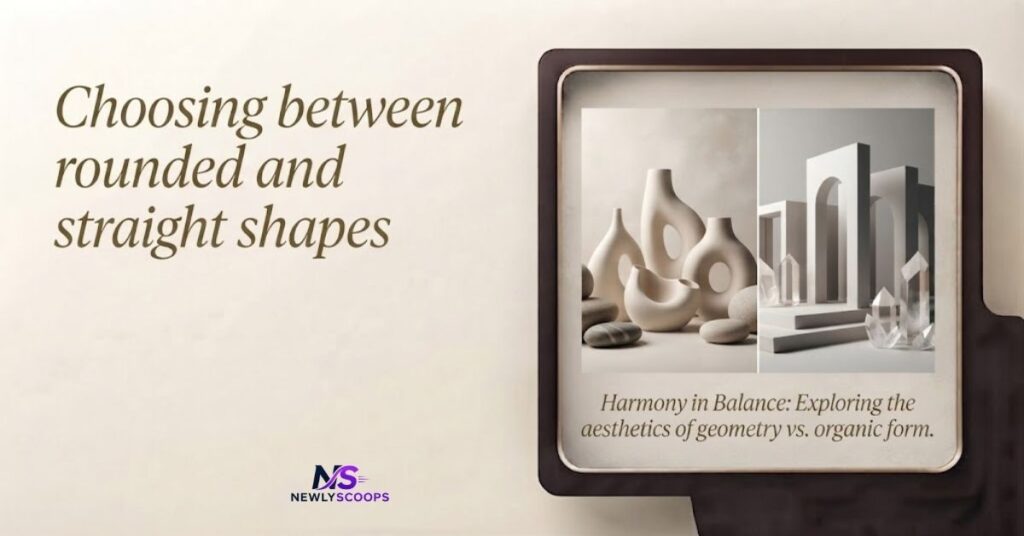
A Rounded shape works naturally with the Burst fade family. A Straight fade can look cleaner when the desired design relies on horizontal structure.
A Curved burst can complement Curly hair, Wavy hair, and other Textured hair because the curved transition follows the Natural shape more closely.
The decision should be based on the desired Side profile rather than the name of the haircut alone.
Final take
The Taper Low Burst Fade offers a practical combination of a low transition and a curved Ear-area design. Its flexible top makes it suitable for Straight hair, Wavy hair, Curly hair, Coily hair, Textured hair, and several modern Haircut styles.
The most important details are Fade placement, Hair length, Hair around the ears, Hair at the neckline, and the shape of the Burst fade. A clear Barber consultation and a useful reference photo can make those details easier to communicate.
In short
The Taper Low Burst Fade combines a Low taper with a Curved burst around the ear, creating a rounded Side profile while retaining flexibility on top.
Choose the top according to Hair texture and personal Styling preferences, explain the desired Fade height to your Barber, and maintain the Ear area, Hairline, and Nape during the Grow-out period.
Go deeper: low taper fade guides
For anyone planning a new Hairstyle, it helps to compare related Haircut styles rather than choosing only from a name.
Consider these directions:
- Low taper fade with curls for Natural curls and Curly top styles.
- Low taper fade with fringe for a softer Forward fringe.
- Low taper fade with textured crop for a Short top and Textured finish.
- Low taper fade mullet for a Long back and Short front.
- Low taper fade mohawk for stronger center Hair length.
- Low taper drop fade for a transition that drops toward the Nape.
- South of France for a classic Burst fade variation.
- Mid burst for greater Fade height.
- High burst for stronger contrast.
- Low fade for a more pronounced reduction in Hair length.
- Taper fade for a gradual transition.
- Skin fade for maximum Skin exposure.
FAQ’s about the taper low burst fade
Is a burst fade the same as a taper?
No. A Burst fade describes the curved shape around the Ear area, while a Taper describes gradual shortening around areas such as the sideburns and neckline. A Haircut can combine both techniques, which is why a Low taper burst fade is possible.
Is a burst fade haram?
There is no single universal answer that applies to every Islamic interpretation. Views about Fade haircut styles can differ among scholars and communities, particularly concerning how much Hair is removed from different parts of the head.
Is a low taper burst fade a thing?
Yes. A Low taper burst fade combines a Low taper with the curved Burst fade shape around the Ear area. The Low taper controls the lower sides and neckline, while the Burst fade creates the rounded transition.
What fade is most attractive?
Attractiveness is subjective and depends on personal preference, Face shape, Hair texture, Hair length, Styling habits, and the setting where the Hairstyle will be worn. A Low fade, Mid fade, High fade, Curved fade, or Burst fade can each produce different visual effects.
Do girls like a fade?
Preferences vary from person to person, so there is no universal answer. Some people prefer Clean sides and sharp definition, while others prefer longer Hair, Natural texture, or a softer appearance.
Conclusion
The Taper Low Burst Fade is a versatile Haircut because it combines a controlled Low taper with a rounded Burst fade around the ear. It can support Curly hair, Wavy hair, Straight hair, Coily hair, 360 waves, a Textured crop, Fringe, Mullet, or other top styles.
The key to a successful result is clear Barber communication: specify the Low placement, Curved burst, desired Hair length, Fade height, Skin exposure, and preferred finish. With suitable Hair maintenance and timely Touch-up appointments, the style can retain its clean appearance through the Grow-out period.
