


A Low Taper Fade With Design combines a controlled taper around the ears and neckline with a personalized detail. The result can range from a clean single line to a detailed geometric or freestyle pattern, depending on hair texture, workplace expectations, and personal style.
For men and boys, the appeal is versatility. A Low Taper Fade With Design can support a clean look for school or an office while still providing enough personality for casual wear, photography, sports, and social media. The right barber can adjust fade placement, hair length, and design depth so the haircut works with the natural hairline rather than fighting it.
The quick version
- A low taper fade keeps the fade level low around the ears, temple, and neckline.
- A Low Taper Fade With Design adds a shaved line, curve, pattern, or custom detail.
- The side, temple, back, neckline, and behind the ear are common design locations.
- A single line is a practical starting point for a subtle haircut.
- Curly, coily, wavy, straight, and thick hair can all support different haircut styles.
- A barber should consider hair density, head shape, hairline, and desired maintenance.
- Simple designs generally require less commitment than detailed hair art.
- A regular trim helps preserve a clean appearance as hair growth softens the fade blend.
- A design can be subtle enough for everyday wear or bold enough to become the main feature of the hairstyle.
What is a low taper fade with design?
A Low Taper Fade With Design uses a low taper as the foundation and adds a deliberate shaved detail. The taper begins close to the ears, sideburns, and lower neckline, while the hair gradually becomes longer higher on the head. This creates tapered sides without taking the fade as high as a high fade.
The main difference between a traditional taper haircut and a designed version is the additional hair design. A barber may use clippers, a trimmer, or a razor to create a single line, curved line, geometric pattern, freestyle pattern, or detailed design. The design can sit above the fade, near the temple, behind the ear, around the ears, or along the neckline.
A Low Taper Fade With Design can therefore be adapted to many haircut ideas. A student may choose a simple shaved line, while someone looking for stronger personal expression may choose multiple lines or a custom hair pattern.
What makes the fade “low”?
A low taper keeps the fade placement close to the natural hairline. The faded sides normally begin around the sideburns, ears, temple, and lower part of the back of the head instead of rising toward the upper sides.
This makes the transition relatively gradual. A low taper fade is different from a low fade, skin fade, high fade, and high taper because the amount of exposed scalp and the height of the transition can differ substantially.
The barber should check the natural hairline before beginning. A strong natural hairline can make a low taper look especially defined, while an uneven neckline may require careful blending.
Where can the design go?
A Low Taper Fade With Design does not have to be placed in one standard location. Common choices include:
- Side of the head
- Temple area
- Above the fade
- Behind the ear
- Around the ears
- Back of the head
- Lower neckline
- Near the hairline
- Sideburn area
- Lower sides
Design placement matters because the same haircut design can look very different depending on where it sits. A side design is easier to see, while a hidden design behind the ear can provide a quieter form of personal style.
Simple versus detailed designs
A simple design usually contains one visual element, such as a single line, thin line, soft curve, or short shaved detail. These haircut designs tend to be easier to maintain and can work well when a clean appearance is important.
A detailed design may include multiple lines, sharp angles, a geometric pattern, or a freestyle pattern. Detailed hair art can create a stronger statement haircut, but it also requires more precision and usually shows regrowth more quickly.
The best approach is to match design complexity with hair density, lifestyle, and commitment. A Low Taper Fade With Design should look intentional rather than crowded.
Why it’s popular in 2026
The Low Taper Fade With Design fits several current hairstyle trends because it combines a classic taper fade with personal expression. The base haircut remains controlled, while the design allows the wearer to introduce individuality without changing the entire silhouette.
Another reason for its popularity is versatility. Men can choose a clean haircut with a subtle design for an office or a more noticeable version for casual everyday wear. Boys can select a boys’ haircut that keeps the sides neat while adding a small detail.
A taper fade also works across many hair textures. Short hair can produce a crisp fade blend, while longer hair on top can create contrast. Curly hair, coily hair, straight hair, and wavy hair each produce different results.
The design itself can also reflect personality. A straight line can create a sharp look, a curved line can create a softer look, and a freestyle pattern can make the hairstyle more individual.
For athletes and sports players, a low-maintenance haircut can be useful because the top can remain manageable while the faded sides stay controlled. For students, a minimalist design may provide personal style without dominating the entire haircut.
Best low taper fade with design ideas for men and boys

The following haircut styles provide a wider range of options than simply choosing between a single line and a complicated pattern.
- Single line: A single line is one of the easiest haircut designs to request. It can run diagonally above the fade or sit near the temple.
- Double line: Multiple lines create additional visual interest while remaining relatively simple.
- Curved line: A soft curve can follow the natural shape of the head and create a less rigid appearance.
- Straight line: A straight line provides a crisp, structured detail.
- Diagonal slash: A short diagonal mark gives a modern haircut a small amount of movement.
- Temple detail: A temple design keeps the detail close to the front of the haircut.
- Behind-ear detail: This hidden design is suitable for someone who wants personal style without constant visibility.
- Neckline design: The lower neckline can become the location for a small pattern or shaved line.
- V neckline: A shaped neckline can make the back appear more structured.
- Geometric pattern: Triangles, angles, and clean shapes create a more deliberate hair pattern.
- Freestyle pattern: A barber can create a freehand cutting concept based on the shape of the head.
- Multiple lines: Parallel or intersecting lines provide more detail.
- Lightning pattern: Angled lines can create a dynamic effect.
- Minimalist design: A tiny shaved detail keeps the haircut understated.
- Detailed pattern: A more complex pattern can become the focal point of the style.
A Low Taper Fade With Design should be selected according to the person wearing it rather than copied without modification. Head shape, hair length, natural hairline, and workplace or school expectations all influence the final result.
For a men’s haircut, a barber may use stronger contrast and more intricate detailing. For a boys’ haircut, a smaller design can be easier to maintain and may fit better within school requirements.
Simple line designs for a clean look
A simple Low Taper Fade With Design is often the easiest starting point for someone who has never tried shaved hair art. The simplest option is a single line placed near the lower sides or temple. It creates contrast without overwhelming the haircut.
A thin line can also be placed just above the fade. This approach keeps the fade blend visible while giving the side a defined feature. A straight line produces a sharper look, whereas a soft curve can provide a more natural look.
A simple shaved line haircut is particularly practical for students and office workers because it can remain relatively discreet. The design may become less visible as hair growth fills the shaved section, which means it does not necessarily require constant redesign.
Other simple options include:
- One short temple line
- One diagonal line
- Two parallel thin lines
- A small curved line
- A short neckline mark
- A tiny design behind the ear
- A narrow line near the hairline
- A single side detail
The advantage of a simple design is commitment. If someone decides they do not want the design again, normal hair growth gradually removes the shaved detail. A complex pattern can take longer to disappear visually because its structure remains apparent during regrowth.
Back and neckline design ideas

The back of the head offers several possibilities for a Low Taper Fade With Design. Because the top hair can partially cover the back, the design can remain more discreet than a large side pattern.
A neckline design may use a V shape, a curved line, a small geometric mark, or a short shaved pattern. The barber needs to account for the natural hairline because the neckline determines how clean the haircut looks from behind.
A symmetrical back design can be effective when the barber has strong freehand cutting skills. Symmetry is important because even a small difference between the left and right sides can make a detailed design appear uneven.
Other back options include:
- V-shaped neckline
- Rounded neckline with a small shaved detail
- Straight neckline with a single line
- Geometric back design
- Centered pattern
- Two matching side marks
- Hidden design below the occipital area
- Small design behind the ear
A Low Taper Fade With Design on the back is especially useful for people who want their haircut to look conventional from the front while still having an interesting feature when viewed from behind.
Low Taper With Design on Back
A Low Taper With Design on Back can use the lower skull, neckline, or area immediately above the tapered neckline. The barber should first establish the fade level and natural hairline before adding the design, because the pattern should complement rather than compete with the taper.
A centered line, V-shaped detail, or small geometric pattern can work well when the goal is controlled visual balance. The back design should also account for how the hair naturally grows around the lower skull.
For people who prefer less visible hair art, a Low Taper With Design on Back provides a hidden-design effect. The detail can be noticeable in photographs or from behind without becoming the first thing people see during everyday interaction.
A barber can also use a trimmer to create a shallow line and then refine it carefully. This is useful when the client wants a subtle design rather than a deeply shaved pattern.
Low taper fade with design straight hair
Straight hair gives a Low Taper Fade With Design a particularly defined appearance because the hair texture does not obscure the edges of the design. A straight line can look very crisp, while a geometric pattern can remain easy to identify.
The barber should consider hair density before removing too much hair. Fine straight hair may expose more scalp when shaved deeply, so a minimalist design can produce a cleaner result than an extremely detailed pattern.
A straight-hair version also works well with longer hair on top. The contrast between longer hair and tapered sides creates separation, while the haircut design adds another visual layer.
For a Low taper fade with design straight hair combination, useful choices include a single line, double line, temple design, curved line, or restrained geometric pattern.
Low Taper With Design On Side

A Low Taper With Design On Side is one of the most visible versions because the side of the head naturally attracts attention. The design can sit above the faded sides, near the temple, or closer to the ear area.
A single line is a practical starting point. Someone wanting more individuality can move toward multiple lines, sharp angles, or a freestyle pattern. The barber should consider the side profile and natural hairline before deciding the exact placement.
A Low Taper With Design On Side can also be adjusted according to lifestyle. A small side detail can work for everyday wear, while a bold pattern may suit a more expressive personal style.
The side design should remain balanced with the top hairstyle. If the top already has considerable volume or texture, a simpler side design may create a cleaner overall appearance.
Low taper fade with design curly hair
Curly hair creates strong contrast between textured hair on top and the clean faded sides. A Low Taper Fade With Design can therefore appear particularly prominent when the curls are left longer above the fade.
A curly hairstyle can support a straight line, curved line, geometric design, or freestyle detail. The barber should work with the natural curl pattern instead of treating curly hair exactly like straight hair.
For dense curls, the design can usually be made more visible because the surrounding hair provides contrast. For looser curls, a smaller detail may create a more balanced appearance.
The barber should also consider shrinkage. Curly hair can appear considerably shorter when dry than when wet, so the haircut consultation should establish how the hair normally behaves.
A Low taper fade with design curly hair style can be especially effective when the top remains natural and textured while the lower sides are controlled.
Low taper fade with design black male
For a black male client, a Low Taper Fade With Design can be adapted to coily, curly, sponge-textured, or tightly textured hair. The barber should account for density, curl pattern, growth direction, and the natural hairline when creating the fade.
A sharp line can create contrast against dense textured hair. A geometric pattern, curved line, or freestyle design can also work when the barber has experience with the specific texture.
The phrase “black male” covers many different hair textures, so there is no single correct design. Hair density and curl behavior matter more than relying on a generic template.
For a black male looking for a personalized men’s haircut, useful options include a low taper, clean temple area, defined sideburns, textured top, and a custom shaved detail.
Read More: Mid Taper Fade Edgar: Styles, Barber Guide & Maintenance
Taper with Design on The Back
A Taper with Design on The Back can emphasize the neckline while keeping the upper hairstyle relatively traditional. The barber may create a small line, V-shaped detail, geometric mark, or custom pattern near the lower neckline.
The taper itself should remain gradual so that the design does not visually overwhelm the back. A clean tapered neckline can provide the foundation for the design and help maintain a neat appearance as the hair grows.
A Taper with Design on The Back is also useful when someone wants a statement haircut that is not constantly visible from the front. It can be revealed naturally when the wearer turns around or when the hair is styled differently.
For a personalized haircut, ask the barber to show the intended placement before the trimmer begins. This gives both sides an opportunity to adjust the design request.
Low taper fade with design for curly, wavy, and straight hair

Hair texture changes the visual relationship between the taper and design. The same Low Taper Fade With Design may look crisp on straight hair, highly contrasted on curly hair, and softer on wavy hair.
Curly hair
Curly hair naturally creates volume and movement. A low taper can clean the lower sides while leaving enough length on top for the curls to remain the main texture.
Wavy hair
Wavy hair can support a relaxed hairstyle with tapered sides. A curved line can complement the movement of the waves, while a straight line creates contrast.
Straight hair
Straight hair usually makes lines and geometric shapes easy to see. A sharp design can therefore become a prominent part of the haircut.
Coily or thick hair
Thick hair can provide excellent contrast for a shaved design. However, the barber needs consistent clipper work to create a smooth fade blend and avoid uneven transitions.
Fine hair
Fine hair benefits from restraint. A large shaved pattern can expose more scalp than intended, so a small line or subtle design may produce a better clean look.
Mixed textures
Some clients have different textures across the head. The temple may be finer, the top may be curly, and the neckline may grow differently. The barber should adjust techniques rather than forcing the same guard length everywhere.
Low taper fade with design for different face shapes
Face shape can influence the balance between the top hairstyle and the faded sides. A Low Taper Fade With Design can be customized without changing the basic concept.
- Round: Additional texture or controlled height on top can add visual length.
- Oval: Many taper haircut variations can work without major changes.
- Square: Clean lines and structured tapered sides can complement the strong facial outline.
- Long: Excessive height on top may make the face appear longer, so a moderate top length can be useful.
- Heart: Softer designs and balanced volume can help keep the overall hairstyle proportional.
Head shape also matters independently of face shape. A barber can use fade placement and hair length to control how the haircut follows the skull.
A good haircut consultation should therefore include the hairline, temple, ears, sideburns, neckline, and desired top length rather than focusing only on the reference photo.
How to ask your barber for a low taper fade with design

The easiest way to request a Low Taper Fade With Design is to describe the base cut first and the design second.
Start by saying that you want a low taper around the sideburns, ears, temple, and neckline. Then specify whether you want a low fade effect, a traditional taper, or a more visible skin fade. The terms can describe different amounts of exposed scalp, so clear wording matters.
Next, explain the design placement. Say “side,” “temple,” “back,” “neckline,” “behind the ear,” or “above the fade.” Then describe the design itself.
Useful barber instructions include:
- “Keep the taper low.”
- “Leave the top length as shown in this reference.”
- “Keep the natural hairline as much as possible.”
- “Place the shaved line above the fade.”
- “Use a thin straight line.”
- “Make the curve follow my head.”
- “Keep the neckline natural.”
- “Put the design behind the ear.”
- “Keep the design subtle.”
- “Make the pattern more detailed.”
- “Do not take the fade too high.”
- “Use the reference for placement, not as an exact template.”
A good barber consultation should also cover maintenance. Ask how often the fade needs a trim, how quickly the design will grow out, and whether a touch-up is recommended between full haircut appointments.
Maintenance and styling tips
A Low Taper Fade With Design requires regular haircut maintenance because both the fade and shaved design change as the hair grows. The fade blend gradually becomes less distinct, while a shaved line or detailed pattern becomes softer.
A regular trim can restore the faded sides and tapered neckline. Someone who wants the design to remain very crisp may need a barber visit sooner than someone who is comfortable with a natural grow-out.
Maintenance can be organized around three stages:
- Fresh stage: The design is sharp and the fade placement is clearly defined.
- Growth stage: The shaved detail begins to soften and the tapered sides become less contrasted.
- Refresh stage: A trim, touch-up, or new design restores definition.
Hair maintenance also depends on the top. Curly hair may need curl cream, while straight hair may benefit from a lightweight styling product. A matte product can create texture without making the hair appear overly shiny.
Avoid aggressive home trimming unless you have professional experience. Clippers and a trimmer can quickly alter the fade level, while a razor can make a shaved design deeper than intended.
A low-maintenance haircut does not mean zero maintenance. It means the style remains manageable without extensive daily work.
Common mistakes to avoid with haircut designs
The following mistakes can make a good haircut design look less polished:
- Choosing a pattern that is too complicated for the hair density.
- Asking for a fade without specifying the fade level.
- Forgetting to discuss the natural hairline.
- Placing a design where it conflicts with the head shape.
- Choosing a bold design for a strict workplace or school.
- Using an unsuitable reference photograph.
- Asking an inexperienced barber to create detailed hair art.
- Cutting too deeply into fine hair.
- Ignoring the neckline during maintenance.
- Trying to repair an uneven line at home.
- Keeping the design after the surrounding fade has grown out.
- Copying a design without adapting it to the individual head shape.
- Choosing a design that requires more commitment than the wearer wants.
- Neglecting sideburns and the area around the ears.
- Forgetting to explain whether the desired look is sharp or natural.
The best haircut designs are usually the ones that fit the wearer rather than simply looking impressive in a photograph. A custom design should work with the hair pattern, fade blend, natural hairline, and lifestyle.
Low taper fade design placement
Design placement is one of the most important decisions because it determines how visible the hair pattern will be. A side design is generally more noticeable, while a behind-the-ear design can remain private.
The temple area is useful for a small line because it naturally connects the front hairline with the faded sides. The lower sides offer more space for longer patterns, while the neckline can support a compact geometric design.
For a subtle design, consider:
- Behind the ear
- Lower neckline
- Near the hairline
- Small temple detail
- One thin side line
For a bolder design, consider:
- Multiple lines
- Sharp angles
- Large geometric pattern
- Freestyle pattern
- Detailed back design
A Low Taper Fade With Design can therefore be adjusted from nearly hidden to highly visible without changing the underlying taper haircut.
Low taper fade vs high fade
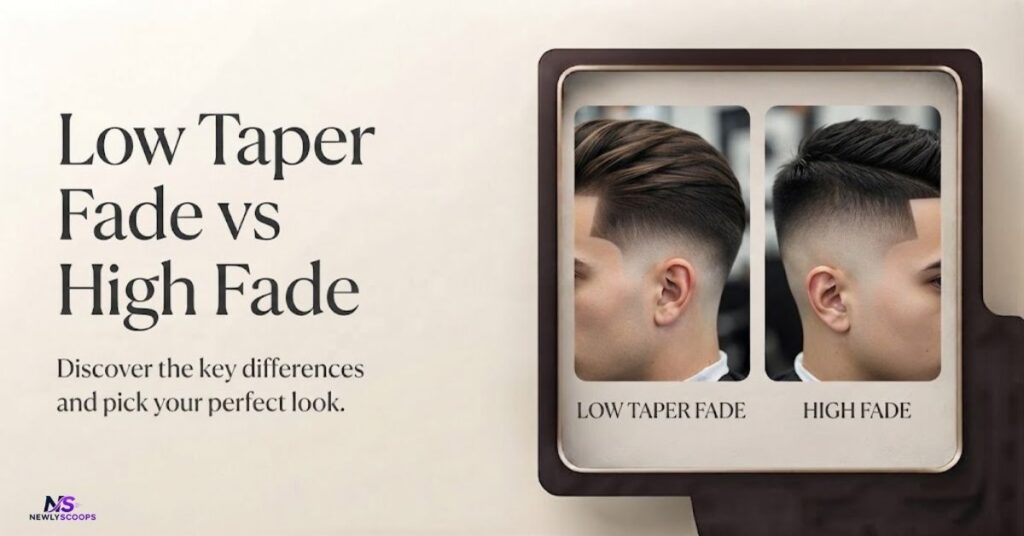
A low taper keeps the fade closer to the ears, temples, sideburns, and neckline. A high fade moves the transition substantially higher on the sides and can create a more dramatic contrast.
A Low Taper Fade With Design generally leaves more of the natural side structure visible. A high fade may provide a larger canvas for a design but also changes the overall silhouette more strongly.
Neither approach is universally suitable for every person. The choice depends on desired hair length, personal style, workplace expectations, and the amount of contrast the wearer wants.
Low taper fade vs skin fade
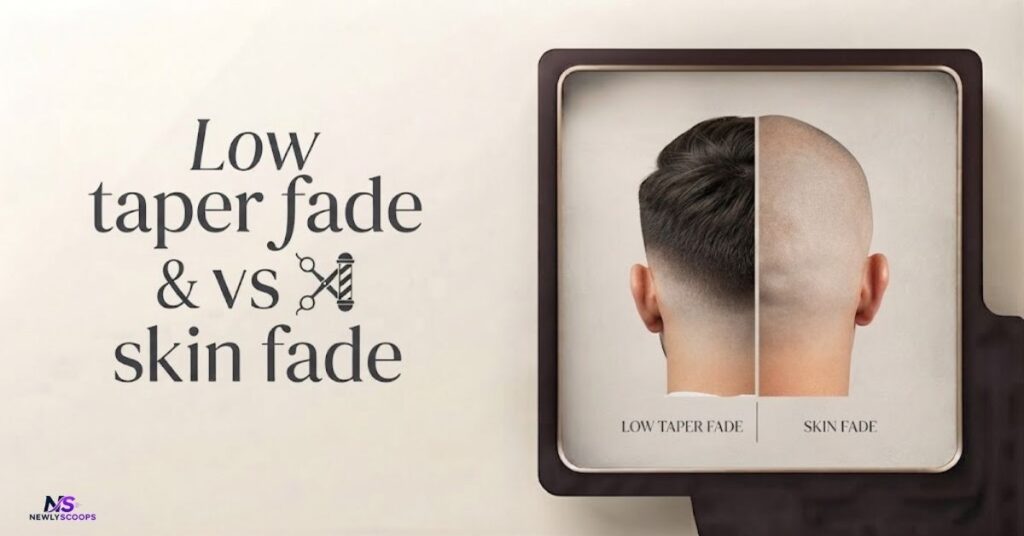
A skin fade typically reduces the hair to bare or nearly bare skin at its shortest point. A low taper can remain less exposed and may preserve a softer transition around the ears and neckline.
A Low Taper Fade With Design can therefore be useful for someone who wants a defined design without making the entire lower side extremely short.
A barber can combine a design with different fade levels, but the final appearance depends on hair density and natural growth.
Low taper fade vs taper fade

The phrase “taper fade” can describe several related haircut approaches, while a low taper specifies that the transition remains low. A taper haircut may also preserve more hair around the sides depending on the technique.
When requesting a Low Taper Fade With Design, it helps to identify the exact location of the fade. Saying “low around the ears and neckline” reduces ambiguity.
The distinction matters because two barbers may interpret a general taper request differently. A reference image plus precise barber wording can make the haircut consultation more effective.
How long does a design usually stay sharp?
Hair grows continuously, so a shaved design gradually loses definition. A single line may remain recognizable longer than an intricate pattern because the eye has fewer edges to follow.
Design longevity also depends on hair growth rate, hair density, design depth, and maintenance. Someone seeking a very crisp appearance may schedule regular touch-ups, while another person may allow the pattern to soften naturally.
A haircut schedule should therefore be based on appearance rather than a universal number of days. When the fade and hair design no longer look intentional, it may be time for a trim.
Which designs are easier to maintain?
Simple lines are usually easier to maintain than detailed designs because there are fewer edges and intersections to preserve. A single line, short curved line, or small temple mark can remain visually clean during regrowth.
Multiple lines, geometric shapes, and detailed freestyle patterns require more precision. As hair grows, small inconsistencies can become more noticeable.
For a low-maintenance style, choose a simple shaved line haircut with a controlled fade. For stronger personal expression, a detailed design can be worthwhile if regular barber visits are practical.
Low-maintenance versus detailed styles
A low-maintenance style is useful for people with busy schedules, frequent sports activity, or limited access to a barber. A subtle design can still provide individuality without requiring frequent design refreshes.
A detailed design is better suited to someone who enjoys grooming and sees the haircut as an important part of personal style. It may require more frequent touch-up appointments and more careful hair maintenance.
The decision ultimately comes down to commitment. A personalized haircut should fit the time and attention the wearer is willing to give it.
Low taper fade with design ideas for school and office
For school students and office workers, a subtle design is often easier to incorporate into a presentable haircut. A single line, short temple detail, or hidden design can add personality while keeping the overall style controlled.
School policies and workplace standards differ, so the wearer should check the applicable rules before choosing a bold design. A clean look can still have individuality without using an elaborate hair pattern.
For a classroom setting, a minimalist design can provide a low-risk haircut option. For an office, the same principle applies: controlled tapered sides, a natural hairline, and restrained hair art can create a neat appearance.
Low taper fade for sports and active lifestyles
Athletes and sports players often prefer practical haircut styles that remain manageable during training. A low taper keeps the sides controlled while allowing flexibility in the top hairstyle.
A Low Taper Fade With Design can work for sports when the design is simple and the hair length is easy to manage. Sweat and frequent washing may not directly remove a properly shaved design, but faster visible regrowth can affect how crisp the pattern appears.
A practical grooming routine should include regular trims, clean hair, and appropriate styling products for the hair texture.
Barber techniques for clean designs

Professional barber techniques can make a major difference in the final appearance. Clippers are commonly used to establish the taper and remove larger amounts of hair, while a trimmer can refine edges and create a shaved line.
A razor may be used when a very clean line is requested, although the barber should consider skin sensitivity and the desired finish. Freehand cutting can be useful for custom patterns that do not follow a standard template.
A detailed design also requires attention to symmetry, spacing, line depth, and relationship to the fade blend. The barber should periodically step back from the head rather than evaluating only one small section.
Barber shop consultation tips
A successful barber shop visit begins before the chair. Bring a clear reference, decide where the design should sit, and understand how much maintenance you are prepared to do.
During the barber consultation, explain:
- Desired fade level
- Top hair length
- Design placement
- Design complexity
- Natural or sharp finish
- Neckline preference
- Sideburn preference
- Maintenance expectations
- School or workplace restrictions
- Desired design longevity
The barber can then adapt the haircut to the actual head rather than blindly reproducing a photograph.
Choosing a design by personality
Personal style can guide design selection. Someone with a restrained style may prefer a single line, while someone interested in hair art may enjoy a freestyle pattern.
A sharp look can come from straight lines and geometric angles. A soft look can come from curves and natural placement. A statement haircut can use several visual elements, while an everyday hairstyle may benefit from a minimalist detail.
The important point is consistency. The haircut should make sense with the person’s clothing, grooming habits, hairstyle, and comfort level.
Haircut upkeep and design refresh
Haircut upkeep involves more than maintaining the design itself. The fade, neckline, sideburns, and top length should also remain balanced.
A design refresh can restore a faded line without requiring a complete redesign. A barber can also reshape the taper and clean around the ears at the same appointment.
Regular trim appointments are particularly useful when the wearer wants a consistently clean appearance. Those who prefer a natural grow-out can extend the haircut schedule and accept softer edges.
2026 haircut trends and personal expression
The broader 2026 haircut trends include continued interest in personalization, texture, and adaptable haircut styles. A Low Taper Fade With Design fits that direction because the base haircut can remain familiar while the design changes according to personal expression.
Current hairstyle trends do not require everyone to choose the same pattern. A clean taper can be personalized through a shaved line, hair pattern, neckline detail, or freestyle element.
Social media and Instagram can provide reference material, but photographs should be treated as inspiration rather than exact instructions. Hair density, head shape, hairline, and texture can make the same haircut appear different on another person.
Grooming videos and barber Instagram inspiration
Grooming videos can help explain how a barber creates a fade blend or design. Barber Instagram pages can also provide examples of line designs, geometric patterns, and freehand cutting.
When using social media for inspiration, look for several examples rather than choosing the first photograph. Compare designs on similar hair textures and face shapes.
The goal is to arrive at the barber shop with a clear idea of placement and complexity rather than demanding an identical copy.
Is a Low Taper Fade With Design low risk?
A simple Low Taper Fade With Design can be considered relatively low commitment because the shaved detail grows back as the hair grows. The underlying taper can also be maintained independently from the design.
A more detailed pattern requires greater commitment because its appearance depends on crisp edges and consistent upkeep. Someone uncertain about hair art can therefore begin with a small design.
A barber consultation can also identify whether the design should be placed somewhere less visible. Behind the ear and lower neckline are useful choices for a hidden design.
Conclusion
A Low Taper Fade With Design gives a classic taper haircut an additional layer of personal style. The combination can range from a subtle shaved line to a detailed geometric pattern, with placement around the side, temple, back, neckline, or behind the ear.
The strongest result comes from matching the fade level, hair length, design placement, and maintenance routine to the individual. A clear haircut request, experienced barber, appropriate design, and realistic upkeep plan can keep the finished style clean and personalized.
FAQ’s
Is a low taper fade attractive?
Attractiveness is subjective, so there is no universal answer. A low taper can create a clean appearance by keeping the faded sides controlled while preserving more natural structure around the head.
What goes with a low taper fade?
A low taper can be paired with curly hair, straight hair, waves, textured hair, longer hair on top, short hair, or a variety of modern hairstyle choices. A shaved line or small haircut design can add additional detail.
What is low taper fade gen z?
“Low taper fade Gen Z” generally refers to the popularity of the low taper among younger audiences and its frequent appearance in contemporary online hairstyle culture. Social media, grooming videos, and barber content have helped expose younger viewers to many variations.
What is a low taper cut?
A low taper cut gradually reduces hair around the lower sides, sideburns, ears, and neckline while leaving more length higher on the head. It is generally less aggressive than a high fade because the transition remains lower.
Is taper haircut haram?
Whether a particular taper haircut is considered permissible in Islam depends on the interpretation and guidance followed by the individual and their religious authority. Islamic scholars have differing discussions about hairstyles, including questions concerning qaza and shaving parts of the head.
