

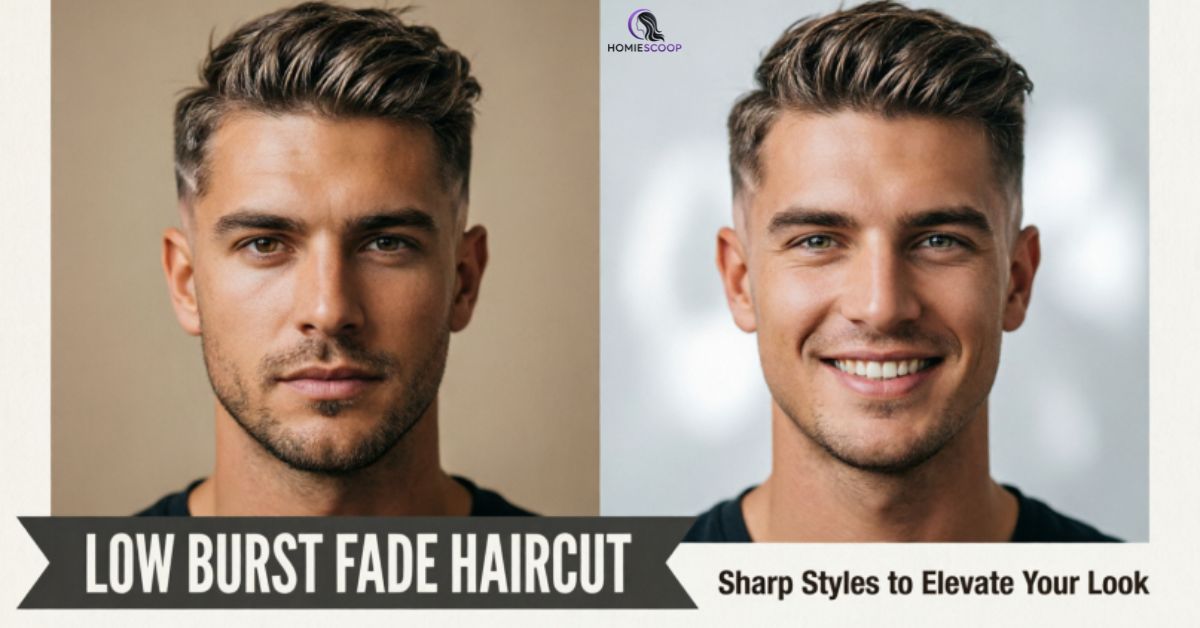
A Low Burst Fade Haircut is a clean, modern choice for men who want style without much effort. This Low Burst Fade Haircut keeps the fade line low around the ear and temples. The burst shape creates a smooth, curved fade. It blends the sides while leaving more length on top and back. This gives a balanced, sharp appearance.
The Low Burst Fade Haircut works with straight hair, wavy hair, curly hair, and coily hair. You can choose a classic low burst fade, textured top, or low burst fade with beard. It also pairs well with a mullet, mohawk, fringe, or slick back. A skilled barber can adjust the fade height, fade blend, and hair length to suit your face and hair texture. The Low Burst Fade Haircut can look casual, professional, or edgy. Regular trims keep the fade fresh.
What Is a Low Burst Fade Haircut?
A low burst fade haircut is a tapered style that curves around the ear in a rounded, burst-like pattern. Unlike a traditional fade that moves upward along the sides, this design concentrates the shortest hair around the ear before gradually blending into the surrounding length. The low placement leaves more hair around the temples, creating a softer transition between the sides and top.
Because the fade sits low, it works with a wide range of hair textures and top styles. You can pair it with curls, waves, straight hair, a textured crop, mullet, pompadour, fringe, or slick back. The haircut also blends naturally into facial hair, making it a versatile option when you want clean sides without sacrificing volume or character on top.
Read More: 40 Best Curly Burst Fade Haircut Ideas for Men in 2026
Low Burst Fade vs. High Burst Fade vs. Mid Burst Fade
All three styles use the same curved burst pattern around the ear. The main difference lies in how high the fade travels along the sides. A low burst fade stays closest to the ear and creates the softest contrast. A mid burst fade rises farther toward the temples, while a high burst fade reaches higher along the sides for a sharper, more dramatic appearance.
Your choice should depend on the amount of contrast and maintenance you want. Low fades generally offer a more forgiving grow-out and suit conservative or professional settings. Mid fades provide a balanced middle ground, while high fades make the haircut more noticeable. If you’re getting your first burst fade, the low version offers an easier starting point because you can raise the fade at your next appointment.
What’s Driving the Low Burst Fade Trend in 2026?
The low burst fade continues to attract attention in 2026 because it combines modern barbering with practical everyday styling. Its curved shape gives the haircut personality without creating the extreme contrast associated with some higher fades. That balance makes it easy to wear with casual outfits, professional clothing, or more expressive hairstyles.
Another reason for its popularity comes from its versatility. The same low fade can support curls, waves, thick straight hair, textured tops, mullets, and even longer hairstyles. It also grows out relatively smoothly when the blend starts low. For someone who wants a fashionable haircut without constant upkeep, that combination makes the low burst fade a compelling choice.
Who Should Get a Low Burst Fade Haircut?
A low burst fade suits men who want clean, controlled sides while keeping noticeable length or texture on top. It’s particularly useful for curly, coily, wavy, and thick hair because the low fade removes bulk around the ears without stripping away the natural character of the top. Straight hair can also look excellent when the blend receives precise barbering.
This haircut also makes sense if you prefer moderate maintenance rather than frequent high-fade touch-ups. It pairs naturally with beards and works across casual and professional settings. If you want a very dramatic contrast or an extremely high fade, however, another variation may suit you better. The best choice ultimately depends on your hair texture, preferred top style, and desired level of contrast.
Pros and Cons of a Low Burst Fade Haircut
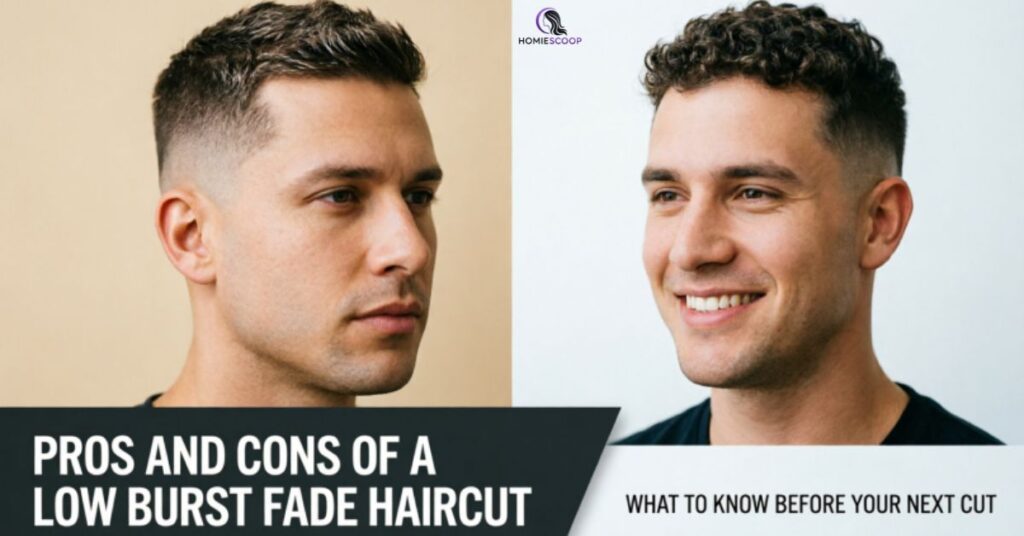
The biggest advantage is versatility. A low burst fade works with almost every major hair texture and can support everything from a short buzz cut to a long, textured top. Its low placement also creates a softer grow-out than higher burst fades. Add a beard, curls, fringe, or textured styling and you can customize the haircut without changing its basic structure.
However, the softer contrast can feel too conservative if you want an attention-grabbing haircut. The limited space around the ear also doesn’t provide much room for elaborate shaved designs. Maintenance still matters because the curved fade eventually loses definition as hair grows. Most importantly, communicate the placement clearly to your barber because asking for a generic burst fade could result in a fade that’s higher than you intended.
30 Low Burst Fade Haircut Ideas for Men
Looking for a fresh way to wear this versatile fade? These 30 low burst fade haircut ideas cover everything from classic and professional styles to curly, textured, edgy, and low-maintenance looks. Whether you prefer a buzz cut, mullet, pompadour, fringe, or beard blend, there’s a variation to match your hair type, face shape, styling routine, and personal taste.
1. Classic Low Burst Fade
The classic low burst fade keeps the sides clean while preserving enough length on top for easy styling. The fade curves neatly around the ear and blends gradually into the surrounding hair. This balanced approach suits straight, wavy, curly, and thick textures. For a polished everyday finish, pair it with a textured top and matte pomade.
2. Low Burst Fade Mullet
The low burst fade mullet combines tight sides with noticeable length through the back. Because the fade stays low around the ears, the longer rear section becomes the haircut’s main focal point without looking overly aggressive. This style works especially well with wavy, curly, or textured hair. Use texturizing spray to emphasize movement and separation.
3. Curly Low Burst Fade
A curly low burst fade gives natural curls a defined outline while keeping their volume intact on top. The curved fade follows the ear and creates a clean transition without taking too much weight from the sides. Curl cream or leave-in conditioner can enhance definition and control frizz. It’s an excellent choice for medium curls and tighter curl patterns.
4. Straight Hair Low Burst Fade
Straight hair makes every detail of a fade easier to see, which makes precise blending especially important. The low burst fade creates a clean curve around the ear while leaving enough length above for styling versatility. A comb-over, textured crop, or neat side part works well here. Finish with lightweight pomade or wax for controlled shine.
5. Textured Low Burst Fade
The textured low burst fade adds movement to the top while keeping the sides sharply controlled. Point-cutting and texturizing create separation without requiring significant length, making the style practical for busy mornings. Matte clay works particularly well because it provides flexible hold without creating excessive shine. This variation suits thick, straight, wavy, and lightly curly hair.
6. Short Low Burst Fade
The short low burst fade delivers a clean appearance with minimal styling effort. Hair stays relatively short across the top while the fade curves tightly around the ears and blends into the sides. It’s particularly useful during warmer months or for anyone who prefers simple grooming. Regular trims every two to three weeks keep the fade crisp.
7. Low Burst Fade with Beard
Pairing a low burst fade with a beard creates a seamless transition between the haircut and facial hair. The fade stays close to the ear before gradually connecting with the beard, eliminating harsh breaks between the two. This combination works with both medium and full beards. Keep the beard edges defined and use beard oil to maintain softness.
8. Messy Low Burst Fade
The messy low burst fade balances deliberately tousled texture with clean, controlled sides. Hair on top gets enough length to create loose movement while the low fade keeps the overall silhouette sharp. This contrast gives the haircut a relaxed personality without looking neglected. Apply a small amount of matte clay, then work it through with your fingers.
9. Low Burst Fade Mohawk
The low burst fade mohawk creates a stronger silhouette by preserving a strip of longer hair through the center of the head. The sides curve tightly around the ears, directing attention toward the central section. Curly and coily textures can make this style especially striking. Discuss the mohawk’s width with your barber before cutting for balanced proportions.
10. Low Burst Fade with Design
A low burst fade with design adds personality by incorporating a shaved line, pattern, or simple graphic into the faded area. Since the available space around the ear remains limited, simpler designs usually look cleaner and last longer. Ask your barber to position the design carefully within the fade. Refresh it regularly because intricate details soften quickly as hair grows.
11. Buzz Cut Low Burst Fade
The buzz cut low burst fade combines an even, short top with a clean fade around the ears. Usually cut with a #2 or #3 guard, the buzzed top keeps styling nearly effortless while the burst fade adds definition. This low-maintenance haircut suits busy routines and warmer weather. Regular trims help maintain its crisp shape and clean edges.
12. Low Burst Fade Pompadour

The low burst fade pompadour pairs substantial height on top with neatly tapered sides. Hair gets brushed upward and backward to create the signature pompadour shape while the low fade keeps the sides visually restrained. Blow-drying helps build volume before applying pomade. Choose a matte product for a modern finish or a higher-shine pomade for formal occasions.
13. Comb Over Low Burst Fade
A comb over low burst fade delivers a polished appearance without making the haircut feel overly formal. The hair gets directed across the top while a defined part can add extra structure. Meanwhile, the low burst fade curves naturally around the ear. Medium-hold pomade keeps the comb-over controlled while preserving enough movement for an effortless finish.
14. Wavy Hair Low Burst Fade
The wavy hair low burst fade lets your natural wave pattern remain the star while the sides stay clean and defined. The low fade follows the ear without removing excessive volume from the top. That makes this variation particularly easy to maintain. Apply moisturizing cream or lightweight styling product to enhance the waves while keeping them soft and flexible.
15. Asian Low Burst Fade
The Asian low burst fade works particularly well with thick, straight hair that naturally holds structure. The curved fade removes bulk around the ears while leaving enough density on top for texture, a side part, or a neat fringe. Because straight hair can reveal uneven blending, ask your barber to refine the transition carefully. Lightweight styling cream keeps the finish natural.
16. Low Burst Fade for Black Men
The low burst fade works exceptionally well with coily and tightly curled hair because it preserves substantial texture on top. The curved fade creates definition around the ears while maintaining the haircut’s natural volume and shape. You can pair it with curls, twists, a short afro, or a defined top. Moisturizing products help maintain softness and reduce dryness.
17. Slick Back Low Burst Fade
The slick back low burst fade creates a refined silhouette by combining smoothly brushed-back hair with controlled sides. The low fade keeps the area around the ears neat without competing with the longer top. This variation suits formal events as well as polished everyday looks. Apply pomade evenly, then comb the hair backward for consistent shape and hold.
18. Low Burst Fade Fringe
The low burst fade fringe keeps more length toward the front, allowing the hair to fall naturally across the forehead. The low fade provides structure around the ears without making the overall haircut appear too severe. You can wear the fringe straight, textured, or slightly swept aside. A lightweight styling cream helps maintain movement without creating stiffness.
19. Spiky Hair Low Burst Fade
The spiky hair low burst fade brings energetic texture to the top while keeping the sides controlled and clean. Short-to-medium hair works best because it provides enough length for distinct spikes without becoming difficult to manage. Use a strong-hold paste or clay to shape individual sections. Keep the spikes slightly irregular for a modern finish rather than overly rigid points.
20. Undercut Low Burst Fade
The undercut low burst fade combines a noticeable separation between the longer top and shorter sides with the curved shape of a burst fade. Unlike a traditional blended haircut, the undercut creates stronger contrast around the sides. This makes the style more dramatic while retaining the low placement. Longer hair on top works well with slick backs, textured styles, or fringes.
21. Long Hair Low Burst Fade
The long hair low burst fade keeps significant length on top and through the back while cleaning up the area around the ears. This creates a striking contrast without pushing the fade too high. Long hair works especially well when worn naturally, slicked back, or tied loosely. Use a lightweight styling product to control flyaways without weighing everything down.
22. Tapered Low Burst Fade
The tapered low burst fade offers a subtle transition for anyone who wants clean edges without an aggressive fade. Hair gradually shortens around the ears and neckline while more weight remains along the sides and top. This makes the style easy to wear in professional settings. A natural finish usually works best because the taper provides enough definition.
23. Low Burst Fade Faux Hawk
The low burst fade faux hawk creates height and direction through the center without requiring the dramatic commitment of a traditional mohawk. The sides curve tightly around the ears while the top gradually builds toward the middle. Textured or curly hair can make the shape especially dynamic. Apply matte clay or styling paste to lift and define the central section.
24. Low Burst Fade with Line Up
A low burst fade with line up combines the soft curve of the fade with sharply defined edges around the forehead and temples. This contrast gives the haircut a crisp, structured appearance without raising the fade itself. It works particularly well with short, curly, and coily hair. Keep the lineup precise with regular touch-ups as new growth appears.
25. Skin Low Burst Fade
The skin low burst fade takes the classic curved shape down to the skin around the ears for maximum contrast and definition. The fade then gradually blends upward into the longer hair, creating a clean yet balanced silhouette. This version looks especially sharp with textured, curly, or coily tops. Expect to refresh it more often to preserve the skin-level finish.
26. Low Burst Fade with Curls

The low burst fade with curls keeps natural texture prominent while removing excess bulk around the ears. The curved fade creates a clean frame that makes the curls on top appear fuller and more defined. This style works across loose and tight curl patterns. Apply curl cream or leave-in conditioner to maintain moisture, definition, and a soft natural finish.
27. Low Burst Fade Crop
The low burst fade crop pairs a short, textured top with a neat curved fade around the ears. Its compact shape makes styling quick while still providing enough texture for visual interest. A slightly forward fringe can add extra character to the haircut. Use matte clay or texture powder to create separation without making the hair appear greasy.
28. Low Burst Fade with Twists
The low burst fade with twists combines defined protective styling on top with closely tapered sides. The low placement preserves more hair around the temples while keeping the area surrounding the ears clean. Short twists, two-strand twists, or mini twists can all complement the shape. Keep the scalp and hair moisturized to support a healthy, well-maintained finish.
29. Low Burst Fade Caesar
The low burst fade Caesar features a short, forward-styled top with a compact fringe across the forehead. Its low fade keeps the sides tidy while the cropped top creates a structured, masculine silhouette. This haircut requires little daily styling, making it practical for busy routines. A small amount of matte paste can add texture without disrupting the clean shape.
30. Low Burst Fade with Hard Part
The low burst fade with hard part adds a sharply shaved part to an otherwise smooth and gradual haircut. The defined line creates a strong visual break while the burst fade keeps the area around the ear balanced. This variation works especially well with comb-overs and textured tops. Ask your barber to position the part according to your natural growth pattern.
Best Face Shapes for a Low Burst Fade Haircut
A low burst fade works well with oval, square, round, diamond, and heart-shaped faces because its low placement keeps the sides controlled without creating excessive width or height. Oval faces have the most styling flexibility, while round faces can benefit from added volume on top. Square faces pair naturally with the haircut’s sharp structure, whereas diamond and heart shapes often look balanced with moderate texture and fringe.
Oval Face Shape
An oval face shape offers plenty of flexibility because its proportions naturally look balanced. A low burst fade works particularly well when you keep moderate length and texture on top. Try a textured crop, pompadour, comb-over, or slick back to add personality. Avoid taking excessive height from the top if you want to preserve the face’s naturally proportionate appearance.
Round Face Shape
A round face shape benefits from hairstyles that create extra height and sharper definition. A low burst fade keeps the sides controlled without making the face appear wider. Pair it with a textured top, pompadour, faux hawk, or spiky style to draw the eye upward. Keeping the sides neat also creates a cleaner, more structured overall silhouette.
Square Face Shape
A square face shape already has strong angles, so the low burst fade can enhance that naturally masculine structure. Keep the fade clean around the ears while adding texture or moderate length on top. A textured crop, messy top, or slick back can work especially well. Avoid overly bulky sides because they can make the overall shape look too wide.
Diamond Face Shape
A diamond face shape typically features prominent cheekbones with a narrower forehead and jawline. The low burst fade helps maintain balance by keeping the sides controlled without removing too much hair around the temples. Textured tops, fringes, and wavy styles can soften sharper facial angles. Moderate volume works better than extreme height for maintaining natural proportions.
Heart Face Shape
A heart face shape has a wider forehead with a narrower chin, so the right haircut should create visual balance between the upper and lower face. A low burst fade works well when paired with moderate texture and some fullness around the jawline. A fringe, messy top, or wavy style can soften the forehead while keeping the overall silhouette balanced.
How to Ask Your Barber for a Low Burst Fade Haircut
Tell your barber that you want a low burst fade that curves tightly around the ear, rather than a mid or high burst fade. Then explain how much length you want on top and whether you prefer texture, curls, a fringe, a comb-over, or another finish. Showing a reference photo can also remove guesswork and help your barber match the shape you have in mind.
Oval Face Shape
An oval face shape offers plenty of flexibility because its proportions naturally look balanced. A low burst fade works particularly well when you keep moderate length and texture on top. Try a textured crop, pompadour, comb-over, or slick back to add personality. Avoid taking excessive height from the top if you want to preserve the face’s naturally proportionate appearance.
Round Face Shape
A round face shape benefits from hairstyles that create extra height and sharper definition. A low burst fade keeps the sides controlled without making the face appear wider. Pair it with a textured top, pompadour, faux hawk, or spiky style to draw the eye upward. Keeping the sides neat also creates a cleaner, more structured overall silhouette.
Square Face Shape
A square face shape already has strong angles, so the low burst fade can enhance that naturally masculine structure. Keep the fade clean around the ears while adding texture or moderate length on top. A textured crop, messy top, or slick back can work especially well. Avoid overly bulky sides because they can make the overall shape look too wide.
Diamond Face Shape
A diamond face shape typically features prominent cheekbones with a narrower forehead and jawline. The low burst fade helps maintain balance by keeping the sides controlled without removing too much hair around the temples. Textured tops, fringes, and wavy styles can soften sharper facial angles. Moderate volume works better than extreme height for maintaining natural proportions.
Heart Face Shape
A heart face shape has a wider forehead with a narrower chin, so the right haircut should create visual balance between the upper and lower face. A low burst fade works well when paired with moderate texture and some fullness around the jawline. A fringe, messy top, or wavy style can soften the forehead while keeping the overall silhouette balanced.
How to Style a Low Burst Fade Haircut

Start with clean, slightly damp hair and apply a small amount of product suited to your texture. Use matte clay for a textured finish, pomade for a slick style, or curl cream to define natural curls. Work the product through the top rather than the faded sides. Then shape the hair with your fingers, comb, or brush depending on your desired look.
Step 1: Start with Clean Hair
Start with clean, slightly damp hair so your styling products can spread evenly. Shampoo when needed and use conditioner if your hair feels dry or coarse. Gently towel-dry instead of rubbing aggressively, which can create frizz and disrupt natural texture. Your hair should feel fresh and manageable without being completely soaked before you begin styling.
Step 2: Apply the Right Product
Choose a styling product based on your hair type and the finish you want. Matte clay works well for textured or messy looks while pomade suits slick backs and comb-overs. For curls, use curl cream or leave-in conditioner instead. Start with a small amount, warm it between your palms, then distribute it evenly through your hair.
Step 3: Shape Your Hair
Once the product reaches your hair, shape the top according to your chosen style. Use your fingers for a relaxed, textured appearance or a comb for cleaner styles such as a side part. Work from the back toward the front rather than piling product onto one area. Keep the low burst fade itself clean and naturally defined.
Step 4: Add Volume if Needed
If your hairstyle needs extra height, reach for a blow dryer before the product fully sets. Direct warm air upward while lifting the roots with your fingers or a brush. For a pompadour or faux hawk, focus especially on the front and center. Keep the airflow controlled because excessive heat can leave hair dry and difficult to manage.
Step 5: Finish and Hold
Finish by checking the overall shape from the front, sides, and back. Add a tiny amount of product wherever you notice loose strands or weak texture. If your hair needs extra staying power, use a light mist of hairspray. Don’t overload the finish, though. A low burst fade looks best when the styling feels deliberate rather than overly rigid.
Step-by-Step Low Burst Fade Haircut Tutorial
A low burst fade requires careful clipper work because the signature curve around the ear needs to stay balanced and seamless. Start by sectioning the hair and establishing a low guideline around the ear. Gradually blend upward using different clipper guards, then refine the transition until no harsh lines remain. Next, trim and texture the top to match the desired style.
Step 1: Prepare the Hair
Begin by washing and drying the hair so your barber can clearly see its natural texture, density, and growth pattern. Remove any excess length that could interfere with the fade. Before the clippers come out, discuss the desired fade height, top length, and overall shape. A clear plan makes the cutting process smoother.
Step 2: Create the Burst Fade Shape
The defining feature of this haircut comes next: the curved shape around the ear. Your barber creates a low guideline that follows the ear rather than running straight across the sides. This rounded section forms the burst pattern. Keeping the guideline low preserves more hair around the temples and creates the haircut’s softer silhouette.
Step 3: Blend the Fade
Once the shape is established, the barber gradually removes visible lines between different hair lengths. Clippers, guards, and careful lever adjustments help create a smooth transition from the shortest section upward. The blend should look seamless from every angle. With straight hair especially, careful blending matters because uneven transitions tend to stand out immediately.
Step 4: Cut and Style the Top
After finishing the fade, attention shifts to the top. Your barber cuts the hair according to your chosen style, whether that’s a textured crop, curls, pompadour, fringe, or slick back. The top length should complement the fade rather than compete with it. Texture and layering can also create movement without removing too much overall volume.
Step 5: Clean the Edges
Sharp finishing details can transform a good haircut into a polished one. Your barber cleans around the ears, neckline, temples, and forehead while checking the symmetry of the entire cut. A line up can add extra definition if you prefer crisp edges. Keep the finish natural when you want a softer appearance that grows out gracefully.
Step 6: Finish with Styling Products
Finally, your barber applies a suitable styling product to demonstrate the finished shape. Matte clay works well for textured styles while pomade suits slick or polished looks. Curly hair may benefit from curl cream or leave-in conditioner. Pay attention to the technique used during styling because recreating those steps at home will help maintain the haircut’s intended shape.
H2: How to Maintain a Low Burst Fade Haircut
Wash Hair Properly
Keep your low burst fade looking fresh by washing your hair according to its texture and styling routine. Avoid excessive shampooing because it can strip away natural oils and leave the hair dry. Focus shampoo on the scalp while gently working the lather through the lengths. For curly or coily hair, less frequent washing can help preserve moisture and definition.
Use Conditioner
Conditioner helps maintain softness, manageability, and moisture after cleansing. Apply it mainly through the longer hair on top because the faded sides need far less product. Let the conditioner sit briefly before rinsing thoroughly. If your hair feels particularly dry, consider a leave-in conditioner to improve texture, reduce frizz, and make daily styling easier.
Apply Styling Products Carefully
Use styling products sparingly so your haircut keeps its natural movement and texture. Start with a small amount of pomade, clay, cream, or styling paste, then add more only when necessary. Work the product evenly through the top rather than concentrating it in one spot. Too much product can create buildup and make even a fresh fade look heavy.
Maintain Beard and Edges
Clean edges help a low burst fade look polished between barber visits. Keep the neckline, temples, and area around the ears tidy without constantly reshaping them yourself. If you wear a beard, trim it regularly so the transition from the haircut into your facial hair stays seamless. A small amount of beard oil can also keep coarse facial hair softer and healthier.
Low Burst Fade Haircut vs. Taper Fade
The key difference comes down to shape and placement. A low burst fade curves around the ear in a distinctive semicircular pattern, creating a focused fade while preserving more hair around the temples. A taper fade, by contrast, gradually shortens the hair around the sideburns and neckline without creating the same burst shape. If you want more definition around the ear, choose the low burst fade. For a subtle, traditional finish, a taper offers a cleaner and softer transition.
| Feature | Low Burst Fade | Taper Fade |
| Fade shape | Curves around the ear | Gradually follows the edges |
| Main focus | Ear and surrounding sides | Sideburns and neckline |
| Contrast | Moderate to high | Low to moderate |
| Style | Modern and distinctive | Classic and versatile |
| Best for | Statement hairstyles | Professional, understated looks |
| Maintenance | Moderate | Usually lower |
Best Hair Products for a Low Burst Fade Haircut
The right product keeps your low burst fade defined while letting the top retain its natural texture and movement.
Choose pomade for polished styles, clay for texture, sea salt spray for volume, and curl cream for curly or coily hair.
Pomade
Pomade works especially well when you want a polished low burst fade with controlled shape and definition. It suits styles such as slick backs, comb-overs, and pompadours. Choose a water-based formula for easier washing and a lighter feel. Start with a small amount, spread it between your palms, then work it evenly through slightly damp or dry hair.
Hair Clay
Hair clay gives a low burst fade a textured, natural-looking finish without excessive shine. It’s particularly useful for messy tops, textured crops, spiky styles, and casual hairstyles. Because clay usually provides strong control, begin with a small amount and build gradually. Warm it between your hands before applying it through the top for even distribution.
Sea Salt Spray
Sea salt spray adds texture, volume, and a slightly tousled finish to the hair. It works particularly well with wavy or straight hair when you want the top to look relaxed rather than heavily styled. Spray it lightly onto damp hair, then scrunch or shape the strands with your fingers. Blow-drying can create additional volume when needed.
Curl Cream
Curl cream helps define natural curls while keeping them soft, flexible, and moisturized. It’s an excellent choice for curly and coily low burst fade styles because the fade provides clean structure while the top retains its natural pattern. Apply a small amount to damp hair, distribute it evenly, then gently scrunch the curls instead of brushing them aggressively.
Hair Wax
Hair wax provides flexible control with enough hold for structured yet movable hairstyles. It works well for spiky tops, textured styles, fringes, and short low burst fades. Unlike heavier products, wax lets you reshape the hair throughout the day. Use a pea-sized amount first, then add more gradually until you achieve the desired definition and hold.
5 Mistakes to Avoid With a Low Burst Fade Haircut
A low burst fade looks sharp when the placement, blend, and top length work together. One common mistake involves asking for a generic “burst fade” without specifying that you want it low. That can leave the fade sitting higher than expected. Other errors include choosing the wrong top length, ignoring your natural hair texture, and skipping a clear discussion about the desired shape before the cut begins.
Maintenance mistakes can also undermine an otherwise excellent haircut. Waiting too long between trims may cause the fade to lose its curved definition, while excessive product can make the top look greasy or weighed down. Avoid over-washing textured hair as well because it can strip away moisture. Finally, don’t neglect the area around the ears, neckline, beard, and edges because these small details often determine whether the finished style looks polished or untidy.
FAQ’s
What Is a Low Burst Fade Haircut?
A low burst fade haircut curves around the ears while keeping the fade low. It leaves more length near the temples and creates a soft blend.
Is a Low Burst Fade Haircut Good for Curly Hair?
Yes, a low burst fade haircut works beautifully with curls. It cleans the sides while keeping natural volume and texture on top.
How Often Should You Trim a Low Burst Fade Haircut?
A low burst fade haircut usually needs trimming every three to four weeks. Regular visits keep the curved fade clean, sharp, and well blended.
Does a Low Burst Fade Haircut Suit a Beard?
Yes, a low burst fade haircut blends naturally into medium or full beards. The low placement creates a smooth connection between your haircut and facial hair.
How Do You Style a Low Burst Fade Haircut?
Start with clean, slightly damp hair and apply suitable styling product. Shape the top with your fingers, comb, or brush for your preferred finish.
Conclusion
A low burst fade haircut gives you a clean look without making your style feel too harsh. The curved fade sits around the ears and keeps more hair near the temples. That makes it easy to pair with curls, waves, straight hair, thick hair, or coily textures. You can also choose a buzz cut, mullet, fringe, pompadour, or textured top. A low burst fade haircut works well for casual days and professional settings. It also blends nicely with a beard.
Choosing the right version depends on your hair type, face shape, and styling routine. Keep the fade low if you want a softer finish and easier grow-out. Add texture if you want more movement. Use pomade for a neat style or clay for a matte finish. With regular trims and simple care, a low burst fade haircut can stay sharp, fresh, and easy to manage.
