

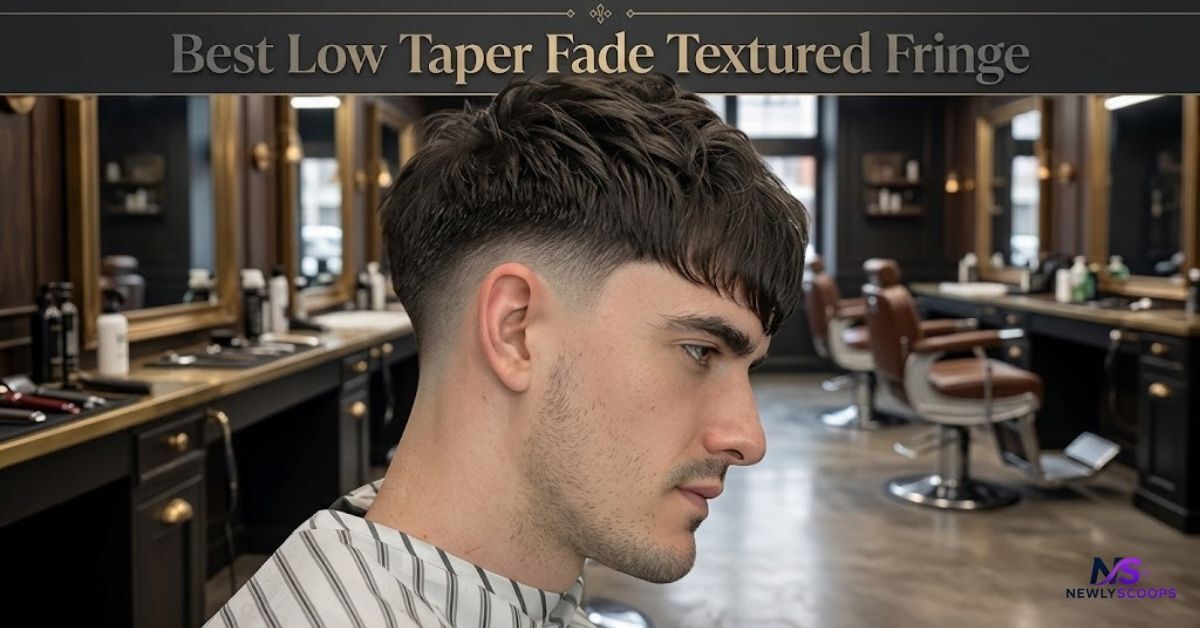
A great taper can stay understated or become the main feature of the haircut with the right carved detail. The best Low Taper Fade Designs for Men balance the fade, top length, face shape, hair texture, and placement of the pattern.
This guide covers back, side, freestyle, Edgar, subtle, short-hair, straight-hair, curly, wavy, and afro-textured options. It also explains what to ask your barber, how designs are created, which products work best, and how to keep the finished cut sharp.
What Is a Low Taper Fade Design and How Long Does It Last?
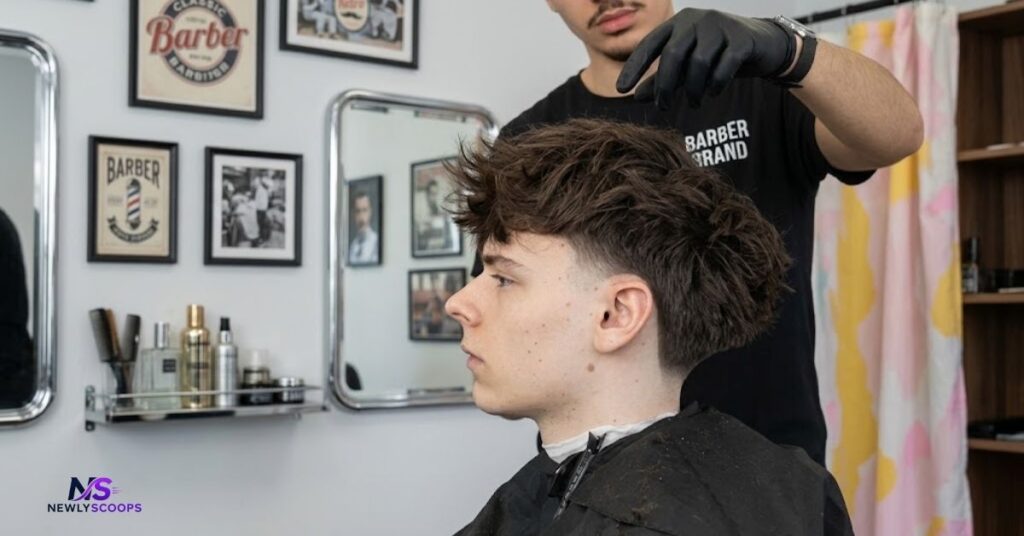
A low taper fade design combines a gradual taper around the ears and neckline with an etched detail placed inside the shorter area. The result can be understated, geometric, athletic, artistic, or completely custom.
The exact lifespan depends on growth rate, design complexity, fade length, and how crisp the original carving is. Simple lines generally remain recognizable longer than tiny detailed artwork, while a fresh taper usually looks its cleanest during the first week or two.
Key Points
- The nape provides an excellent canvas for visible back designs.
- Temple details are easier to hide when a workplace requires conservative grooming.
- Straight razor work creates extremely crisp edges, while a detailer trimmer offers more control for small patterns.
- Dark hair often provides strong visual contrast between the shaved design and surrounding hair.
- Curly, wavy, straight, and afro-textured hair can all support appropriate designs.
- A simple pattern usually requires less frequent touch-up work than detailed barber artistry.
- The fade should be blended before the design is etched.
- The top should complement rather than compete with the carved pattern.
A useful way to think about Low Taper Fade Designs for Men is as a balance of contrast and restraint. The taper provides the foundation, while the shaved detail adds personality.
What Is a Low Taper Fade Design?
A low taper fade haircut gradually reduces the hair around the temples, sideburns, ears, and neckline while preserving more length above the transition. A low taper fade design adds a carved line, shape, symbol, or artistic pattern to that foundation.
Unlike a completely shaved side, a low taper haircut leaves much of the head fuller. That makes it versatile for professional settings, school environments, casual styling, and creative looks.
The strongest taper fade designs for men usually follow the natural shape of the head. Lines can emphasize the temple, frame the nape, travel behind the ear, or wrap around the side. Good haircut designs for men should feel integrated into the fade rather than pasted onto it.
A barber may use clippers, clipper guards, a T-outliner, detailer trimmer, or straight razor. Techniques such as blending, clipper-over-comb, scissor-over-comb, etching, and freehand carving determine the final result.
For a modern men’s hairstyle, Low Taper Fade Designs for Men work especially well because the haircut can remain conservative while the design adds individuality. That makes a professional taper fade possible without sacrificing creativity.
Low Taper Fade vs. Skin Fade: Which Is Better for Designs?
Before choosing among low fade designs, decide how much contrast you want. A low taper fade leaves a soft transition and normally preserves some hair at the bottom. A skin fade takes the fade down to the scalp, creating stronger contrast.
| Feature | Low Taper Fade | Skin Fade |
| Fade position | Low around ears and nape | Can be placed higher |
| Finish | Soft and blended | Very close to skin |
| Design character | Controlled and versatile | High contrast |
| Workplace suitability | Usually easier | Depends on design |
| Maintenance | Moderate | Often more noticeable as it grows |
| Best use | Everyday styling | Dramatic designs |
A low taper fade haircut is often the better starting point for a first design because it gives you room to experiment without making the entire haircut feel extreme.
A taper fade with design can also be adapted easily. A subtle taper design can suit an office, while a bold taper design can work for a weekend, event, or streetwear haircut.
A low taper fade design does not have to be dramatic. A single line, small diamond, or short arc can create enough contrast to make the haircut feel custom.
When comparing taper fade designs for men, consider the visibility of the pattern from the front, side, and back. Also consider whether the design needs to remain school-friendly haircut or office-friendly haircut territory.
50 Best Low Taper Fade Designs for Men (2026 Gallery)
The following ideas cover classic lines, geometric shapes, symbols, freestyle barber design, Edgar combinations, subtle patterns, and hair-type-specific options. Each design can be adjusted for thickness, top length, face shape, and personal style.
Back Low Taper Fade Designs
Back placement is especially effective because the nape gives the barber a compact canvas. A back taper fade design can be visible without dominating the front of the haircut.
These options also work well when you want a creative detail that remains relatively discreet from a front-facing view.
1. Zigzag / Z-Pattern Back Design
A zigzag taper fade creates a sharp directional pattern across the nape. The Z-pattern haircut can be narrow and understated or wider and more dramatic.
It works particularly well with thick hair and dark hair because the carved negative space stands out against the surrounding blend.
Best For: Thick hair, dark hair, curly hair, afro-textured hair
Barber Tip: Ask for a clean zigzag with balanced angles and enough space between the pattern and neckline.
2. Single Line Back Design
A single line fade is one of the easiest designs to wear. One precise horizontal or slightly angled line can define the nape without overwhelming the haircut.
It is a strong first taper design because it is simple, recognizable, and relatively easy to refresh.
Best For: Straight hair, fine hair, professionals, first-time wearers
Barber Tip: Keep the line thin and centered unless the natural neckline suggests another position.
3. Double Line Back Design
A double line fade adds more visual rhythm than a single mark. Two parallel lines can be positioned close together or separated for a stronger contrast.
This taper fade with design looks particularly clean when the top remains textured but controlled.
Best For: Straight hair, wavy hair, medium-to-thick hair
Barber Tip: Ask for equal spacing and consistent thickness.
4. Triple Line Back Design
A triple line fade creates a more graphic appearance. Three lines can be straight, gently curved, or angled to follow the nape.
Because the pattern contains more detail, the surrounding fade should stay clean rather than overly busy.
Best For: Dark hair, curly hair, wavy hair, short tops
Barber Tip: Keep every line visually balanced.
5. Star / Starburst Back Design
A starburst fade radiates from a central point and immediately becomes the focal detail of the nape.
This is one of the more demanding shaved hair designs because the barber has to maintain symmetry while working on a curved surface.
Best For: Buzz cuts, short textured tops, dark hair
Barber Tip: Bring a reference image showing the desired number and direction of points.
6. Geometric Shape Back Design
A geometric fade design can combine triangles, diamonds, squares, or intersecting lines.
A diamond fade design is especially effective when the surrounding hair is short enough to create clear negative space.
Best For: Straight hair, thick hair, dark hair
Barber Tip: Ask the barber to map the shape before final etching.
7. Wave Pattern Back Design
A wave pattern fade uses curved lines rather than rigid geometry. It can visually echo natural curls or waves on top.
The flowing shape makes this one of the more organic fade haircut designs.
Best For: Wavy hair, curly hair, textured top
Barber Tip: Ask for smooth curves instead of tight corners.
8. Arrow Design Back
An arrow haircut design points downward or diagonally through the nape. Its directional shape gives the haircut a crisp, athletic character.
It can also be scaled down for a minimalist haircut design.
Best For: Straight hair, short hair, athletic styles
Barber Tip: Center the arrow carefully so the visual axis looks intentional.
9. Lightning Bolt Back Design
A lightning bolt fade introduces sharp angles and immediate contrast.
This edgy haircut design pairs naturally with a textured top, buzz cut, or modern men’s hairstyle.
Best For: Dark hair, thick hair, curly hair
Barber Tip: Keep the bolt clean and avoid excessive detail.
10. Cross / X Pattern Back Design
A cross haircut design or X-pattern fade can be centered at the nape or slightly offset.
The intersecting lines create strong visual balance and can remain readable even when the hair is fine.
Best For: Fine hair, straight hair, short hair
Barber Tip: Confirm that both arms have similar proportions.
11. Double Chevron Back Design
A chevron creates two directional lines that point toward the center. It gives the nape a sporty appearance without requiring a large graphic.
Best For: Short hair, thick hair, dark hair
Barber Tip: Keep the chevrons symmetrical.
12. Split-Line Nape Design
Two short lines can sit on either side of the center neckline. This creates separation without filling the entire nape.
Best For: Professional taper fade, subtle taper design
Barber Tip: Leave enough negative space between each mark.
13. Curved Nape Ribbon
A curved ribbon-style carving follows the neckline’s natural shape.
Best For: Wavy hair and softer styles
Barber Tip: Follow the head shape rather than forcing a perfectly straight line.
14. Diamond-and-Line Combination
A small diamond placed between two short lines creates a compact geometric composition.
Best For: Thick hair and dark hair
Barber Tip: Keep the central diamond small enough to remain crisp.
15. Center Slash Design
A single diagonal slash can make the back look sharper while requiring less maintenance than a complex illustration.
Best For: Buzz cut with taper design, textured crop, short hair
Barber Tip: Choose an angle that complements the neckline.
Key Point #1
The best back designs use the nape as a natural canvas. Low Taper Fade Designs for Men look strongest when the pattern follows the head’s contours and leaves enough negative space for each line to remain recognizable.
Side Low Taper Fade Designs
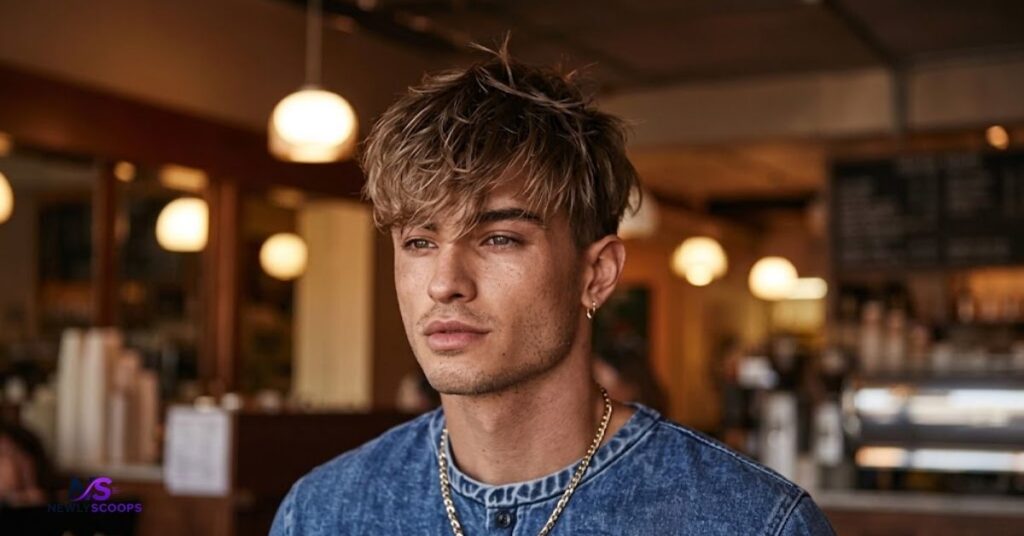
Side hair design placement is more visible than most back patterns. A temple fade design can be seen immediately from the front, making the side a useful location for a personal statement.
A side taper fade design can be tiny enough for an office or bold enough for streetwear. The key is matching the size of the pattern to the amount of hair available around the temple.
16. Single Temple Line Design
A single temple line haircut is a classic entry point. It adds a clean detail without changing the overall character of the haircut.
Best For: All hair types, school-friendly haircut, office-friendly haircut
Barber Tip: Follow the natural hairline.
17. Double Temple Line Design
Two parallel marks create more contrast than one. This is a simple way to turn a standard low taper fade into a customized look.
Best For: Straight hair, wavy hair, thick hair
Barber Tip: Keep the lines evenly spaced.
18. Curved Temple Line Design
A curved line can look softer than a straight razor mark. It works especially well when the hairline itself has a rounded contour.
Best For: Round and oval faces
Barber Tip: Match the curve to the temple rather than using a generic arc.
19. Lightning Bolt Side Design
A lightning bolt above the ear is a recognizable symbol that photographs well.
Best For: Trendy taper fade, edgy haircut design, casual styling
Barber Tip: Use a simple bolt if you want better design longevity.
20. Geometric Side Pattern
A small triangle, diamond, or square makes a polished side detail.
Best For: Professional taper fade, fine hair, straight hair
Barber Tip: Prioritize clean corners over excessive detail.
21. Side Design + Beard Fade Combo
A low taper with beard fade can connect the temple area to the facial hair. The barber can blend the sideburn area so the haircut and beard appear to belong to the same visual system.
Best For: Men with fuller facial hair
Barber Tip: Explain whether you want the beard transition soft or sharply defined.
22. Behind-Ear Design
A behind-ear hair design is intentionally discreet. The pattern appears when the head turns, creating a subtle surprise.
Best For: Professionals and conservative environments
Barber Tip: Keep the design compact.
23. Full-Side Wrap Design
A full-side wrap design travels from the temple toward the area behind the ear. It is more demanding because the pattern must remain coherent across changing head angles.
Best For: Creative men’s haircut, streetwear haircut, thick hair
Barber Tip: Show the barber front, side, and rear references.
24. Temple Initial
An initial haircut design places one letter near the temple. It turns a haircut into a personalized haircut without requiring a large illustration.
Best For: Dark hair, thick hair
Barber Tip: Choose a simple letterform.
25. Side Arrow
An arrow can be angled toward the back or upward toward the temple.
Best For: Short hair and athletic styles
Barber Tip: Avoid making the arrow too narrow.
26. Side Cross
A compact cross gives the side of the haircut a symbolic focal point.
Best For: Straight hair and dark hair
Barber Tip: Keep the surrounding fade smooth.
27. Side Wave
A short wave pattern fade above the ear adds movement without creating hard geometry.
Best For: Wavy hair, curly hair
Barber Tip: Let the curves follow the natural direction of the hair.
28. Side Spiral
A spiral hair design can be reduced to a few curved lines to prevent it from becoming visually crowded.
Best For: Creative styling and short hair
Barber Tip: Use a larger spiral rather than several tiny loops.
Freestyle Low Taper Fade Designs
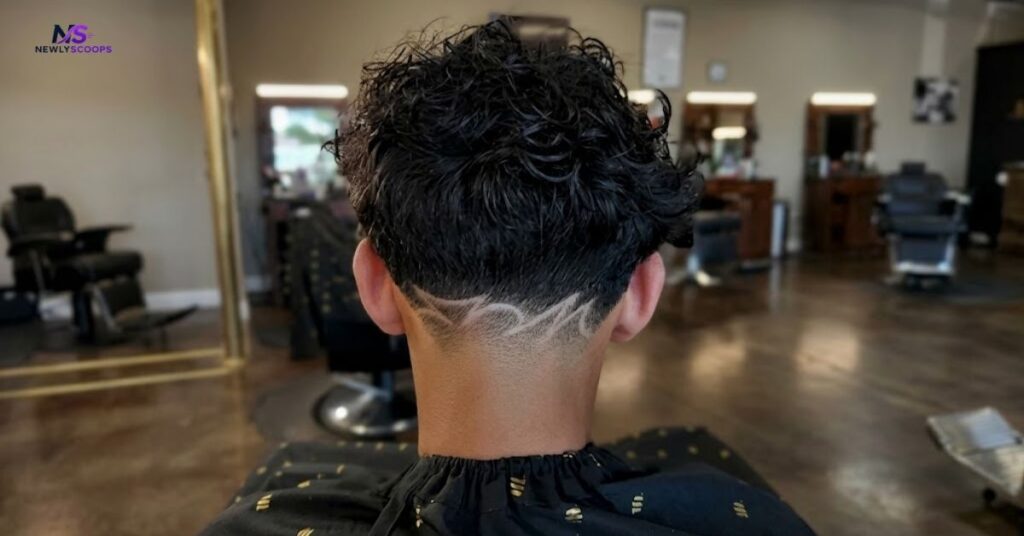
Freestyle fade design gives the barber greater creative freedom. Instead of requesting one exact symbol, you can specify a mood, direction, size, and placement.
The strongest freestyle work depends on barber artistry, clean blending, controlled etching, and good visual balance. A freestyle barber design should still respect the shape of the head.
29. Abstract Freehand Design
An abstract hair design uses curves, angles, and negative space without following a recognizable symbol.
Best For: Curly hair, afro-textured hair, dark hair
Barber Tip: Give the barber a general direction such as fluid, sharp, minimal, or geometric.
30. Swirl / Spiral Design
A swirl fade design can start from one focal point and curve outward.
Best For: Buzz cuts, afro texture, close-cropped hair
Barber Tip: Use broad curves to preserve clarity as the hair grows.
31. Wave / Fluid Curve Design
This design uses long curves that visually connect different parts of the fade.
Best For: Wavy hair, curly hair
Barber Tip: Keep the curves flowing rather than fragmented.
32. Nature-Inspired Freestyle Design
A nature-inspired hair design may use leaves, flames, branches, petals, or water-like curves.
Best For: Creative clients and dark hair
Barber Tip: Bring several references but allow the barber to simplify the artwork.
33. Pop Culture / Symbol Design
A symbol can reference sports, music, gaming, initials, or another personal interest.
Best For: Events and expressive styles
Barber Tip: Simplify complicated symbols so the outline survives regrowth.
34. Initial / Letter Design
A letter haircut design can be a single initial, monogram, or stylized character.
Best For: Personalized styles
Barber Tip: Choose a bold shape that can be etched cleanly.
35. Number Design
A number haircut design can represent a jersey number, birth year, lucky number, or meaningful date.
Best For: Sports fans and personalized cuts
Barber Tip: One or two digits are easier to maintain.
36. Portrait / Miniature Art Design
A portrait hair design is among the most technically demanding forms of barber artistry. It requires exceptional control and enough contrast to represent fine features.
Best For: Competitions, showcases, events
Barber Tip: Only choose a barber with a proven portfolio of miniature work.
37. Negative-Space Freestyle
This design uses the untouched portions of the fade as part of the artwork.
Best For: Dark hair and thick hair
Barber Tip: Ask the barber to prioritize visual balance.
38. Geometric Freestyle
A geometric fade design can combine arcs, triangles, diamonds, and straight lines.
Best For: Straight hair and short textured tops
Barber Tip: Map the composition before shaving.
39. Abstract Wave-and-Line Design
Long waves can intersect with one or two straight lines to create contrast.
Best For: Wavy hair and curly hair
Barber Tip: Keep the number of intersections limited.
40. Crown-to-Nape Freestyle
A narrow design can begin near the lower back of the head and lead toward the nape.
Best For: Thick hair and creative men’s haircut styles
Barber Tip: Maintain a clear focal point.
Edgar Cut with Low Taper Fade Designs
The Edgar combines a defined fringe with a tapered or faded foundation. Adding a design creates another layer of contrast, particularly when the top remains blunt and structured.
The result can be sharp, youthful, and highly customizable. An Edgar taper fade design works particularly well when the top and shaved pattern share a visual theme.
41. Edgar + Back Zigzag Design
An Edgar with zigzag combines a strong frontal shape with a directional back pattern.
Best For: Thick hair, dark hair, curly hair
Barber Tip: Ask for the zigzag to remain within the low taper zone.
42. Edgar + Double Line Side Design
Edgar with double lines gives the side a clean graphic element while the fringe remains dominant.
Best For: Straight hair, wavy hair, teenagers
Barber Tip: Keep the lines modest for a school-friendly haircut.
43. Edgar + Star Back Design
An Edgar with star design places a radial pattern beneath the structured top.
Best For: Dark hair and short sides
Barber Tip: Center the star carefully.
44. Edgar + Freestyle Temple Design
An Edgar taper fade design can also include freehand temple artwork.
Best For: Thick hair, curly hair, creative styles
Barber Tip: Keep the fringe simple so the temple remains the focal point.
45. Fluffy Edgar + Freestyle Back Design
A fluffy Edgar taper combines volume on top with a clean taper underneath. A freestyle back design adds contrast between soft texture and precise carving.
Best For: Thick hair and fluffy hair
Barber Tip: Use a blowout taper approach if extra volume is desired.
46. Edgar + Geometric Side Pattern
A small diamond or triangle can mirror the sharp shape of the Edgar fringe.
Best For: Straight hair, thick hair, dark hair
Barber Tip: Match the geometry to the angular character of the fringe.
47. Edgar with Back Design and Textured Top
An Edgar with back design can be softened by leaving the top textured instead of perfectly flat.
Best For: Thick hair and natural texture
Barber Tip: Ask for texture without losing the defined front edge.
48. Edgar with Star Design and Curly Top
Natural curls can make the contrast between the structured fringe and star pattern more pronounced.
Best For: Curly hair
Barber Tip: Preserve enough curl density above the taper.
Small & Subtle Low Taper Fade Designs
Minimal patterns are ideal when you want personality without committing to a large graphic. They are also useful for a first taper design because they are easy to understand and relatively simple to refresh.
These low fade designs can be adapted to school, work, formal events, or everyday grooming.
49. Micro Single Line
A very short line above the ear creates a minimalist haircut design with limited maintenance demands.
Best For: Fine hair, professionals, first-time wearers
Barber Tip: Keep it narrow and clean.
50. Subtle Nape Line
A short nape line gives the back of the haircut a defined finish without making the design obvious.
Best For: Office-friendly haircut and school-friendly haircut
Barber Tip: Ask for a thin line that does not extend too far across the neckline.
51. Small Diamond
A tiny diamond fade design provides geometry in a compact area.
Best For: Fine hair and straight hair
Barber Tip: Keep the corners crisp.
52. Short Arc Line
A short arc is softer than a straight line and can follow the natural head contour.
Best For: Oval and round faces
Barber Tip: Let the arc follow the hairline.
53. Dot Pattern
Small etched dots offer a distinctive but restrained detail.
Best For: Dark hair and short tops
Barber Tip: Space the dots evenly.
54. Mini Hard Part
A shaved part can function as both a styling feature and a design.
Best For: Comb-over low taper and slick back low taper
Barber Tip: Match the part to your preferred styling direction.
55. Subtle Behind-Ear Line
A hidden line behind the ear offers personality with minimal visibility.
Best For: Corporate environments
Barber Tip: Keep the line short.
56. Single Curved Temple Line
A curved temple line is one of the easiest designs to combine with a professional taper fade.
Best For: All hair types
Barber Tip: Use a gentle curve.
57. Tiny Initial
A tiny initial haircut design can be positioned near the sideburn or behind the ear.
Best For: Personalized haircut styles
Barber Tip: Use a simple letterform.
58. Short Chevron
A compact chevron adds direction without occupying much space.
Best For: Short hair and dark hair
Barber Tip: Keep both angles consistent.
Low Taper Fade Designs by Hair Type
Hair texture changes how every taper and design appears. Density, curl pattern, strand thickness, and natural movement all influence contrast.
The most useful rule is to choose a pattern that complements the texture rather than fighting it.
Low Taper Fade Designs for Curly Hair
Curly hair creates natural volume around the top, which can contrast strongly with clean etched patterns. A curly taper fade design can therefore look more dimensional than the same pattern on very fine hair.
Natural curls can be paired with a curly top with low taper, a blowout taper, or a shaped afro. Leave enough density above the fade to preserve the silhouette.
Best Designs:
- Back geometric pattern with curly top
- Starburst with shaped afro
- Freestyle curly blowout with back design
- Curly taper fade design with wave pattern
- Zigzag taper fade with natural curls
For styling, curl cream, leave-in conditioner, argan oil, and twist cream can help control texture. Avoid heavy product buildup near carved lines.
A low taper fade for curly hair should preserve the curl pattern while controlling the sides. A curly taper fade design works particularly well when the design is broad enough to remain visible through normal growth.
Low Taper Fade Designs for Straight Hair
Straight hair provides a clear surface for lines and geometric shapes. A straight hair fade design can therefore use thinner marks and smaller shapes than some heavily textured hair types.
A low taper fade for straight hair can support a comb-over, slick back, textured crop, or short top. A low taper fade haircut also creates a clean foundation for a single line fade or double line fade.
Best Designs:
- Double temple line with comb-over
- Single back line with slick back
- Small diamond with textured top
- Arrow haircut design with short top
- Geometric side pattern
Texture clay, water-based pomade, molding paste, and texture powder can provide shape without making the taper appear greasy.
Read More: Soccer Player Haircuts Every Guy Should Try in 2026
Low Taper Fade Designs for Wavy Hair
A wavy taper fade naturally combines movement on top with controlled sides. Curved patterns can echo the direction of natural waves.
A low taper fade for wavy hair works especially well with a textured top because the design and hair movement create a consistent visual language.
Best Designs:
- Wave pattern with natural waves
- Curved arc with textured top
- Double line with loose waves
- Swirl fade design
- Soft freestyle taper
Sea salt spray and texture powder can enhance movement. Avoid overloading the top with heavy styling products.
Low Taper Fade Designs for Afro-Textured Hair
Afro-textured hair offers strong density and excellent contrast for carved patterns. An afro taper fade can support both simple lines and larger geometric designs.
A low taper fade for afro-textured hair can be paired with a shaped afro, natural curls, blowout taper, or short textured top.
Best Designs:
- Bold geometric back with shaped afro
- Lightning bolt side with natural afro
- Starburst nape with blowout taper
- Cross haircut design
- Diamond fade design
- Abstract hair design
Twist cream, leave-in conditioner, and suitable moisturizing products can help preserve the top’s shape. The fade itself should remain clean and free of heavy buildup.
Short Hair Options
Low taper fade designs for men short hair can be especially effective because the design remains visible against a compact silhouette. Buzz cut with taper design is a practical option for someone who wants minimal styling.
A short top also allows the design to become the visual centerpiece. Simple shaved hair designs such as a single line, X-pattern fade, arrow, or lightning bolt are particularly easy to integrate.
Straight Hair Options
Straight hair makes precise lines easy to see. A low taper fade for straight hair can therefore support small geometric patterns without requiring excessive contrast.
A comb-over low taper can pair with a temple line, while a slick back low taper can work with a small nape detail.
Mid Taper Fade
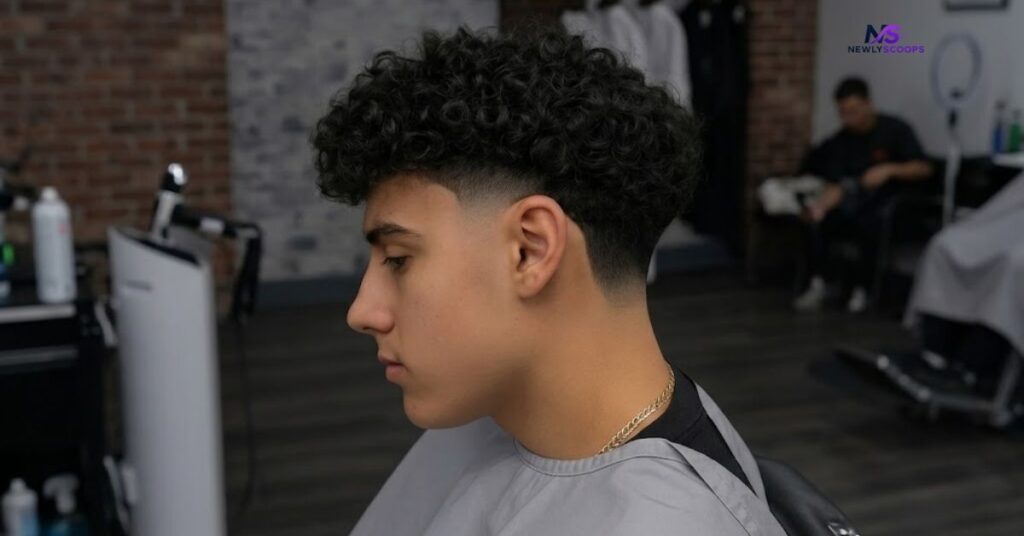
A mid taper fade begins higher than a traditional low taper and creates a stronger transition around the sides and back. It can make a design more visible because there is a larger short-haired canvas.
However, anyone seeking a conservative appearance may prefer the lower starting point of a classic low taper fade. A mid taper fade is better suited to a stronger, more noticeable haircut.
Low Taper With Design on back
A low taper with design on back is one of the easiest ways to add creativity without making the pattern visible from every angle.
The back taper fade design can be centered at the nape, placed slightly to one side, or spread horizontally. Zigzag, starburst, diamond, arrow, cross, and wave patterns all work well.
Low fade
A low fade generally creates a lower transition around the sides and back. Depending on the barber’s terminology, it may overlap visually with a low taper fade, but a taper specifically emphasizes the temples and neckline.
Low fade designs can range from a simple single line to a detailed freestyle barber design. If you want the shortest possible finish at the base, tell the barber whether you want visible skin or a soft taper.
High taper fade
A high taper fade moves the transition higher toward the temples and back of the head. It produces more contrast and can make a design easier to see.
For a bold taper fade with design, a higher transition can create additional canvas space. For a professional taper fade, however, the lower placement is generally easier to keep restrained.
How Are Low Taper Fade Designs Created? (Step-by-Step)
A skilled barber normally builds the haircut in stages so the design does not interfere with the blend.
Step 1 — Consultation
Discuss your hair texture, desired top length, fade height, neckline shape, and design placement.
Bring a reference photo and explain whether you want a subtle taper design, bold taper design, minimalist haircut design, or freestyle design.
Step 2 — Establish the Length
The barber uses clipper guards to remove excess bulk and establish the foundation.
The low taper fade should remain low around the ears and nape unless you specifically request another height.
Step 3 — Blend the Fade
Blending creates the transition from longer hair into shorter hair.
Clipper-over-comb, scissor-over-comb, and graduated clipper guards may all be used depending on the hair and desired finish.
Step 4 — Map the Design
For geometric fade design work, the barber may lightly map the pattern before cutting it permanently.
This stage is important for symmetry, especially with a starburst fade, diamond fade design, X-pattern fade, or zigzag taper fade.
Step 5 — Etch the Pattern
The barber uses a T-outliner or detailer trimmer for most design work. A straight razor may be used for extremely crisp finishing.
Freehand carving requires a steady hand and strong understanding of negative space.
Step 6 — Finish the Neckline
The neckline can be squared, rounded, or tapered.
A neckline hair design should be considered together with the overall pattern. A squared neckline can create a stronger frame, while a tapered neckline gives a softer transition.
Step 7 — Style the Top
The barber finishes the textured top, natural curls, shaped afro, comb-over, slick back, Edgar, or other chosen style.
Step 8 — Inspect From Multiple Angles
The final haircut should be checked from the front, sides, and back.
This is especially important for full-side wrap design, back of head fade design, and freestyle work.
How to Ask Your Barber for a Low Taper Fade Design
Knowing what to ask your barber can make the difference between a good haircut and a disappointing one.
If you are unsure how to ask for a low taper fade, describe four things first: fade height, top style, design placement, and design complexity.
Step 1 — Bring 3 Reference Photos
Bring a reference photo from the front, side, and back.
Show barber multiple angles whenever possible. A single picture may not reveal the neckline shape or how the design wraps around the head.
Step 2 — Specify Fade Height
Use clear language such as:
“Keep the fade low around the ears and neckline. I want a blended fade rather than a high transition.”
Specify fade height instead of simply saying “make it low.”
Step 3 — Name the Design
Tell the barber whether you want a single line fade, double line fade, triple line fade, zigzag taper fade, starburst fade, lightning bolt fade, or freestyle fade design.
Step 4 — Explain Design Placement
Mention back, side, temple, behind-ear, or full-side placement.
Design placement is especially important because a temple fade design looks completely different from a back taper fade design.
Step 5 — Explain Size
Say whether you want the pattern subtle, medium, bold, or fully artistic.
A first taper design is usually easier to manage when the design remains relatively small.
Step 6 — Confirm the Top
Mention whether you want a textured top, Edgar, buzz cut, comb-over, slick back, natural curls, shaped afro, or another finish.
Example Barber Script
“I want a low taper fade haircut with a low blend around the ears and nape. Keep the top textured and leave enough length for styling. Add a double line on the right temple and keep the neckline tapered. I want clean razor lines, but nothing too wide.”
What to Ask Your Barber
Useful questions include:
- What to ask your barber if you are unsure about fade height?
- Can this design work with my hair texture?
- How much will the design change as it grows?
- Should the neckline be squared or tapered?
- Would a single line or double line be easier to maintain?
- Can you show me the design placement before etching it?
A good barber script should also mention fade length, neckline shape, and whether you want symmetrical design work.
Best Styling Products for Low Taper Fade Designs
The top should be styled without filling the carved pattern with product.
For curly hair, curl cream and leave-in conditioner can preserve natural curls. Argan oil may add moisture and shine when used sparingly.
For straight hair, texture clay, water-based pomade, and molding paste can create structure. A comb-over low taper benefits from flexible hold, while a slick back low taper can use stronger control.
For wavy hair, sea salt spray and texture powder can create movement without flattening the top.
For afro-textured hair, twist cream and suitable moisturizing products can help maintain shape. Avoid excessive product near the fade zone.
The goal is to keep the design visually separated from the top. Heavy product buildup can reduce contrast and make a fresh design appear older.
How to Maintain a Low Taper Fade Design
Taper fade maintenance is mainly about preserving the transition and keeping the design edges visible.
Most carved designs gradually soften as the hair grows. The answer to how long does a taper design last depends on hair growth, pattern complexity, and how close the lines were shaved.
Maintenance Timeline
| Time | Appearance | Recommended Action |
| Days 1–7 | Very crisp | Normal styling |
| Days 7–10 | Slight edge softening | Optional light cleanup |
| Days 10–14 | Visible regrowth | Consider barber touch-up |
| Weeks 2–3 | Pattern less defined | Haircut touch-up |
| Weeks 3–4 | Design substantially grown out | Full redesign |
6 Maintenance Steps
- Schedule a taper fade touch-up when the edges begin losing definition.
- Use a T-outliner or detailer trimmer only if you know how to safely maintain the lines.
- Keep heavy styling products away from carved areas.
- Maintain scalp moisture without coating the design.
- Protect textured styles appropriately while sleeping.
- Book a barber appointment before the pattern becomes difficult to restore.
To keep a taper fade sharp, focus on the transition, neckline cleanup, and design edges rather than repeatedly cutting large areas.
Maintain shaved lines carefully. Excessive home trimming can widen the pattern or disturb symmetry.
Design fade maintenance is easier when the pattern is simple. Complex carved hair designs require more frequent attention because small changes are more noticeable.
Low Taper Fade Design Mistakes to Avoid
Even excellent fade haircut designs can lose their impact when the foundation or communication is poor.
1. Placing the Design Too High
A pattern should generally belong to the fade area. If it sits too far above the transition, it can look disconnected.
2. Adding Too Many Lines
More lines do not automatically create a better taper fade design. Excessive detail can reduce visual clarity.
3. Cutting the Design Before Blending
The fade should be established first. Etching before the blend is finished can distort contrast and placement.
4. Skipping the Reference Photo
A reference photo gives the barber a visual target.
5. Showing Only One Angle
Always show barber multiple angles when the pattern wraps around the head.
6. Using the Wrong Home Tool
Ordinary clippers are not ideal for precise design work. A T-outliner or detailer trimmer provides greater control.
7. Ignoring Hair Texture
A design that works on straight hair may need adjustment for thick curls or afro-textured hair.
8. Forgetting the Neckline
A clean neckline shape can make the entire cut look more polished.
9. Choosing Excessive Detail for a First Cut
Start with a simple pattern if you have never had shaved hair designs before.
10. Expecting Permanent Definition
Fade regrowth is unavoidable. Even excellent designs eventually soften.
11. Neglecting Symmetry
Symmetrical design work is especially important for geometric patterns, double lines, triple lines, and starbursts.
12. Choosing a Pattern That Conflicts With the Top
The design should complement the hairstyle rather than fight it.
13. Ignoring Workplace Requirements
A full-side wrap design may not be appropriate for every office. A small temple line or hidden nape detail is more adaptable.
14. Copying Someone Else’s Hair Exactly
Face shape, hair density, and texture can change how a style looks. A personalized haircut usually works better than an exact copy.
15. Forgetting Design Longevity
Ask your barber how long the design should remain recognizable before choosing an intricate pattern.
Frequently Asked Questions
Is a low taper fade attractive?
Yes. Its appeal comes from versatility: the sides and neckline look clean while the top can remain textured, curly, wavy, straight, or styled in another way.
Low Taper Fade Designs for Men can make the haircut more personal without requiring an aggressive overall fade. A subtle design is particularly easy to combine with a professional taper fade.
What is the most popular fade in 2026?
The low taper fade remains a highly versatile choice because it works across many hair textures and styling preferences.
Among taper fade styles, simple line details, Edgar combinations, textured tops, and freestyle patterns are especially adaptable. The best option depends on whether you prioritize subtlety, contrast, or barber artistry.
What is the best low taper fade haircut for men?
There is no single best cut for every man. A good choice depends on hair texture, density, face shape, lifestyle, and styling habits.
For a first design, a low taper fade haircut with a single line, small geometric shape, or simple back pattern is a practical starting point. Someone seeking more visual impact may prefer an Edgar taper fade design or freestyle taper.
What looks good with a low taper fade?
Many combinations work well, including a textured top with taper, curly top with low taper, fluffy Edgar taper, comb-over low taper, slick back low taper, buzz cut with taper design, and low taper with beard fade.
The strongest combinations usually create a clear relationship between the top texture and the side or nape pattern.
Is low fade or taper better?
A taper is generally more gradual and concentrated around the temples and neckline, while a low fade can create a broader faded area.
Choose a taper when you want flexibility and a more controlled silhouette. Choose a low fade when you want greater contrast across the sides. Both can support haircut designs for men, but the taper often provides a more understated foundation.
Conclusion
The best Low Taper Fade Designs for Men combine a clean foundation with a pattern that suits your hair texture, face shape, lifestyle, and personal taste. Back designs provide discreet creativity, side designs create immediate impact, and freestyle work allows genuine barber artistry.
Whether you choose a zigzag, diamond, starburst, single line, wave, initial, or custom freestyle pattern, focus on placement, contrast, symmetry, and maintenance. Bring clear references, explain your preferences, and choose a barber experienced in the type of design you want.
