

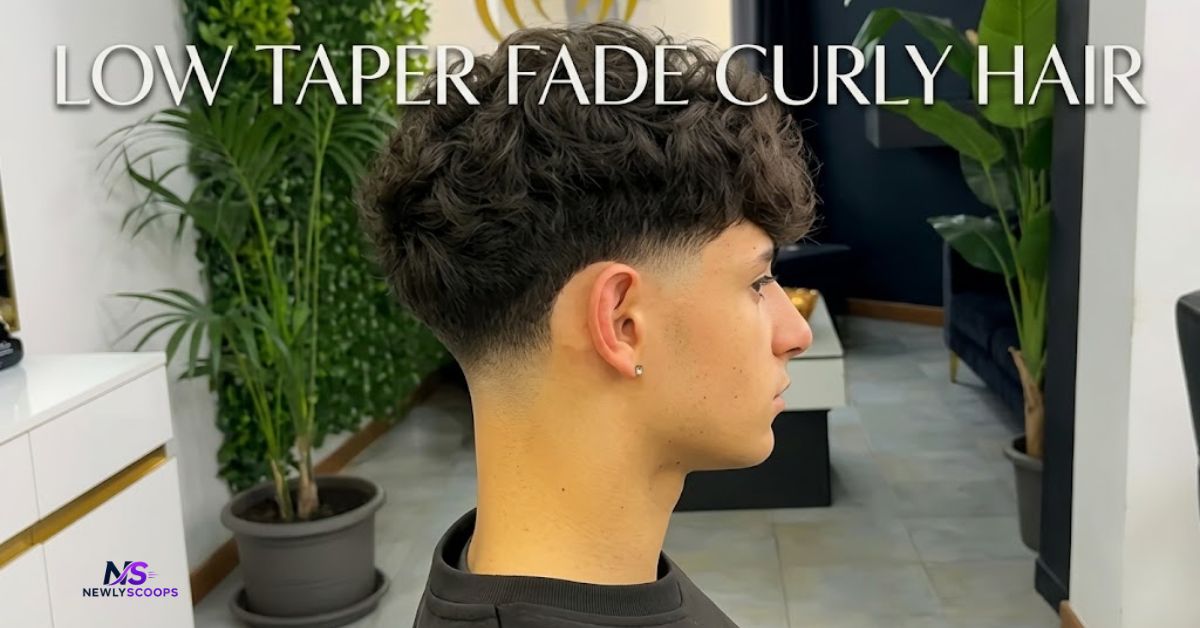
If you have curls, the right haircut should work with your texture rather than flattening or fighting it. Low Taper Fade Curly Hair keeps the sides controlled while leaving enough length above the ears and across the crown for natural movement. The result is a clean haircut that still shows personality.
A good taper haircut also gives you flexibility. You can wear short curls, medium curls, or long curls, depending on your preferred hair length. Whether your texture is wavy, curly, or coily, the right barber can shape the sides and neckline while preserving natural volume.
This guide covers 40 practical ideas, including styles for thick hair, loose curls, tight curls, and textured hair. You will also find barber instructions, styling advice, maintenance tips, and answers to common questions.
Trendy Low Taper Fade Curly Hair
A modern taper fade haircut is especially useful when you want your curly hair texture to remain the main feature. The fade does not need to climb high on the head. Keeping the transition low creates tapered sides, a tapered neckline, and a controlled outline without sacrificing the hair volume that gives curls their character.
The best curly hairstyles also depend on proportions. Thick curls can support a stronger contrast, while loose curls or wavy hair usually look better with a softer fade. Your natural hair, curly texture, and face shape should guide the final haircut rather than a trend alone.
Low Taper Fade Classic Curly
This classic version is one of the easiest curly haircuts to wear. The barber keeps the curly top at a useful length while gradually shortening the hair around the ears and neckline. The subtle fade creates a clean haircut without making the sides look excessively bare.
For a natural look, use a small amount of curl cream after washing. Scrunch the curls rather than brushing them aggressively. This approach preserves defined curls, keeps the hair shape balanced, and gives the finished style a neat hairstyle quality.
- Keep enough top length for the curl pattern to form naturally.
- Ask for a soft fade around the ears and neckline.
- Refresh the curls with water between wash days.
- Schedule hair trimming before the tapered sides become bulky.
Low Taper With Short Curly Top
A short curly top is ideal if you want a low-maintenance men’s haircut. The reduced top length makes the curly haircut easy to refresh while the low taper keeps the outline sharp. This option works particularly well for thick hair because removing some length can reduce excessive weight.
Use lightweight products when the curls are already dense. Heavy products can make thick curls look flat and reduce natural texture. A barber haircut with a short curly top is also practical for people who exercise frequently or prefer a quick morning routine.
- Keep the top short enough to dry quickly.
- Avoid excessive thinning if the curls need density.
- Use a light styling cream.
- Keep the tapered neckline clean.
Low Taper Fade Curly Hair Long Top
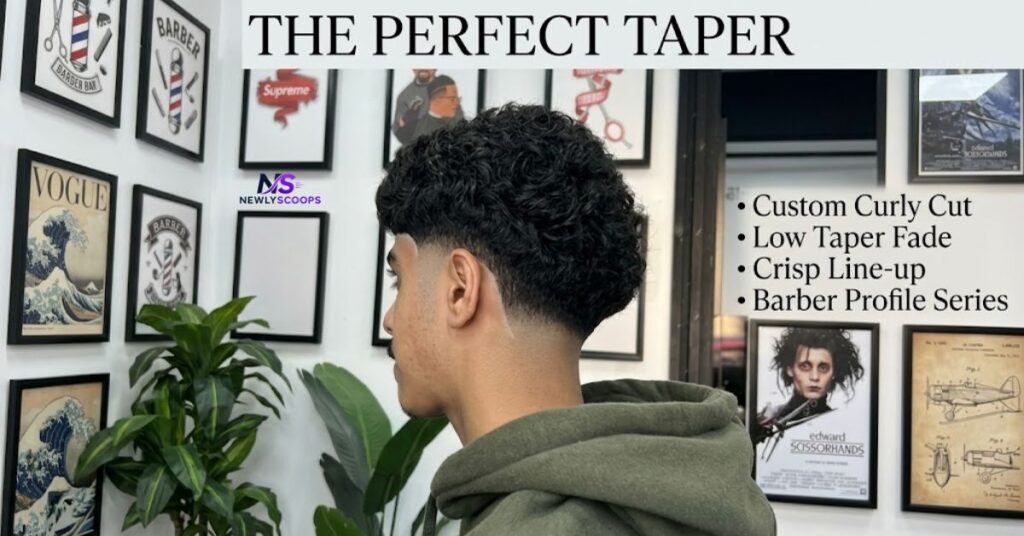
A longer curly top creates more visual contrast with the taper. The additional curl length gives you room to create a side sweep, loose fringe, textured crown, or controlled volume. This version is especially useful for men who want a stylish haircut without removing the identity of their curls.
Longer hair requires more attention to moisture and detangling. Use conditioner regularly and work through knots with your fingers or a wide-tooth comb. A longer top should be shaped around the existing curl pattern instead of cut into an overly rigid silhouette.
- Preserve the strongest curls around the crown.
- Ask your barber to shape rather than aggressively thin the top.
- Use conditioner consistently.
- Dry with low heat when using a diffuser.
Curly Fringe Low Taper
A curly fringe brings the hair toward the forehead and can soften the appearance of angular features. The low taper keeps the sides neat while the fringe provides a relaxed, modern look. It is particularly effective with medium curly hair and a defined curly texture.
Do not cut the fringe too short before accounting for shrinkage. Curly hair can appear considerably shorter after it dries. Ask your barber to judge the final curl length in relation to your natural pattern.
- Keep enough curl length at the front.
- Define the fringe with a lightweight cream.
- Avoid brushing dry curls.
- Refresh the fringe with damp hands.
Low Taper Curly Messy Hairstyle
The messy version is designed to look deliberately relaxed rather than perfectly arranged. The top retains natural volume, while the low fade creates enough structure to prevent the whole haircut from appearing untidy.
The secret is controlled texture. A small amount of curl cream can separate curls without making them stiff. Finger styling is usually better than combing because it maintains natural curls and avoids unnecessary frizz.
- Apply product to damp hair.
- Twist or scrunch selected curls.
- Let the top dry naturally.
- Keep the sides and neckline regularly trimmed.
Curly Low Taper with Beard
A beard can visually connect the tapered sides to the lower half of the face. The barber can blend the temple area carefully so the transition looks deliberate. This makes the overall men’s haircut appear more complete.
Keep the beard proportionate to the curl volume. Very large hair combined with a very short beard can create an uneven silhouette, while moderate facial hair can complement thick curls and a fuller curly top.
- Match the beard outline to the taper.
- Keep the temple transition soft.
- Moisturize both hair and beard.
- Maintain the neckline separately from the haircut.
Low Taper Fade Tight Curls
Tight curls and coily hair often create substantial natural density. A low taper removes some of the visual weight around the ears without taking away the personality of the top. This makes the cut useful for men who want definition without a dramatic hair fade.
The barber should work with the curl pattern instead of treating it like straight hair. A precise taper technique is important because uneven cutting can become more noticeable once the curls spring back into place.
- Explain your curl pattern before the cut.
- Keep the top sufficiently dense.
- Use moisturizing products.
- Avoid excessive manipulation while dry.
Low Taper with Loose Curls
Loose curls offer plenty of movement, making them ideal for a softer taper. The sides can remain slightly fuller while the top falls naturally. This gives the haircut a relaxed appearance without losing the clean outline of a low taper.
Loose curls often respond well to lightweight products. Too much cream or gel can stretch the curl pattern and reduce bounce. A small amount of styling product is usually enough to maintain definition.
- Apply product from mid-length to ends.
- Scrunch upward gently.
- Air-dry when possible.
- Ask for a subtle fade rather than an aggressive one.
Low Taper Curly Afro
An afro-shaped curly top creates strong natural volume. Pairing that volume with a low taper gives the sides a defined border while allowing the top to remain full. This is particularly effective for coily and dense natural hair.
The barber should preserve the intended shape of the afro. The taper is there to refine the perimeter, not to make the entire hairstyle narrow. Regular hydration is especially important for coily textures.
- Keep the top rounded or shaped to your preference.
- Ask for a low taper around the temples and neckline.
- Moisturize regularly.
- Use a pick gently when additional volume is needed.
Low Taper Fade with Line Up
A line up adds a crisp geometric edge around the forehead and temples. Combined with a taper fade haircut, it produces a sharp appearance while the curly top supplies contrast.
Because curls can shift around the hairline, the barber should work carefully rather than creating an excessively artificial edge. A natural-looking line can make the whole haircut appear cleaner.
- Discuss the desired hairline before cutting.
- Keep the line proportional to your forehead.
- Avoid overcutting the corners.
- Refresh the edge when the fade is maintained.
Low Taper Curly Blowout
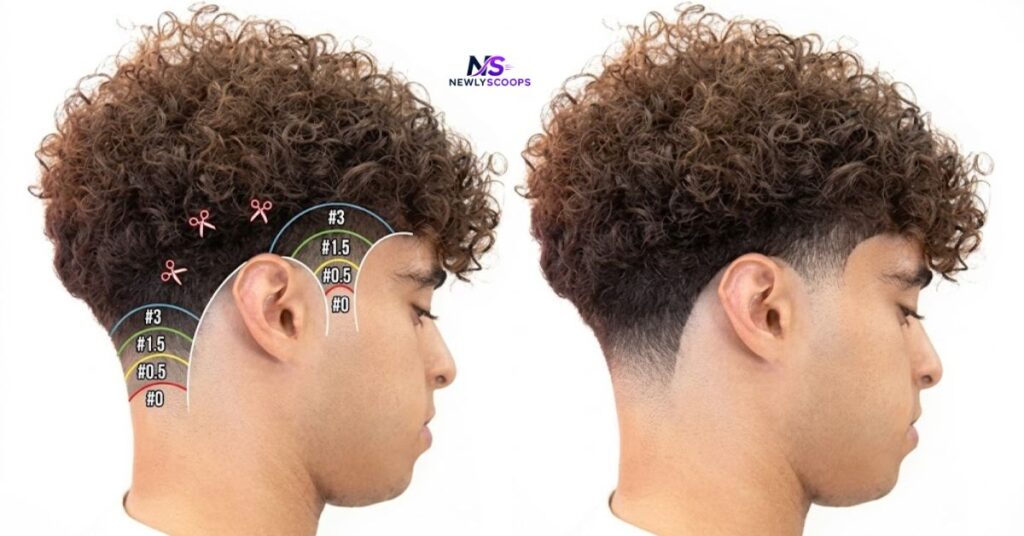
A curly blowout emphasizes hair volume by lifting the roots and allowing curls to expand. It is a strong choice for thick hair and medium-length curls when you want a more dramatic silhouette.
Use a diffuser rather than blasting the curls with high heat. Move the dryer gradually and avoid repeatedly disturbing the hair while it dries. The goal is natural volume rather than uncontrolled frizz.
- Start with damp curls.
- Apply a lightweight volumizing product.
- Diffuse from underneath.
- Stop drying once the curls are mostly set.
Low Taper Fade with Highlights
Highlights can add dimension to curly hair because individual curls catch light differently. The taper keeps the sides understated while the colored strands bring attention to the curly top.
Color-treated hair needs additional conditioning. Avoid aggressive washing and excessive heat. Your barber and stylist should also consider how the color affects the existing hair texture before combining chemical services with a fade technique.
- Choose highlights that complement your natural color.
- Use products intended for treated hair.
- Condition regularly.
- Keep the fade subtle so the color remains the main detail.
Low Taper with Curly Hard Part
A hard part introduces a deliberate separation between sections. On curly hair, it can create an interesting contrast between controlled geometry and natural texture. The taper underneath keeps the haircut polished.
This style works best when the part follows the natural direction of the hair. Your barber can advise whether a hard part is suitable for your density and hair shape.
- Decide where the part should sit.
- Keep the curls defined on both sides.
- Use minimal product around the part.
- Have the line refreshed during haircut maintenance.
Low Taper Curly Side-Swept
Sweeping curls toward one side creates an elegant alternative to wearing the hair forward. It can make medium curls look more structured without requiring a stiff finish.
A small amount of curl cream can provide enough control. Avoid dragging a fine-tooth comb through dry curls, as that can break up the curl clusters and create unnecessary frizz.
- Style the hair while damp.
- Direct curls gently toward one side.
- Let the natural curl pattern determine the final shape.
- Maintain the taper every few weeks.
Low Taper with Curly Mullet
A curly mullet keeps extra length toward the back while the taper cleans the sides. The result is more adventurous than a traditional taper haircut but still controlled around the ears.
The back should retain enough curl length to make the shape obvious. Ask your barber to balance the rear length with the volume on top so the hairstyle does not become visually heavy.
- Preserve length through the back.
- Keep the temple area neat.
- Define the rear curls.
- Trim the neckline without removing the mullet character.
Low Taper Thick Curly Hair
Thick curls can make an ordinary haircut look bulky around the sides. A low taper is useful because it reduces some of that width without flattening the top. The result is a balanced hair shape with controlled density.
Interior weight should be removed cautiously. Over-thinning can create uneven curls or make the top appear sparse after washing. A skilled barber will usually prioritize shape before aggressively removing density.
- Explain where your hair feels too heavy.
- Preserve curl clusters.
- Use richer conditioner if the hair is dry.
- Keep the taper low to retain volume.
Low Taper Thin Curly Hair
Fine curls need a different strategy. Taking the sides extremely short can exaggerate the difference between the sides and a delicate top. A softer taper may therefore create a more balanced result.
Lightweight mousse or curl lotion can add body without weighing the strands down. Avoid applying heavy products at the roots if your goal is increased hair volume.
- Keep some side density.
- Choose lightweight styling products.
- Use root-friendly volumizing techniques.
- Avoid aggressive thinning.
Low Taper Fade Curly Teen
Teenagers often need a haircut that works for school, sports, social events, and low-effort mornings. A low taper with a manageable curly top can meet those needs without requiring a complicated routine.
The best version depends on the individual curl pattern. Younger clients with natural texture should not feel pressured to straighten their hair to make a taper work.
- Keep the routine simple.
- Choose a manageable top length.
- Use a small amount of curl product.
- Schedule regular hair trimming.
Low Taper Curly Professional
A professional curly hairstyle does not need to look stiff. A neat taper with controlled curls can provide a polished appearance while preserving natural texture. This is a strong option for offices where grooming standards are conservative.
Keep the taper soft and the top organized. Defined curls usually look more intentional than a heavily gelled surface.
- Choose moderate top length.
- Keep the neckline clean.
- Use a natural-finish styling product.
- Refresh the curls before important meetings.
Low Taper Curly Casual Everyday
For everyday wear, simplicity matters. This version uses the low taper as a clean foundation while allowing the top to follow its natural movement.
A few minutes of styling can be enough. Wet the curls, apply a small amount of product, scrunch, and allow them to dry. This creates a natural look without requiring complicated styling.
- Refresh with water.
- Add a small amount of curl cream.
- Scrunch gently.
- Leave the curls alone while drying.
Low Taper Curly Wet Look
A wet look emphasizes definition and shine. It can work for events when you want a more controlled hairstyle than your normal routine provides.
Use a product designed for curly texture rather than a stiff gel that leaves the hair brittle. Apply it evenly and avoid repeatedly touching the curls once they have been shaped.
- Start with damp hair.
- Apply a modest amount of gel.
- Shape the curls with your fingers.
- Allow the style to set naturally.
Read More:25 Stunning Men’s Loc Styles for Long Hair (2026 Edition)
Low Taper With Curly Crop Textured
A textured crop keeps the curly top short and deliberately uneven. This is useful when you want the convenience of a short hairstyle but still want visible texture.
The barber should create texture without destroying the curl pattern. Small variations in length can help the curls separate naturally.
- Keep the top compact.
- Request controlled texture.
- Use a lightweight styling cream.
- Refresh the taper regularly.
Low Taper Curly Mohawk Style
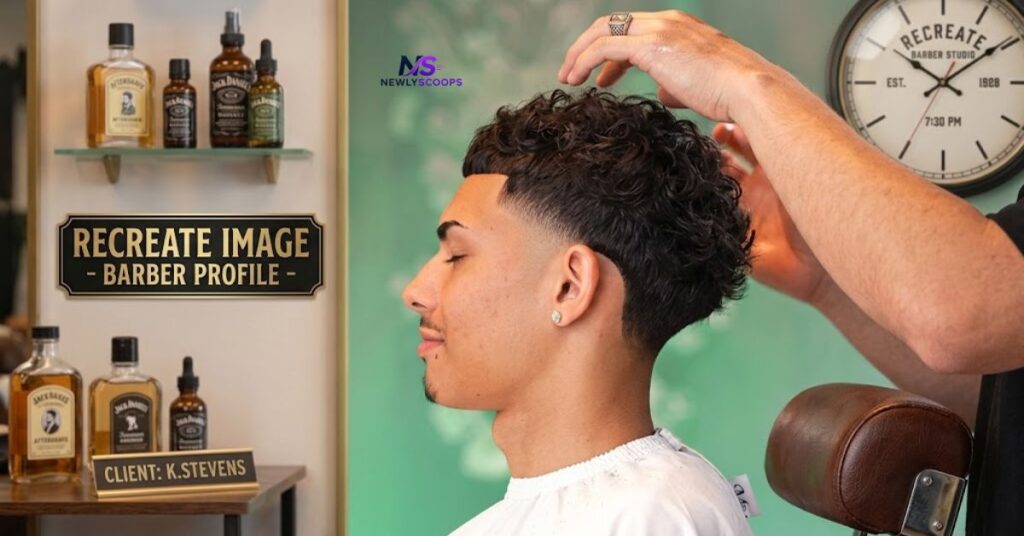
A curly mohawk keeps more emphasis through the center of the head. The low taper gives the sides a cleaner perimeter without necessarily taking the haircut all the way to the skin.
This is a statement style, so proportion matters. Your barber can adjust the width of the central section according to your face shape and density.
- Preserve enough central volume.
- Keep the sides gradually tapered.
- Define the central curls.
- Avoid flattening the top.
Sponge Curls with Low Taper
Sponge styling can create small, consistent curl formations on coily hair. When paired with a low taper, the textured top contrasts neatly with the clean perimeter.
Use a sponge gently and only when the hair is properly moisturized. Excessive friction can cause dryness and breakage.
- Start with damp, conditioned hair.
- Apply a curl-enhancing product.
- Use the sponge lightly in circular motions.
- Stop once the curl pattern forms.
Burst Fade Curly Hair
A burst fade is technically different from a traditional low taper because its shape expands around the ear. It can still be useful as a comparison when deciding how much contrast you want.
For men considering a curly fade haircut, the burst shape creates more drama around the ear while a low taper remains more restrained. Choose based on how much side detail you want.
- Compare the two fade shapes with your barber.
- Consider your ear and temple proportions.
- Keep the curly top defined.
- Maintain the perimeter consistently.
Low Taper Fade Curly Wolf Cut
A wolf cut uses layers to create movement and a slightly undone silhouette. The taper gives the sides more control while the layered curly top remains expressive.
This works especially well with wavy hair and loose curls because the layers can move naturally. Avoid excessive layering if your curls shrink significantly.
- Keep enough length for the layers to show.
- Ask for curl-aware layering.
- Use a texturizing cream.
- Allow natural movement.
Low Taper Fade Curly Edgar
The curly Edgar combines a structured front with a textured top. It works best when the curl pattern is strong enough to maintain a compact shape around the forehead.
The barber should consider shrinkage before setting the front length. A defined front line can be striking, but it needs regular hair trimming to remain crisp.
- Keep the front controlled.
- Define the curls without overloading them.
- Maintain the hairline carefully.
- Refresh the taper before the front loses balance.
Low Taper Fade Curly Shag
A curly shag uses layers and movement rather than a perfectly uniform top. The low taper gives the style a cleaner foundation around the ears and neck.
It is a good choice for people who prefer a natural look. The hair should be allowed to move instead of being forced into a rigid shape.
- Preserve natural layers.
- Avoid brushing dry curls.
- Use a light curl cream.
- Let the hair air-dry where possible.
Low Taper Fade Curly Undercut
An undercut creates stronger separation between the top and sides than a conventional taper. With thick curls, it can remove considerable side weight while leaving the top full.
This option is more dramatic than a subtle fade. Discuss the desired contrast during your haircut consultation so your barber understands whether you want a blended transition or a stronger separation.
- Decide how much contrast you want.
- Preserve sufficient top length.
- Moisturize the curls.
- Maintain the sides before they become bulky.
Low Taper Fade Layered Curly Hair
Layers can make medium curly hair easier to shape. They distribute weight and allow individual curls to sit more naturally. The taper then provides a neat outline around the lower sections.
Layering should follow the curl pattern. A generic straight-hair layering method can produce unexpected results after the curls contract.
- Request curl-aware layering.
- Check the shape after the hair dries.
- Use conditioner to reduce tangling.
- Keep the neckline controlled.
Low Taper Fade Curly Hair Curtain Bangs
Curtain bangs divide the front into two sections and allow curls to frame the face. The style works particularly well when the top has enough length to fall naturally.
The key is avoiding a rigid center part. Let the curls decide where the hair separates, then use a small amount of product to maintain the shape.
- Keep adequate front length.
- Encourage the natural center split.
- Scrunch the two sections separately.
- Trim the bangs before they become heavy.
How to Maintain Low Taper Fade Curly Hair
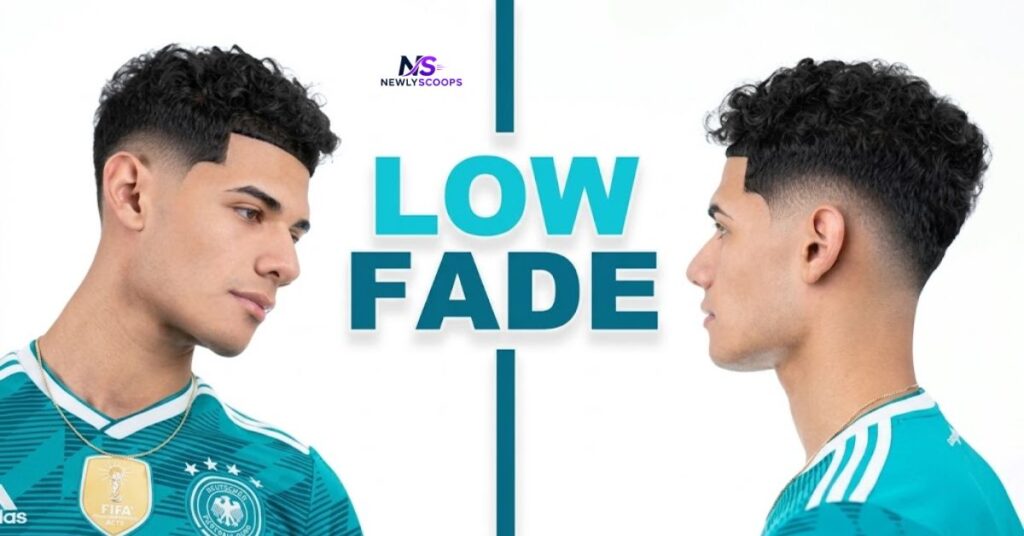
Maintaining Low Taper Fade Curly Hair requires attention to both the fade and the curls. The sides may remain presentable for several weeks, but the exact maintenance schedule depends on how quickly your hair grows and how sharp you want the taper.
Curly hair also needs moisture. Shampooing too frequently can make the texture dry and harder to control. Use a gentle cleanser when needed, condition regularly, and avoid treating every day as a shampoo day.
A good maintenance routine includes:
- Wash according to your scalp and hair needs.
- Condition the lengths consistently.
- Detangle gently while damp.
- Refresh curls with water between washes.
- Use a suitable curl product.
- Protect the hair while sleeping when helpful.
- Avoid excessive heat.
- Trim the taper before the outline becomes fuzzy.
- Ask for hair trimming rather than unnecessarily shortening the top.
- Reassess the shape whenever your curl length changes.
Hair maintenance is also about observing changes. If the curls suddenly feel dry, the issue may be product buildup, excessive cleansing, heat, or insufficient conditioning rather than the haircut itself.
How to Ask Your Barber for Low Taper Fade Curly Hair
The easiest way to explain the haircut is to describe the fade location, the desired top length, and the amount of curl volume you want preserved. Do not rely only on the phrase “taper fade,” because haircut terminology can vary between barbers.
During a barber consultation, show a reference photograph with a curl pattern similar to yours. Then explain what you like about it. You might say that you want a low fade around the ears, tapered sides, a tapered neckline, and a curly top that keeps its natural shape.
Useful barber instructions include:
- Keep the taper low.
- Do not remove too much from the curly top.
- Preserve natural volume.
- Shape the curls instead of forcing them straight.
- Blend the temples gradually.
- Keep the neckline clean.
- Account for shrinkage.
- Match the fade technique to the curl pattern.
- Explain whether you prefer a subtle fade or stronger contrast.
- Ask the barber to show you the side profile before finishing.
Good communication is part of a successful haircut consultation. If you have had a previous bad experience, explain exactly what went wrong. Specific information helps the barber adjust the taper technique and top length.
The Evolution of Low Taper Fade Curly Hair
Low Taper Fade Curly Hair has developed from a simple perimeter-cleaning technique into a broad family of curly hairstyles. Modern barbers combine the taper with crops, fringes, mullets, layered tops, afros, and textured shapes.
The style has also become more personalized. Instead of one universal version, men can adapt the taper according to curl density, face shape, hair length, and lifestyle. That flexibility is one reason the haircut remains relevant.
Today, curly haircut ideas frequently mix traditional barber technique with contemporary styling. Natural texture is no longer something that has to be hidden. A well-executed hair fade can frame curls while allowing their natural character to remain visible.
Low taper fade curly hair Black
Low taper fade curly hair Black styles often emphasize natural density, shape, and texture. The taper can clean the temples and neckline while leaving a strong curly top, afro shape, or sponge-defined finish.
A barber experienced with natural hair can adjust the fade technique for thick curls or coily hair. Moisture and curl definition are particularly important when the hair is dense, and the final hair shape should respect the natural growth pattern.
Mid taper fade curly hair
Mid taper fade curly hair creates more contrast than a low taper because the transition begins higher on the head. It can work well for men who want a sharper appearance and more visible tapered sides.
The choice between a low taper and a mid taper should depend on face shape, hair volume, and personal preference. Men with very dense curls may enjoy the additional side reduction, while others may prefer the softer outline of a low taper.
Low taper fade curly hair male
Low taper fade curly hair male styling is not limited to one curl pattern or length. Men can choose a short hairstyle, medium-length hairstyle, or long curly top depending on how much styling they want each morning.
For a straightforward men’s haircut, keep the top manageable and the taper subtle. For a more expressive option, add a fringe, side sweep, mullet, or layered shape while retaining the clean lower perimeter.
Low taper fade curly hair straight hair
Low taper fade curly hair straight hair is an unusual combination because straight hair does not naturally produce the same curl pattern. However, a low taper can still be used when the top is naturally straight, chemically textured, temporarily curled, or mixed in texture.
If your hair has mixed texture, tell the barber before the cut. The barber can account for the different behavior of each section and avoid creating an uneven hair shape when the hair dries.
Low taper fade curly hair black male
Low taper fade curly hair black male styles can be especially versatile for coily and tightly curled textures. The haircut can preserve a full top while cleaning the lower perimeter, creating a sharp appearance without sacrificing natural texture.
Popular variations include a rounded afro, sponge curls, short coils, a textured crop, or a fuller curly top. The best option depends on density, curl length, and how much daily styling you want.
Low Taper Fade Curly Hair 4c
Low Taper Fade Curly Hair 4c requires a curl-aware approach because Type 4C hair can shrink substantially and often needs careful moisture management. The barber should understand how the hair looks both stretched and in its natural state.
A low taper can frame a 4C top beautifully without reducing its identity. Keep the cut hydrated, minimize unnecessary manipulation, and use a barber who understands coily natural hair and the appropriate taper technique.
Conclusion
Low Taper Fade Curly Hair works because it creates structure without asking natural curls to behave like straight hair. From short curls and loose curls to thick coils, afros, fringes, and longer textured tops, the haircut can be adjusted around the individual rather than forced into one template.
The best result comes from combining the right curl length, a suitable taper, thoughtful styling, and consistent maintenance. Bring a reference photo, explain your preferred shape clearly, and choose a barber who understands your natural texture. With those pieces in place, your curly haircut can stay clean, defined, and easy to wear.
FAQ’s
Is low taper good for curly hair?
Yes. A low taper is often an excellent choice for curly hair because it cleans the area around the ears and neckline while preserving much of the natural volume above. It can work with wavy, curly, and coily textures when the top is shaped appropriately.
What fade is better for curly hair?
There is no single best fade for every person. A low fade is generally a versatile choice when you want to retain side volume, while a mid or high fade creates stronger contrast. Your curl density, face shape, and preferred maintenance level should guide the decision.
How to low taper fade curly hair?
A professional barber should establish the lowest guideline around the ears and neckline, gradually blend upward, and account for the way curls contract after cutting. The top should be shaped according to its curl pattern rather than treated like straight hair. Attempting a fade at home can make blending difficult.
Is a low fade haram?
Islamic opinions about fades can differ depending on the exact haircut and the scholar or school of thought being followed. Some scholars object to qaza, commonly understood as shaving parts of the head while leaving other parts, while not every modern fade is necessarily classified identically. If this matters for religious practice, ask a trusted qualified scholar about the specific haircut you intend to get.
Is it haram to say “OMG”?
The answer depends on what you mean by the expression and the intention behind it. “OMG” commonly means “Oh my God” and can be used casually without intending disrespect, but religious views about invoking God’s name casually can differ. If you want to follow a particular Islamic interpretation, ask a qualified scholar who understands your context.
