

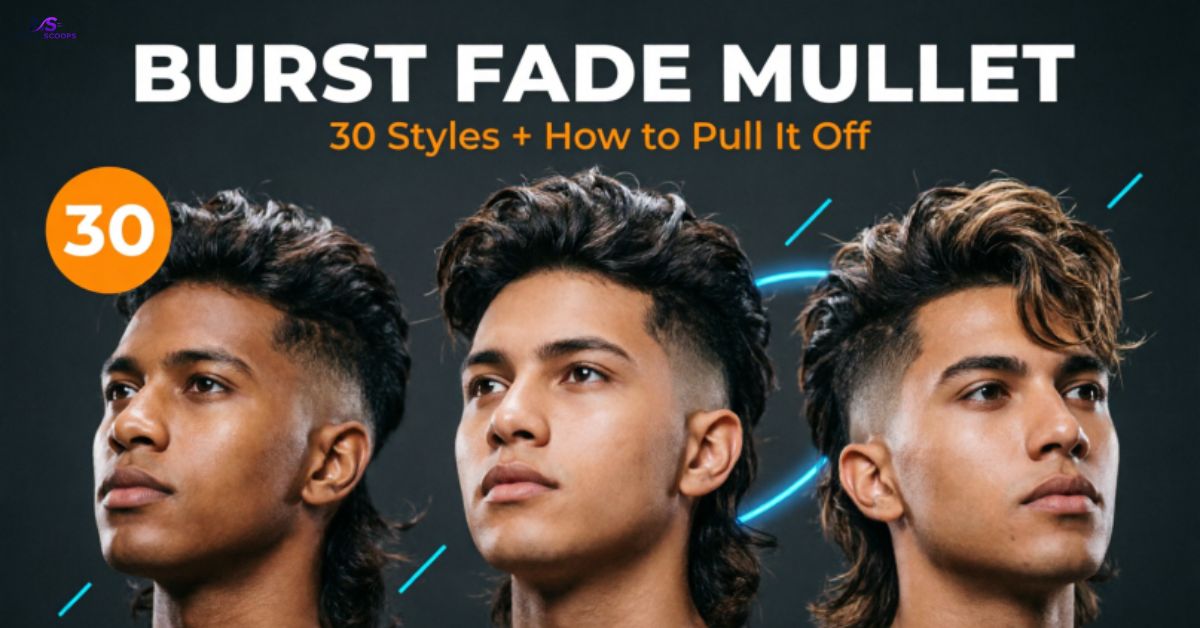
A Burst Fade Mullet is a bold choice for men who want a fresh and edgy look. It combines a burst fade with a longer back section. The sides are kept short around the ear. The back keeps more hair length and movement. This creates strong contrast. A Burst Fade Mullet can also suit straight hair, wavy hair, curly hair, or coily hair. Your hair texture and hair volume can change the final shape. A skilled barber can adjust the fade height and hair length for you.
The Burst Fade Mullet works with many styles. You can choose a low burst fade, mid burst fade, or high burst fade. A skin burst fade gives sharper contrast. A taper burst fade gives a softer finish. You can also try a textured mullet, messy mullet, or modern mullet. With regular trims and simple styling, a Burst Fade Mullet can look clean, stylish, and easy to manage.
What Is a Burst Fade Mullet Haircut?
A Burst Fade Mullet combines a burst fade with longer hair at the back. The fade curves around the ear and blends into the sides. The back stays longer to create the classic mullet silhouette. You can adjust the fade height, hair length, and textured top for a custom shape.
This haircut works with straight hair, wavy hair, curly hair, and coily hair. A low burst fade gives a softer look. A mid or high burst fade creates more contrast. You can also add an undercut, fringe, shaved design, or textured finish for a modern style.
What Is a Burst Fade Mullet Haircut?
A Burst Fade Mullet gives a modern twist to the traditional mullet haircut. It keeps the sides short while leaving more length at the back. The fade follows the ear contour and creates a clean side profile. The result is a bold haircut with strong shape and movement.
Your barber can adjust the cut based on your face shape and hair texture. Thick hair may need layering and point-cutting. Curly hair can benefit from curl-enhancing cream. Straight hair can use texture cream or matte pomade. Regular trims help maintain the fade blend.
Who Should Try a Burst Fade Mullet?
A Burst Fade Mullet suits men who want a bold hairstyle with strong contrast. It can work for oval, square, diamond, and round face shapes. The right fade height can help balance facial proportions. Your barber can also adjust the back length to match your preferred style.
This haircut works across many hair types. Straight, wavy, curly, coily, thick, and fine hair can all be shaped into a mullet. Choose a low burst fade for subtle contrast or a skin burst fade for a sharper finish. Consider your styling difficulty and maintenance level before choosing.
30 Burst Fade Mullet Styles for 2026
The Burst Fade Mullet has many modern variations for 2026. You can choose a low burst fade mullet for a subtle finish or a high burst fade mullet for bold contrast. Other options include a curly hair burst fade mullet, textured burst fade mullet, messy burst fade mullet, and fluffy burst fade mullet.
Your choice should match your hair type, face shape, and lifestyle. A short burst fade mullet is easier to maintain. A long burst fade mullet creates more movement. You can also choose an Edgar burst fade mullet, burst fade mullet with fringe, or burst fade mullet with beard. Regular trims keep the style sharp.
1. Low Burst Fade Mullet
Combines a low burst fade around the ear with longer back length. The fade creates subtle contrast while keeping the Mullet haircut relaxed and balanced. Full styling detail can be adjusted to suit your hair texture.
Best on oval and square faces. It has moderate maintenance, with regular trims needed to keep the fade blend clean while preserving the longer back section.
2. Mid Burst Fade Mullet
Combines a mid burst fade with short sides and a longer back. The higher fade creates more contrast around the ear and temple. This gives the Burst Fade Mullet a stronger and more modern finish.
Best on oval, square, and diamond faces. It has moderate maintenance. A barber visit every two to four weeks can keep the fade height and shape looking sharp.
3. High Burst Fade Mullet
Combines a high burst fade with short sides and noticeable back length. The high fade creates bold contrast between the scalp, sides, and longer back. It gives the Burst Fade Mullet an edgy look.
Best for square and oval faces. This style needs regular fade upkeep. Trim every one to two weeks if you want the sharp fade to stay clean.
4. Curly Hair Burst Fade Mullet
Combines a burst fade with natural curls and a longer back section. The curls add volume, movement, and texture. A Curly hair burst fade mullet works especially well when the natural curl pattern is preserved.
Best for curly hair with medium to thick density. Use a curl-enhancing cream for definition. Maintenance is moderate, with regular trims needed around the ear and temple.
5. Burst Fade Mullet for Straight Hair
Combines clean burst fade lines with straight hair and longer back length. Straight hair creates a clear mullet silhouette. It also makes the fade blend and side contrast easy to see.
Best for oval, square, and diamond faces. Styling can be low to moderate maintenance. A lightweight styling wax or matte styling cream can add texture without removing the natural finish.
6. Messy Burst Fade Mullet
Combines a burst fade with tousled hair and an intentionally loose shape. The messy styling adds movement and a relaxed finish. It gives the Burst Fade Mullet a casual, edgy appearance.
Best for wavy, thick, or textured hair. Use a matte texturizing product for separation. Maintenance is moderate because the fade still needs regular trims.
7. Textured Burst Fade Mullet
Combines a clean burst fade with a textured top and longer back section. Texture cutting and point-cutting can create extra movement. The result is a modern Burst Fade Mullet with a fuller silhouette.
Best for medium-thick hair, wavy hair, and textured hair. A texture cream or matte pomade can improve definition. Regular trims help maintain the fade blend and layered shape.
Here are the next sections in the same short, simple structure and style.
8. Skin Burst Fade Mullet
Combines a skin fade around the ear with a longer back section. The sides are faded very close to the scalp. This creates sharp contrast and gives the Burst Fade Mullet a clean-cut look.
Best for oval, square, and diamond faces. It has high fade maintenance. A barber visit every one to two weeks helps keep the skin fade and clean lines sharp.
9. Taper Burst Fade Mullet
Combines a taper burst fade with short sides and longer back length. The taper creates a softer transition around the ear and temple. It gives the Burst Fade Mullet a refined finish.
Best for oval and round faces. This style has moderate maintenance. Regular trims help control the fade grow-out while keeping the mullet silhouette balanced.
10. Drop Burst Fade Mullet
Combines a drop burst fade with a longer back section. The fade drops naturally behind the ear. This follows the skull contour and creates a smooth side profile.
Best for oval, square, and diamond faces. Maintenance is moderate. Regular trims help maintain the fade placement and clean transition.
11. Burst Fade Mullet with Design
Combines a burst fade and mullet length with a shaved design. The design detail can follow the temple or side profile. It adds bold contrast to the haircut.
Best for square and oval faces. This is a higher-maintenance style. A barber visit every one to two weeks keeps the shaved design and fade looking sharp.
12. Undercut Burst Fade Mullet
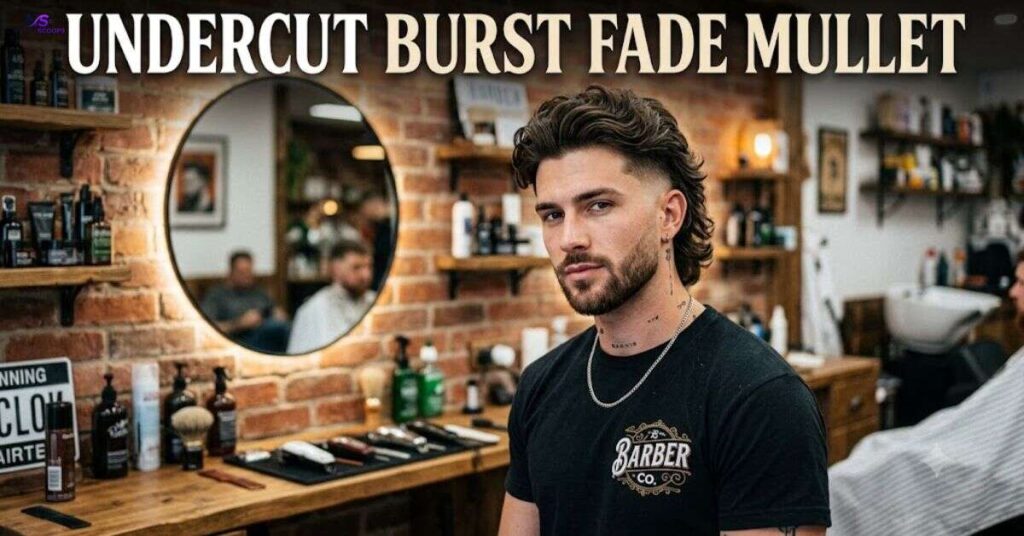
Combines a burst fade with an undercut and longer back length. The hard undercut creates strong separation between the short sides and longer hair. This gives the style bold contrast.
Best for thick hair and square faces. It has moderate to high maintenance. Regular trims help preserve the undercut and sharp fade line.
13. Fluffy Burst Fade Mullet
Combines a soft burst fade with fluffy hair and a fuller back. The extra hair volume creates a rounded silhouette. It gives the Burst Fade Mullet a relaxed and youthful finish.
Best for thick, wavy, or straight hair. Use volumizing mousse or lightweight styling cream. Maintenance is moderate, with regular trims to control hair bulk.
14. Modern Burst Fade Mullet
Combines a clean burst fade with a textured top and longer back. The modern finish keeps the mullet silhouette controlled. It works well as a trendy hairstyle for modern men’s grooming.
Best for oval, square, and diamond faces. Styling is moderate. A matte styling cream can add texture while keeping natural movement.
15. Short Burst Fade Mullet
Combines a short mullet with a burst fade and controlled back length. The shorter shape makes the style easier to manage. It gives a clean-cut look without losing the mullet silhouette.
Best for oval and square faces. This is a low-maintenance hairstyle. Regular trims every two to four weeks help maintain the shape.
16. Long Burst Fade Mullet
Combines a burst fade with a much longer back section. The extra hair length creates stronger movement and a fuller mullet silhouette. It gives the style a more dramatic appearance.
Best for thick, wavy, or textured hair. Styling is moderate to high maintenance. Regular trims keep the short sides clean while allowing the back length to grow.
17. Burst Fade Mullet with Beard
Combines a burst fade mullet with a shaped beard. The beard adds balance between the short sides and longer back. It creates a bold but coordinated men’s grooming look.
Best for oval, square, and diamond faces. Maintenance is moderate to high. Regular trims keep the fade, beard, hairline, and longer back section looking balanced.
Here are sections 18–25 in the same concise structure, with simple sentences and practical styling details.
18. Asian Burst Fade Mullet
Combines a burst fade with the longer back of a mullet haircut. It often works well with straight or thick hair. The short sides create contrast while the back keeps natural movement.
Best for oval, round, and square faces. Maintenance is moderate. Use a lightweight styling wax or matte pomade to add texture without making the hair heavy.
19. Blonde Burst Fade Mullet
Combines blonde hair with a burst fade and longer back length. The lighter color can make the fade contrast more noticeable. It creates a modern and bold appearance.
Best for oval and square faces. Styling is moderate. Use a matte styling cream to control the shape while keeping a natural finish.
20. Wavy Hair Burst Fade Mullet
Combines a burst fade with wavy hair and a longer back section. Natural waves add movement and texture to the mullet silhouette. The result looks relaxed but defined.
Best for oval, square, and diamond faces. Use a texture cream to enhance the waves. Maintenance is moderate, with regular trims around the ear and temple.
21. Burst Fade Mohawk Mullet
Combines a burst fade with a mohawk shape and longer mullet length. The sides stay short while the center and back keep more hair. This creates strong contrast and an edgy look.
Best for square and oval faces. Styling is moderate to high maintenance. Matte clay can add volume and help maintain the central shape.
22. Edgar Burst Fade Mullet
Combines the sharp Edgar fringe with a burst fade and longer mullet back. The straight fringe creates a strong front shape. The longer back adds movement and contrast.
Best for square and oval faces. This is high maintenance. The fringe may need trimming every two to three weeks to stay sharp.
23. Burst Fade Mullet with Fringe
Combines a burst fade with a defined fringe and longer back section. The fringe adds structure to the front. The mullet length creates movement at the back.
Best for oval, round, and diamond faces. Maintenance is moderate. Styling cream can control the fringe while keeping a textured finish.
24. Burst Fade Mullet for Thick Hair
Combines a burst fade with thick hair and longer back length. Texture cutting and layering can reduce excess hair bulk. This helps create a balanced shape.
Best for thick hair with good natural volume. Maintenance is moderate. A matte pomade can add definition without making the hair look flat.
25. Burst Fade Mullet for Thin Hair
Combines a burst fade with a shorter, layered mullet shape. Layering can create the appearance of more volume. A textured top also adds visual movement.
Best for oval and square faces. Keep the back length controlled for a fuller silhouette. Use volumizing mousse or lightweight styling wax for added volume.
26. Burst Fade Mullet with Textured Top
Combines a burst fade with a textured top and longer back section. Texture cutting adds movement and shape. The result is a fuller and more modern Burst Fade Mullet.
Best for thick, wavy, and medium-thick hair. Use matte clay or texture cream for definition. Maintenance is moderate, with regular trims to keep the fade blend clean.
27. Burst Fade Mullet for Round Face
Combines a burst fade with added height on top and longer back length. The extra volume can make the face look longer. It also creates better facial proportions.
Best for a round face. Keep the sides short and the top textured. Styling is moderate. A lightweight styling wax can add volume without heavy buildup.
28. Burst Fade Mullet with Shaved Sides
Combines a sharp burst fade with shaved sides and a longer mullet back. The shaved area creates strong side contrast. It gives the haircut an edgy look.
Best for square, oval, and diamond faces. This style has high maintenance. Regular barber visits help maintain the clean lines and fade height.
29. Burst Fade Mullet with Curly Fringe
Combines a burst fade with a curly fringe and longer back section. The natural curls add texture and movement. The fringe gives the front a defined shape.
Best for curly hair and natural curl patterns. Use curl-enhancing cream for definition. Maintenance is moderate, with regular trims around the ear and fringe.
30. Burst Fade Mullet with Longer Top
Combines a burst fade with a longer top and extended back length. The longer top creates more styling options. It can be worn messy, textured, or with added volume.
Best for straight, wavy, and thick hair. Use matte styling cream or lightweight pomade for control. Maintenance is moderate, with regular trims to maintain the shape.
Below are the four H2 sections in the same short, practical, easy-to-read style.
Burst Fade Mullet by Face Shape
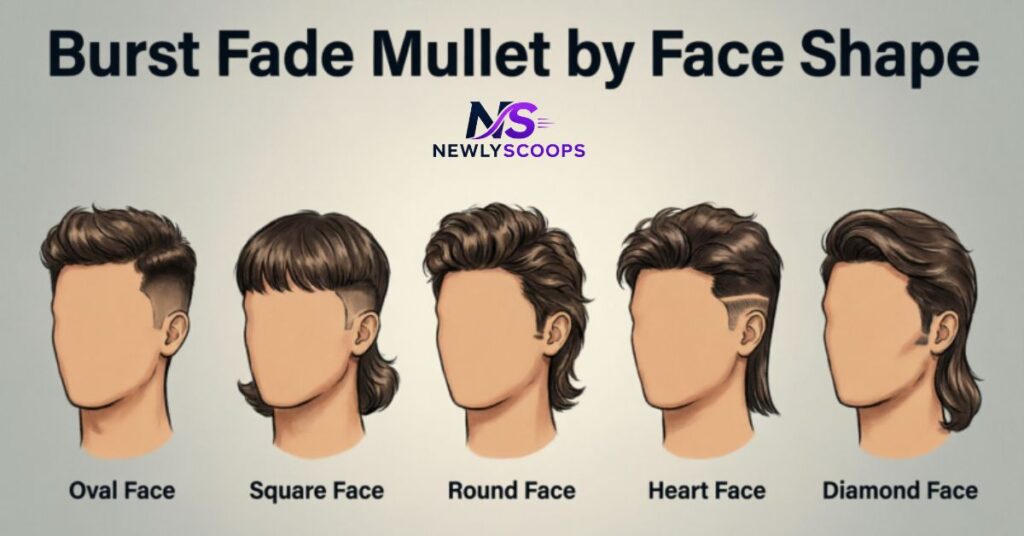
Oval face. The most flexible face shape for a Burst Fade Mullet. Almost every fade height and back length can work. A low burst fade or mid burst fade is an easy starting point.
Round face. Add height on top and keep the short sides controlled. A mid or high burst fade can create a longer-looking profile. Avoid too much side volume.
Square face. Strong facial proportions work well with sharp fades and structured shapes. A high burst fade or skin burst fade can create bold contrast. Keep the longer back section balanced.
Heart-shaped face. Keep some volume around the sides and back. A low burst fade can create a softer transition. Avoid making the top too tall.
Long face. A lower fade and fuller top can help balance facial proportions. A textured mullet with moderate back length works well. Avoid excessive height.
Diamond face. A textured top and moderate back length can complement the cheekbones. A mid burst fade creates balanced side contrast. Keep the overall shape controlled.
Burst Fade Mullet by Hair Type
Straight hair. Straight hair gives the Burst Fade Mullet a clean silhouette. Use texture cutting or layering for movement. Matte styling cream can add natural definition.
Wavy hair. Wavy hair adds natural texture and movement. Keep the longer back section slightly layered. Texture cream can enhance the wave pattern.
Curly hair. Curly hair creates strong volume and definition. Keep the curl pattern natural around the longer sections. Curl-enhancing cream can reduce frizz.
Coily hair. Coily hair can create a bold and distinctive shape. A skilled barber can control hair bulk around the fade. Moisturizing styling products can help maintain definition.
Thick hair. Thick hair provides plenty of volume for a fuller mullet silhouette. Layering and point-cutting can remove excess bulk. Matte pomade can improve control.
Fine hair. Fine hair benefits from shorter layers and added texture. Avoid removing too much density. Volumizing mousse can create more visual volume.
Modern Mullet Haircut vs. Traditional Mullet
| Feature | Modern Mullet Haircut | Traditional Mullet |
| Overall shape | Clean and structured | Classic and relaxed |
| Sides | Often uses a burst fade, taper, or fade haircut | Usually short without a detailed fade |
| Back length | Controlled and layered | Usually noticeably longer |
| Top | Textured top with added movement | Simpler top shape |
| Contrast | Strong or subtle contrast | More natural contrast |
| Texture | Often uses texture cutting and layering | Usually less textured |
| Finish | Modern finish or refined finish | Retro feel |
| Styling | Matte styling cream, matte pomade, or texture cream | Basic styling product |
| Maintenance | Moderate to high | Low to moderate |
| Best for | Modern men’s grooming and trendy hairstyles | Classic and retro looks |
| Customization | Easy to adjust with fade height and hair length | More focused on the classic mullet silhouette |
| Popular variation | Burst Fade Mullet | Classic Mullet haircut |
Step-by-Step Burst Fade Mullet Tutorial
Step 1: Set the length. Decide how short the sides should be and how long you want the back section. Use reference photos before starting.
Step 2: Create the fade. A barber uses clippers to establish the fade line around the ear. The fade height can be low, mid, or high.
Step 3: Build the blend. Clippers remove bulk while creating a smooth fade blend. The barber checks the ear contour and side profile.
Step 4: Shape the top. Shears can shape the textured top and longer sections. Point-cutting can add movement and reduce heavy edges.
Step 5: Layer the back. Layering creates a controlled mullet silhouette. The barber keeps enough back length for the desired shape.
Step 6: Add texture. Texture cutting can create separation and natural movement. This step depends on hair density and natural texture.
Step 7: Style the haircut. Apply a suitable styling product. Matte clay, styling cream, or texture cream can add definition and volume.
Step 8: Maintain the shape. Schedule regular trims to keep the fade clean. Fade maintenance is usually needed sooner than the longer back section.
Best Styling Products for a Burst Fade Mullet
| Styling Product | Best For | Main Benefit | Finish |
| Matte styling cream | Straight and wavy hair | Light control and natural shape | Natural |
| Matte pomade | Medium-thick hair | Definition and flexible hold | Matte |
| Matte clay | Thick hair | Stronger hold and volume | Matte |
| Texture cream | Textured hair | Adds movement and separation | Natural |
| Lightweight styling wax | Fine to medium hair | Adds texture without heavy buildup | Soft |
| Volumizing mousse | Fine or thin hair | Creates visual volume and fullness | Light |
| Curl-enhancing cream | Curly and coily hair | Defines the natural curl pattern | Natural |
| Lightweight pomade | Straight hair | Controls flyaways and adds shape | Low shine |
| Matte texturizing product | Messy mullet styles | Creates tousled texture and definition | Matte |
Weekly Care Routine
Wash regularly. Use a suitable shampoo based on your hair type. Avoid excessive washing if your scalp or hair feels dry.
Condition the hair. Apply conditioner to the longer back section and textured top. This helps maintain softness and natural movement.
Refresh the style. Use a small amount of styling product during daily styling. Avoid applying too much hair product.
Check the fade. Look at the fade line, temple, and area around the ear. Noticeable fade grow-out is normal between barber visits.
Maintain texture. Use texture cream or lightweight styling wax when needed. Let your natural texture guide the final shape.
Maintenance Schedule
| Maintenance Timing | Best For | What to Maintain |
| Every 1–2 weeks | Skin burst fade, high burst fade | Sharp fade, clean lines, temple, and ear area |
| Every 2–3 weeks | High-contrast Burst Fade Mullet | Fade blend, fade height, and side profile |
| Every 2–4 weeks | Low burst fade, mid burst fade, taper burst fade | Fade shape and overall haircut |
| Every 4–6 weeks | Longer mullet styles | Back length, layering, and mullet silhouette |
| As needed | Thick or fast-growing hair | Hair bulk, texture, and shape |
| Daily | All Burst Fade Mullet styles | Styling, texture, volume, and natural movement |
Barber Tips for the Perfect Burst Fade Mullet
Bring reference photos. Show your barber the front, side profile, and back section you want. This makes your preferred hair length and fade placement clear.
Discuss fade height. Tell your barber whether you prefer a low burst fade, mid burst fade, or high burst fade. The right fade height can change the entire shape.
Explain your hair type. Mention if you have straight hair, wavy hair, curly hair, coily hair, thick hair, or fine hair. Your barber can adjust the haircut accordingly.
Consider your face shape. Your oval face, round face, square face, or other face shape can influence the best proportions.
Ask about styling. Your barber can recommend a styling cream, matte pomade, texture cream, or curl-enhancing cream based on your hair texture.
Common Mistakes to Avoid With a Burst Fade Mullet
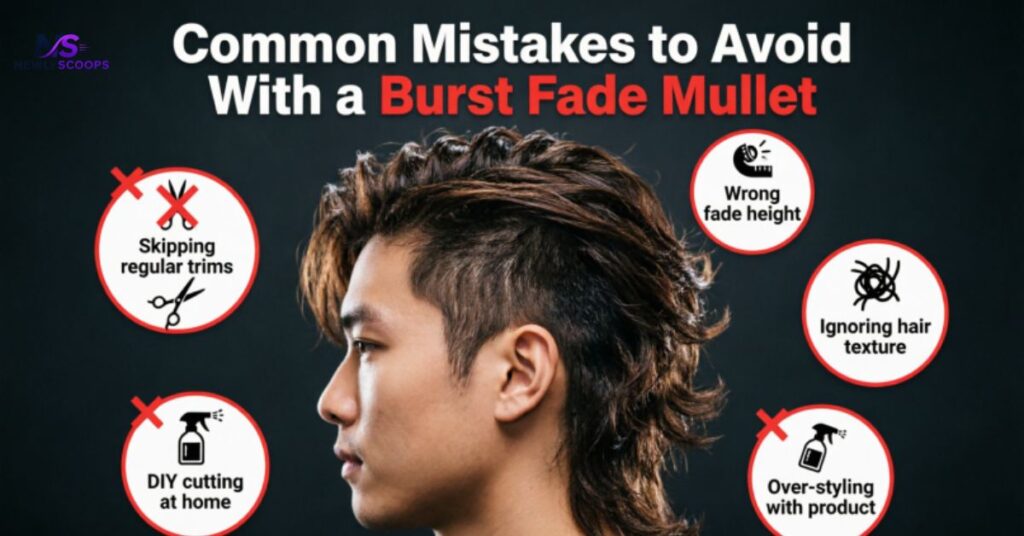
Choosing the wrong fade height. A fade that is too high or too low can affect your facial proportions. Discuss the placement before the barber starts.
Removing too much back length. The longer back section creates the mullet silhouette. Cutting it too short can remove the main character of the style.
Ignoring hair texture. Straight hair, curly hair, and coily hair need different cutting approaches. Your natural texture should guide the shape.
Using too much product. Heavy styling product can make the hair flat and greasy. Start with a small amount and add more only when needed.
Skipping regular trims. Without fade upkeep, the fade blend can lose its clean appearance. Regular trims help maintain the haircut shape.
Copying a style exactly. A Burst Fade Mullet should suit your face shape, hair density, hair length, and styling difficulty. Ask your barber for a custom haircut rather than copying another person’s look.
Burst Fade Mullet Straight Hair
A Burst Fade Mullet for straight hair combines short sides with a longer back section. Straight hair gives the haircut a clean shape and clear lines. A textured top can add movement and volume. A low burst fade creates a subtle contrast, while a mid or high burst fade gives a sharper finish.
This style works well with oval, square, and diamond face shapes. Fine hair can benefit from lightweight styling products that create visual volume. Thick hair may need layering and texture cutting to reduce bulk. Regular trims help maintain the fade blend, hairline, and longer back section without losing the mullet silhouette.
Burst Fade Mullet Curly Hair
A Burst Fade Mullet for curly hair uses natural curls to create volume and movement. The burst fade keeps the sides short around the ear while the back remains longer. This creates a strong contrast between the faded sides and curly mullet silhouette. The natural curl pattern also adds texture.
Curly hair needs careful cutting to control shrinkage and hair bulk. A barber can use layering to improve the shape without removing too much length. Curl-enhancing cream can provide definition and reduce frizz. Regular trims keep the temple, ear contour, and fade line clean while allowing the curls to remain natural.
Burst Fade Mullet Short
A short Burst Fade Mullet keeps the back section shorter than traditional mullet styles. The sides feature a burst fade around the ear, while the top and back maintain enough length for a clear mullet shape. This creates a clean-cut look that feels modern, practical, and easier to manage.
This style suits men who want a low-maintenance hairstyle with some edge. A low burst fade or taper burst fade creates subtle contrast. A mid fade gives stronger contrast. Use matte styling cream or lightweight pomade to add texture. Regular trims help maintain the short sides and controlled back length.
Burst Fade Mullet Men
The Burst Fade Mullet is a popular choice within modern men’s haircuts. It combines a burst fade with a longer back section and can be customized for different hair types. The fade can be low, mid, high, or even a skin burst fade. The top can remain textured, layered, messy, or natural.
Men can choose the haircut based on face shape, hair density, and styling preference. Oval and square faces offer many options, while round faces can benefit from added height. Straight, wavy, curly, and coily hair can all work. A barber consultation helps create a custom haircut that matches personal grooming guidelines.
Burst Fade Mullet French Crop
A Burst Fade Mullet French Crop combines the short, structured front of a French crop with a burst fade and longer back. The cropped fringe creates a defined shape at the front. Meanwhile, the longer back section adds movement and creates the recognizable mullet silhouette.
This combination creates strong contrast between the front, sides, and back. It works especially well with straight or textured hair. Point-cutting can soften the fringe and add texture. A matte clay or matte texturizing product can provide control. Regular trims are important because the cropped front and burst fade need clean lines.
Burst Fade Mullet Kids
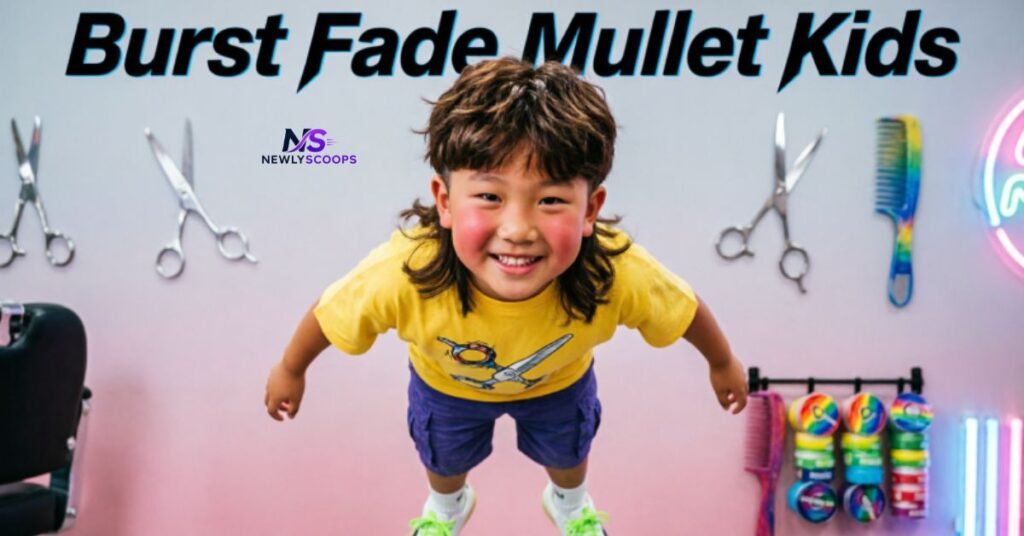
A Burst Fade Mullet for kids can provide a fun and modern haircut without requiring an extreme shape. The barber can keep the sides neat with a low burst fade while leaving moderate length at the back. A softer fade can create a comfortable, workplace-free school-friendly appearance for younger children.
For kids, simple styling is usually best. Natural texture should guide the haircut rather than heavy styling products. Straight, wavy, and curly hair can all work with the right shape. Parents should discuss hair length, school grooming guidelines, and maintenance needs with the barber before choosing the final style.
FAQ’s
Is mullet haram in Islam?
A mullet may be considered impermissible by some Islamic scholars because it can resemble prohibited or disliked haircut styles. Views differ, so consult a trusted scholar.
Is a burst fade a mullet male?
A burst fade is not automatically a mullet. A Burst Fade Mullet combines a burst fade on the sides with noticeably longer hair at the back.
Is a burst fade haram?
A burst fade is not universally considered haram. Islamic opinions differ based on the haircut’s appearance, intention, and resemblance to prohibited styles. Ask a scholar.
What is the 401k mullet?
The 401k mullet is a humorous hairstyle term. It describes a haircut that looks business-like in front while keeping a longer, more relaxed back.
Does Virat Kohli have a mullet?
Virat Kohli has worn several modern hairstyles, but he is not consistently known for a traditional mullet. His hairstyles have included fades and shorter textured cuts.
Conclusion
A Burst Fade Mullet is a bold and flexible haircut. It combines short sides with a longer back section. You can choose a low, mid, or high burst fade. A skin burst fade gives stronger contrast. A taper burst fade creates a softer finish. The Burst Fade Mullet can also work with straight hair, wavy hair, curly hair, or coily hair. Your face shape and hair texture can help you choose the right version.
The Burst Fade Mullet also offers many styling options. Try a textured top, messy styling, or a modern mullet shape. Styling cream, matte pomade, or texture cream can add definition and movement. Regular trims keep the fade blend clean. A good barber can adjust the fade height, hair length, and back section for you. With the right care, a Burst Fade Mullet can create a clean, modern, and edgy look.
